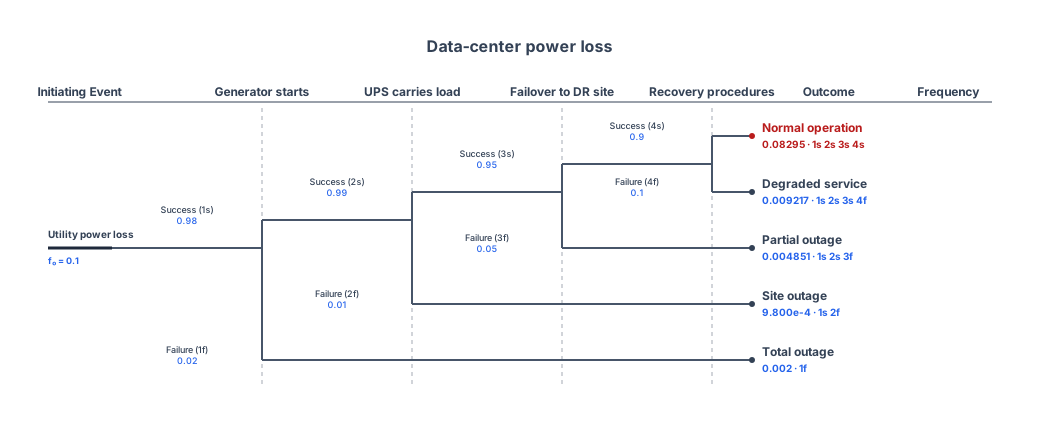
An event tree for a data-center power loss with generator start, UPS availability, failover, and recovery outcomes
NODE ARCHIVE · REAL DIAGRAM BRIEFS
Diagram Examples from Real Visitor Prompts
Browse eligible diagrams shared by FreeDiagram visitors, inspect the exact prompts, and build your own version.
Browse 368 real creationsCOMMUNITY OUTPUTS · EXACT PROMPTS
All visitor creations
Showing 1–24 of 368. No stock examples or system defaults. Choose a tool, study a real result, then reopen its prompt as your starting point.
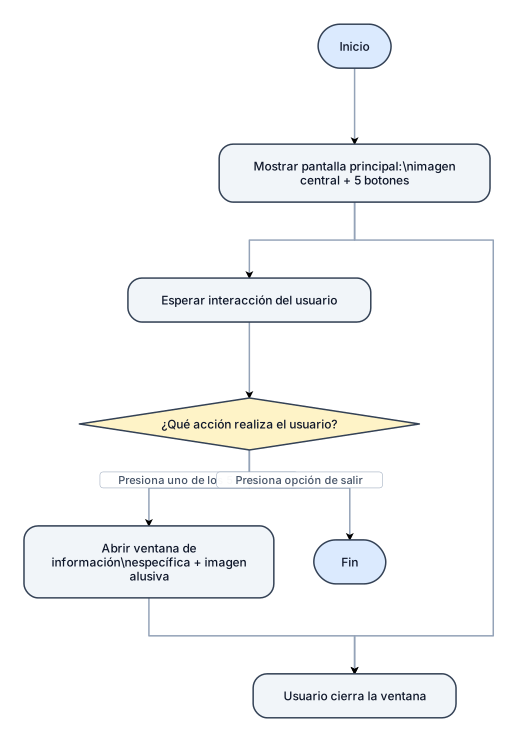
Diseña un diagrama de flujo para un software de escritorio guiado por eventos sobre la adicción a las SPA. La estructura y el funcionamiento del programa son los siguientes: Inicio del algoritmo. Se carga una pantalla principal que contiene una imagen central alusiva a la problemática y 5 botones a su alrededor con diferentes títulos. El sistema queda en estado de espera hasta que el usuario interactúe. Si el usuario presiona cualquiera de los 5 botones, se abre una nueva ventana que muestra información específica y una imagen alusiva. Cuando el usuario cierra esa ventana de información, el programa debe retornar automáticamente a la pantalla principal inicial (bucle). Desde la pantalla principal debe existir una opción para cerrar el programa por completo, llevando al fin del diagrama

ME GUSTARIA QUE EL DIAGRAMA FUERA POR JERARQUIA COMO VAN EN NUMEROS 1. Conectividad (Nivel Regional y Metropolitano) Jerarquía: Red vial primaria y distribuidor arterial metropolitano. Detalle: Intersección estratégica entre el Blvd. Luis Donaldo Colosio (arteria distribuidora oriente-poniente y conexión a salidas hacia México, Actopan y Tulancingo) y el Blvd. Ramón G. Bonfil (eje conector norte-sur). 2. Relaciones con Localidades Cercanas y Área de Influencia Jerarquía: Nodo de articulación metropolitana (Pachuca – Mineral de la Reforma – San Agustín Tlaxiaca). Detalle: Captura flujos diarios intermunicipales (estudiantiles, laborales y comerciales). Su área de influencia directa abarca el sector poniente y su influencia indirecta toda la Zona Metropolitana. 3. Ámbito Intraurbano y Funciones Urbanas Jerarquía: Subcentro urbano mixturado de alta plusvalía. Detalle: Punto de transición y articulación entre áreas residenciales consolidadas (Arboledas de San Javier, El Palmar) y corredores comerciales y de servicios corporativos. 4. Actividades Económicas Jerarquía: Sector Terciario Intensivo (Comercio y Servicios de alto impacto). Detalle: Alta densidad de plazas comerciales, servicios financieros, agencias, corporativos y oferta gastronómica sobre corredores principales. 5. Equipamientos y Servicios Jerarquía: Cobertura de escala intermedia-superior y cobertura infraestructural del 100%. Detalle: Proximidad a centros educativos privados/públicos, clínicas de salud especializadas y complejos deportivos. Infraestructura completa (servicios subterráneos, agua, drenaje y fibra óptica). 6. Población Jerarquía: Densidad media-alta con perfil socioeconómico Medio-Alto a Alto. Detalle: Concentración de población residente de alto poder adquisitivo y alta densidad de usuarios flotantes en horas pico por tránsito vial y comercial. QUE ESTE ORGANIZADA LA IMFORMACIÓN OCUPA SOLO LA INFORMACIÓN NECESARIA ESTO ES PARA Analizar la jerarquía urbana

ME GUSTARIA QUE EL DIAGRAMA FUERA POR JERARQUIA COMO VAN EN NUMEROS 1. Conectividad (Nivel Regional y Metropolitano) Jerarquía: Red vial primaria y distribuidor arterial metropolitano. Detalle: Intersección estratégica entre el Blvd. Luis Donaldo Colosio (arteria distribuidora oriente-poniente y conexión a salidas hacia México, Actopan y Tulancingo) y el Blvd. Ramón G. Bonfil (eje conector norte-sur). 2. Relaciones con Localidades Cercanas y Área de Influencia Jerarquía: Nodo de articulación metropolitana (Pachuca – Mineral de la Reforma – San Agustín Tlaxiaca). Detalle: Captura flujos diarios intermunicipales (estudiantiles, laborales y comerciales). Su área de influencia directa abarca el sector poniente y su influencia indirecta toda la Zona Metropolitana. 3. Ámbito Intraurbano y Funciones Urbanas Jerarquía: Subcentro urbano mixturado de alta plusvalía. Detalle: Punto de transición y articulación entre áreas residenciales consolidadas (Arboledas de San Javier, El Palmar) y corredores comerciales y de servicios corporativos. 4. Actividades Económicas Jerarquía: Sector Terciario Intensivo (Comercio y Servicios de alto impacto). Detalle: Alta densidad de plazas comerciales, servicios financieros, agencias, corporativos y oferta gastronómica sobre corredores principales. 5. Equipamientos y Servicios Jerarquía: Cobertura de escala intermedia-superior y cobertura infraestructural del 100%. Detalle: Proximidad a centros educativos privados/públicos, clínicas de salud especializadas y complejos deportivos. Infraestructura completa (servicios subterráneos, agua, drenaje y fibra óptica). 6. Población Jerarquía: Densidad media-alta con perfil socioeconómico Medio-Alto a Alto. Detalle: Concentración de población residente de alto poder adquisitivo y alta densidad de usuarios flotantes en horas pico por tránsito vial y comercial.
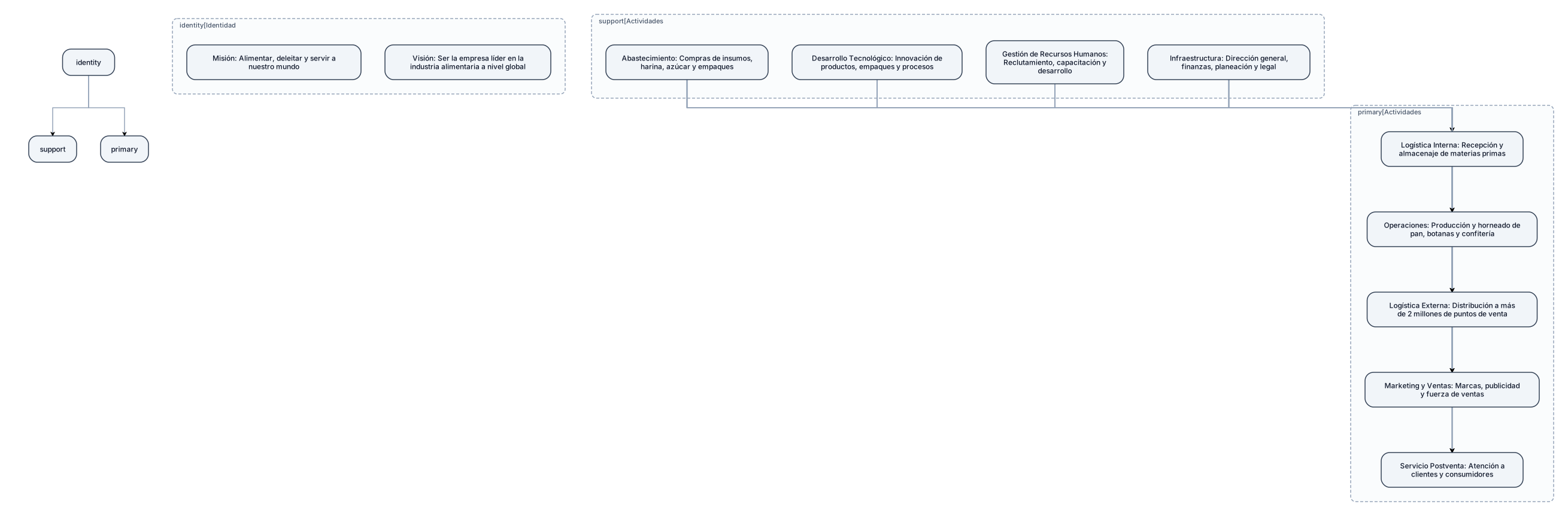
*Es un diagrama de flujo de los elementos que comprenden la cadena de valor de una organización sobre grupo BIMBO* *INSTRUCCIONES:* - Seleccionar una organización que cuente con información disponible en línea, referente a sus procesos de bienes o servicios para poder llevar a cabo un análisis de su cadena de valor, suministro y operación así como su información general - Ejemplos: Bimbo, coca loca, Pepsi, softek - Diseñar un diagrama de flujo que incluya todos los elementos de la cadena de valor de la organización seleccionada - Se deberán describir los principales funciones que hacen cada uno de los elementos que aportan valor al producto o servicio que ofrece la organización - Incluye la misión y visión de la organización para identificar las respectivas acciones que se realizan para cumplirlas *CRITERIOS DE FONDO:* - Presenta de manera jerarquica el orden de los elementos de la cadena de valor dentro de su categoría por el tipo de actividades primarias y secundarias - Define las principales actividades que realizan cada elemento de la cadena de valor en la organización - Comprende la importancia de una cadena de valor dentro de una organización e identifica el impacto de su implementación
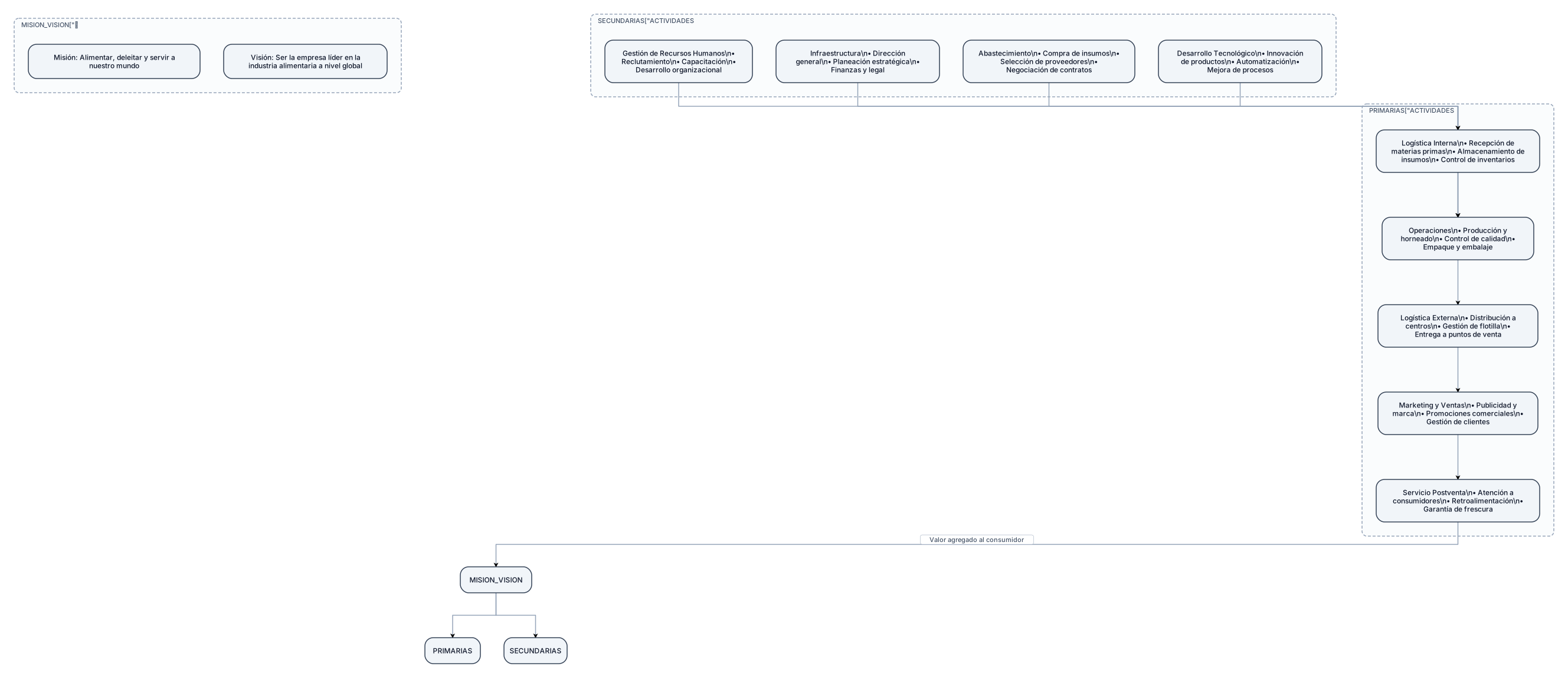
GRUPO: BIMBO *Es un diagrama de flujo de los elementos que comprenden la cadena de valor de una organización* *INSTRUCCIONES:* - Seleccionar una organización que cuente con información disponible en línea, referente a sus procesos de bienes o servicios para poder llevar a cabo un análisis de su cadena de valor, suministro y operación así como su información general - Ejemplos: Bimbo, coca loca, Pepsi, softek - Diseñar un diagrama de flujo que incluya todos los elementos de la cadena de valor de la organización seleccionada - Se deberán describir los principales funciones que hacen cada uno de los elementos que aportan valor al producto o servicio que ofrece la organización - Incluye la misión y visión de la organización para identificar las respectivas acciones que se realizan para cumplirlas *CRITERIOS DE FONDO:* - Presenta de manera jerarquica el orden de los elementos de la cadena de valor dentro de su categoría por el tipo de actividades primarias y secundarias - Define las principales actividades que realizan cada elemento de la cadena de valor en la organización - Comprende la importancia de una cadena de valor dentro de una organización e identifica el impacto de su implementación
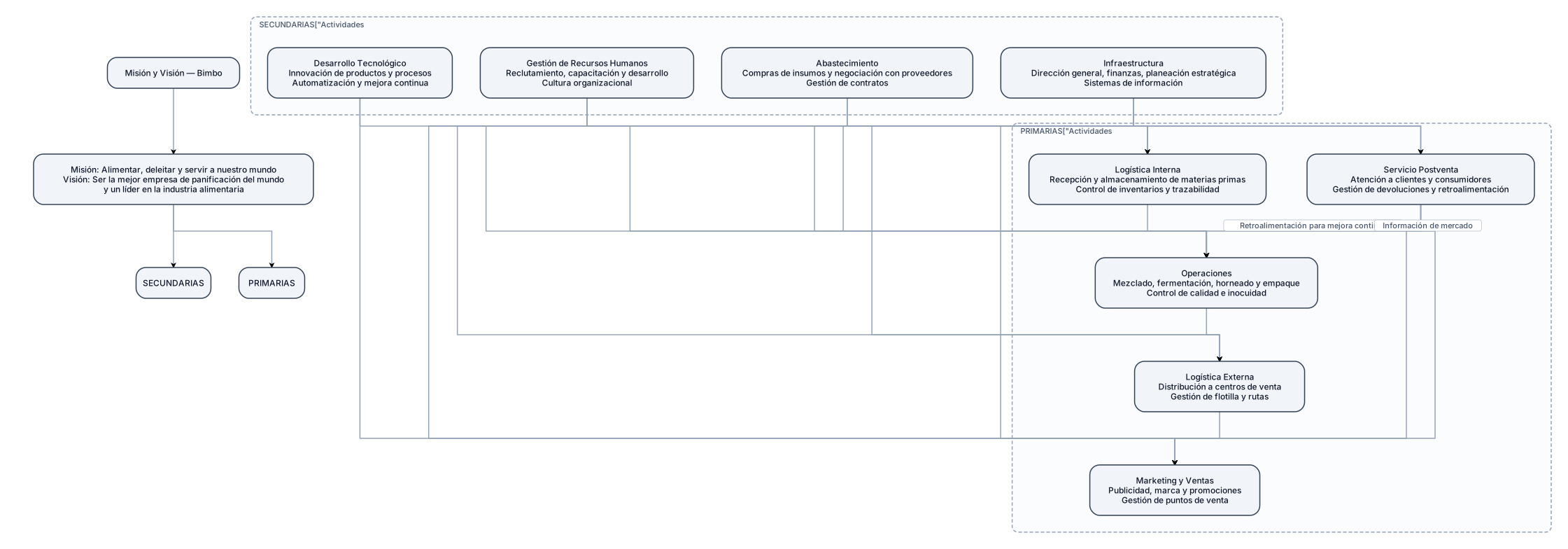
*Es un diagrama de flujo de los elementos que comprenden la cadena de valor de una organización* *INSTRUCCIONES:* - Seleccionar una organización que cuente con información disponible en línea, referente a sus procesos de bienes o servicios para poder llevar a cabo un análisis de su cadena de valor, suministro y operación así como su información general - Ejemplos: Bimbo, coca loca, Pepsi, softek - Diseñar un diagrama de flujo que incluya todos los elementos de la cadena de valor de la organización seleccionada - Se deberán describir los principales funciones que hacen cada uno de los elementos que aportan valor al producto o servicio que ofrece la organización - Incluye la misión y visión de la organización para identificar las respectivas acciones que se realizan para cumplirlas *CRITERIOS DE FONDO:* - Presenta de manera jerarquica el orden de los elementos de la cadena de valor dentro de su categoría por el tipo de actividades primarias y secundarias - Define las principales actividades que realizan cada elemento de la cadena de valor en la organización - Comprende la importancia de una cadena de valor dentro de una organización e identifica el impacto de su implementación

GENRAR UN MAPA MENTAL DE PLANEACION Y RECLUTAMIENTO DE TALENTO HUMANO CON CARACTERISTICAS, PROCESOS, CONVOCATORIAS

UN MAPA MENTAL PARA EXPLICAR LA PLANEACION Y EL RECLUTAMIENTO DE TALENTO HUMANO PERFIL DEL CARGO OCUPACIONAL, RECLUTAMIENTO, PROCESO, PLANACION
UN MAPA MENTAL PARA EXPLICAR LA PLANEACION Y EL RECLUTAMIENTO DE TALENTO HUMANO
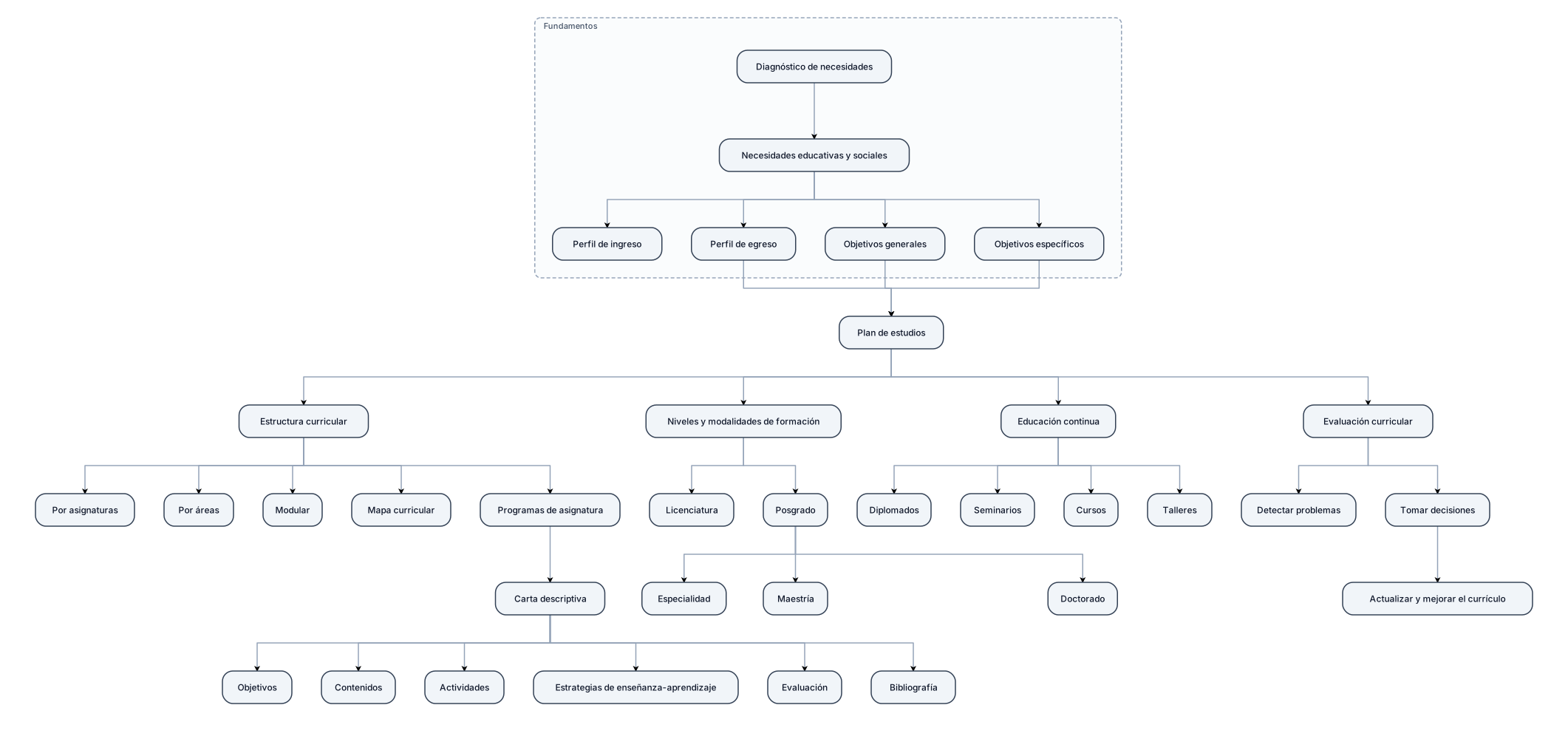
Título: Conceptos fundamentales del diseño curricular se fundamenta en → Diagnóstico de necesidades que permite identificar → Necesidades educativas y sociales y orienta → Perfil de ingreso y → Perfil de egreso y → Objetivos generales y → Objetivos específicos PERFIL DE EGRESO + OBJETIVOS orientan → Plan de estudios PLAN DE ESTUDIOS se organiza mediante → Estructura curricular que puede ser → Por asignaturas Por áreas Modular ESTRUCTURA CURRICULAR se representa mediante → Mapa curricular y se concreta en → Programas de asignatura PROGRAMA DE ASIGNATURA se desarrolla mediante → Carta descriptiva que organiza → Objetivos Contenidos Actividades Estrategias de enseñanza-aprendizaje Evaluación Bibliografía PLAN DE ESTUDIOS se implementa en diferentes niveles y modalidades de formación → Licenciatura Posgrado Especialidad Maestría Doctorado EDUCACIÓN CONTINUA puede incluir → Diplomados Seminarios Cursos Talleres TODO EL PROCESO CURRICULAR se somete a → Evaluación curricular que permite → Detectar problemas y → Tomar decisiones para → Actualizar y mejorar el currículo
![Flowchart example: ┌────────────────────────────────────────────────────────┐ │ [INICIO] Cliente solicita reserva de 'X' unidades del │ │ libro BD-07[cite: 2] en la sede](https://psvtykrtciekraoilfux.supabase.co/storage/v1/object/public/gallery-assets/freediagram/feed/c0bfc181-892e-4302-88f3-81ee9e5a8aa0.svg)
┌────────────────────────────────────────────────────────┐ │ [INICIO] Cliente solicita reserva de 'X' unidades del │ │ libro BD-07[cite: 2] en la sede elegida. │ └──────────────────────────┬─────────────────────────────┘ │ ▼ ┌────────────────────────────────────────────────────────┐ │ [EVALUACIÓN] ¿La cantidad 'X' solicitada es menor o │ │ igual a las unidades disponibles (aptas y libres)? │ └──────────────┬───────────────────────────┬─────────────┘ │ │ [SÍ] │ │ [NO] ▼ ▼ ┌────────────────────────────┐ ┌─────────────────────────────┐ │ [RUTA POSITIVA] │ │ [RUTA NEGATIVA] │ │ El sistema aprueba la │ │ El sistema rechaza la │ │ solicitud de reserva. │ │ solicitud de reserva. │ └──────────────┬─────────────┘ └───────────┬─────────────────┘ │ │ ▼ ▼ ┌────────────────────────────┐ ┌─────────────────────────────┐ │ Se crea la reserva │ │ Se notifica al cliente que │ │ vinculando cliente, sede y │ │ la cantidad solicitada │ │ producto. La unidad pasa a │ │ supera la disponibilidad │ │ estado "reservada". │ │ real en la tienda. │ └──────────────┬─────────────┘ └───────────┬─────────────────┘ │ │ └─────────────┬─────────────┘ │ ▼ ┌─────────────────────────┐ │ [FIN] │ └─────────────────────────┘

a. PROBLEMA CENTRAL: ➡️ CRISIS DEL SOFTWARE b. CAUSAS — ¿Por qué surgió la crisis? Puedes colocar estas como las raíces: Falta de metodologías y procesos adecuados. Mala gestión de los proyectos. Falta de formación en ingeniería de software. Aumento de la complejidad de los sistemas. Dificultad para coordinar equipos grandes de programadores. Problemas para estimar tiempos y costos. Falta de planificación y organización. Baja productividad de los equipos. Falta de técnicas adecuadas para garantizar la calidad. c. CONSECUENCIAS — ¿Qué efectos negativos produjo? Estas serían las ramas: Proyectos retrasados o que nunca se terminaban. Aumento de los costos de desarrollo y mantenimiento. Software de baja calidad. Software que no cumplía con los requisitos del usuario. Dificultad para modificar, depurar y mejorar el software. Uso ineficiente de los recursos. Fallas frecuentes en los sistemas. Pérdida de datos o resultados incorrectos. Mayor dificultad para mantener y evolucionar los sistemas.
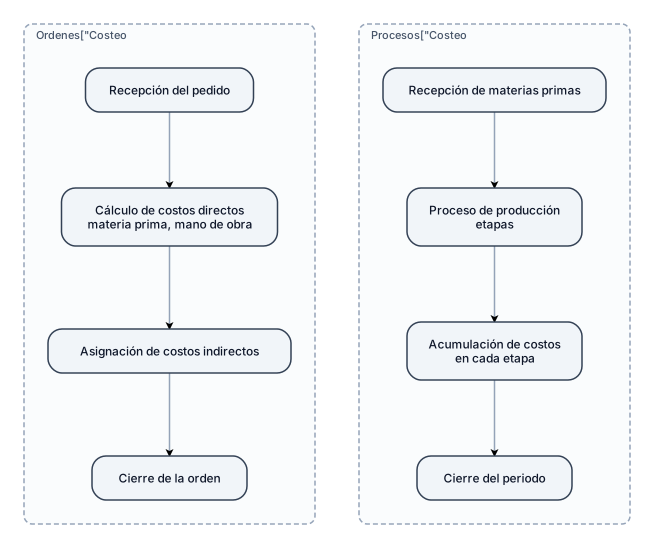
osteo por órdenes de producción: Recepción del pedido → Cálculo de costos directos (materia prima, mano de obra) → Asignación de costos indirectos → Cierre de la orden. Costeo por procesos: Recepción de materias primas → Proceso de producción (etapas) → Acumulación de costos en cada etapa → Cierre del periodo.
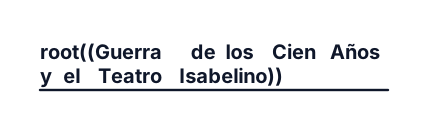
mapa mental ilsutrado de influencias de la guerra de100 Years en el teatro isabelino, abordando tematicas, dramaturgos, obras, influencias directas e indirectas reflejadas en el teatro ingles
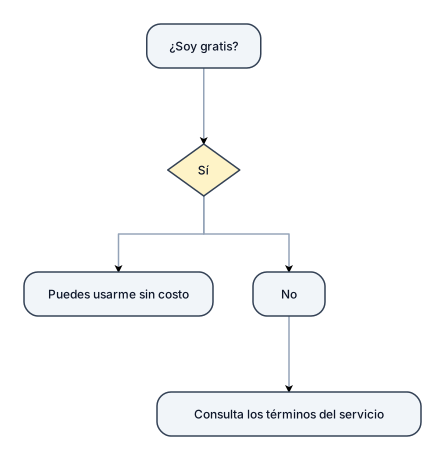
hola eres gratis ?
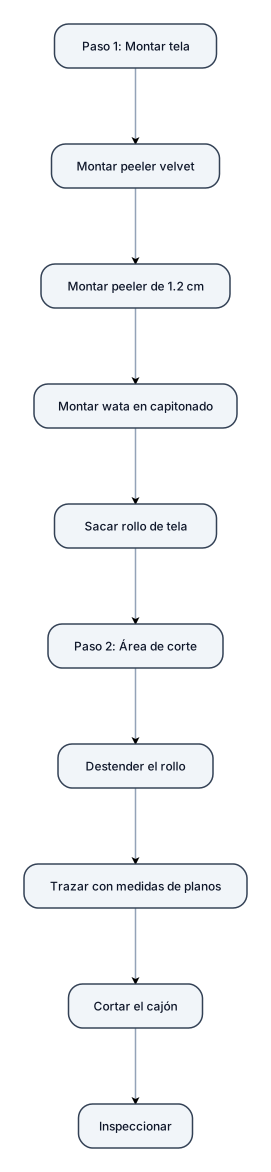
Sobre el proceso de la fabricación de la funda innofa Paso 1 es montar la tela , el peeler velvet, el peler de 1.2cm y la wata en capitonado se saca el rollo de tela . Paso 2 pasa al Área de corte se destienden el rollo se traza con las medidas establecidas en los planos. Se corta el cajon se inspeccióna
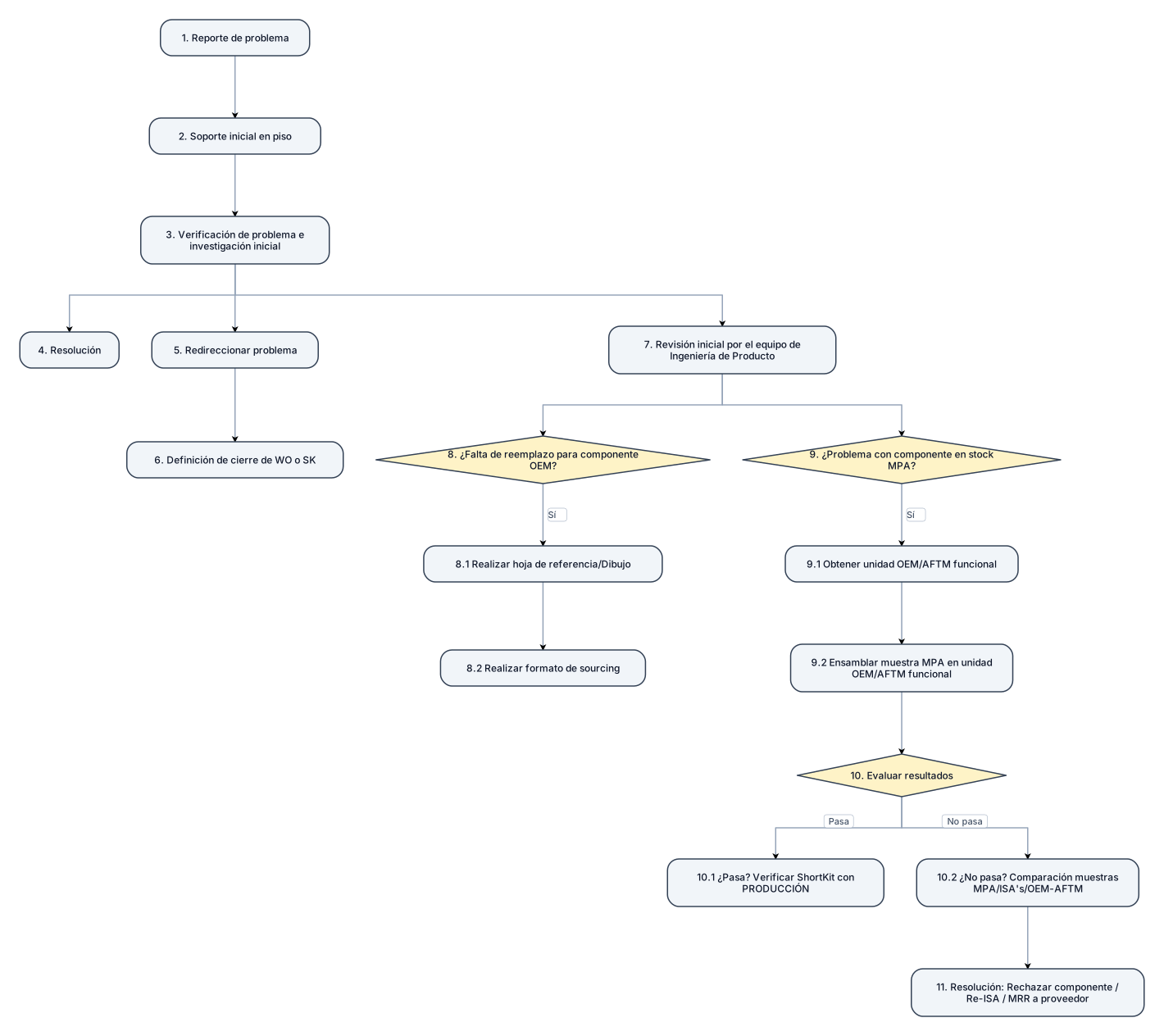
Seguimiento de problemas de componentes reportados por PRODUCCIÓN BB 1 Reporte de problema 2 Soporte inicial en piso 3 Verificación de problema e investigación inicial 4 Resolución 5 Redireccionar problema 6 Definición de cierre de WO o SK 7 Revisión inicial por el equipo de Ingenieria de Producto 8 Si el problema es falta de reemplazo para componente OEM: Evaluar necesidad para realizar proceso de sourcing 8.1 Realizar hoja de referencia/Dibujo 8.2 Realizar formato de sourcing 9 Si el problema es con un componente en stock mpa: Realizar evaluación y seguimiento 9.1 Obtener un unidad OEM/AFTM funcional 9.2 Ensamblar muestra mpa(componente) en la unidad OEM/AFTM funcional 10 Evaluar resultados 10.1 Si pasa: Verificar ShortKit con equipo de PRODUCCIÓN 10.2 No pasa: Comparación de muestras mpa/ISA's/Muestra OEM-AFTM 11 Resolución en caso de encontrar defectos en el componente actual: Reachazar componente/Re-ISA/MRR a proveedor
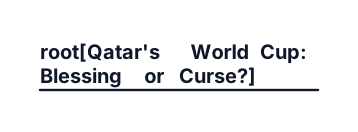
Create a simple school mind map titled “Qatar’s World Cup: Blessing or Curse?” Put the title in the center. Create exactly 6 main branches: GLOBAL, INTERNATIONAL, REGIONAL, NATIONAL, LOCAL, and COMMUNITY. Under each branch, add short, clear points connecting that level of analysis to the Qatar 2022 FIFA World Cup. Use only the information from these sources: Human Rights Watch – “No Dignity and Pride in World Cup Labor Abuses”; Bloomberg – “Football World Cup to Add Up to $17 Billion to Qatari Economy”; and Gulf Times – “Qatar 2022 Will Have a Positive Impact in the Region: Desailly.” Include the main ideas of labor abuses, migrant workers, economic benefits, Qatar’s development, regional impact, international attention, and effects on local communities. Keep each point very short (5–10 words). Make the mind map clean, organized, easy to understand, and appropriate for a high school Global Politics assignment. Do not add unrelated information.
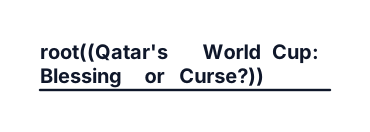
Create a clear and organized mind map titled “Qatar’s World Cup: Blessing or Curse?”. Put the title in the center and create six main branches: Global, International, Regional, National, Local, and Community. Global: The World Cup attracted worldwide attention and raised global discussions about human rights, labor conditions, and the economic impact of major sporting events. International: Qatar’s World Cup involved international organizations, countries, FIFA, international media, and discussions about migrant workers and human rights. Regional: The World Cup affected Qatar and the wider Middle East region by increasing tourism, investment, international attention, and regional influence. National: The event had a major impact on Qatar’s economy, infrastructure, tourism, and international reputation. Sources also discussed billions of dollars being added to the Qatari economy. Local: The construction and organization of the World Cup affected workers, businesses, infrastructure, transportation, and communities within Qatar. Community: The World Cup affected groups of people such as migrant workers, Qatari citizens, football fans, and local communities. Human Rights Watch reported concerns about labor abuses, while other sources highlighted economic and regional benefits. Use short phrases instead of long paragraphs. Make the six levels visually distinct and show connections between economic benefits, human rights concerns, labor conditions, international attention, and Qatar’s development. Keep the design simple enough for a student to copy into a notebook.
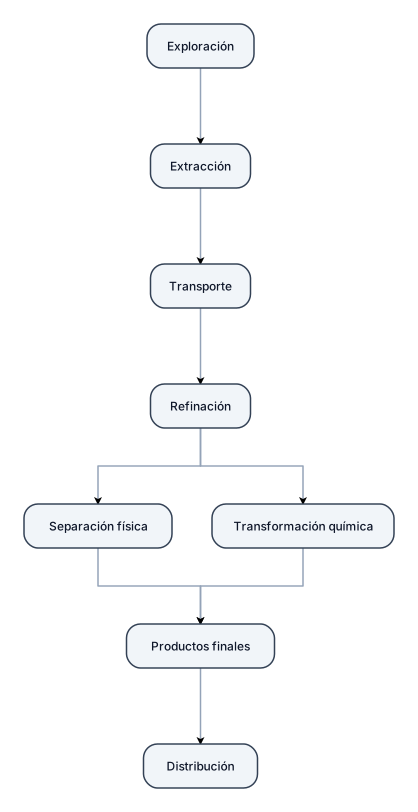
Un diagrama de flujo para un proceso mineroExploración ↓ Extracción ↓ Transporte ↓ Refinación ├─→ Separación física └─→ Transformación química ↓ Productos finales ↓ Distribución

Crear diagrama de flujo para proceso de estudio de estabilidad Plan Anual de Estabilidad 2 ↓ 3 2. Emisión de Protocolos (Veeva Vault / GBS) 4 ↓ 5 3. Ingreso de muestras a estabilidad 6 ↓ 7 4. Retiro de muestras 8 ↓ 9 5. Generación de hojas de trabajo 10 ↓ 11 6. Aprobación QA 12 ↓ 13 7. Análisis de laboratorio 14 ↓ 15 8. Generación de resultados 16 ↓ 17 9. Evaluación de tendencias 18 ↓ 19 10. Aprobación analítica 20 ↓ 21 11. Emisión de CoA 22 ↓ 23 12. Actualización de base de datos 24 ↓ 25 13. Reporte final 26 ↓ 27 14. Archivo documental
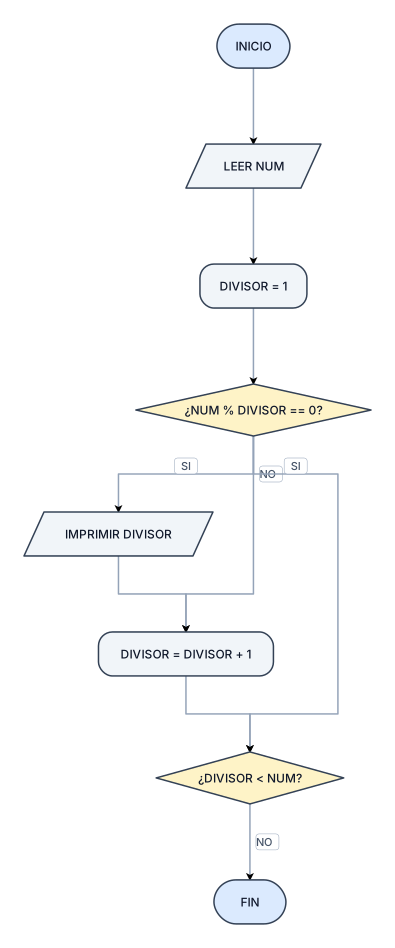
Haz un diagrama de flujo sencillo de pseudolenguaje, como un ejercicio realizado por un estudiante que está iniciando en algoritmos. Utiliza las figuras básicas: óvalo para INICIO y FIN, paralelogramo para LEER e IMPRIMIR, rectángulos para procesos y rombos para condiciones. Usa flechas sencillas y muestra claramente los ciclos y las decisiones SI y NO. No agregues diseño moderno ni elementos innecesarios. Algoritmo: Leer un número e indicar por cuántos números es divisible. INICIO ↓ LEER NUM ↓ DIVISOR = 1 ↓ ¿NUM % DIVISOR == 0? SI: IMPRIMIR DIVISOR ↓ DIVISOR = DIVISOR + 1 NO: DIVISOR = DIVISOR + 1 Después de ambas opciones: ¿DIVISOR < NUM? SI: regresar a: ¿NUM % DIVISOR == 0? NO: FIN No incluyas el número 40 como ejemplo dentro del diagrama. El algoritmo debe funcionar para cualquier número que se introduzca. Mantén el uso del operador % para obtener el residuo, tal como se está enseñando en clase.
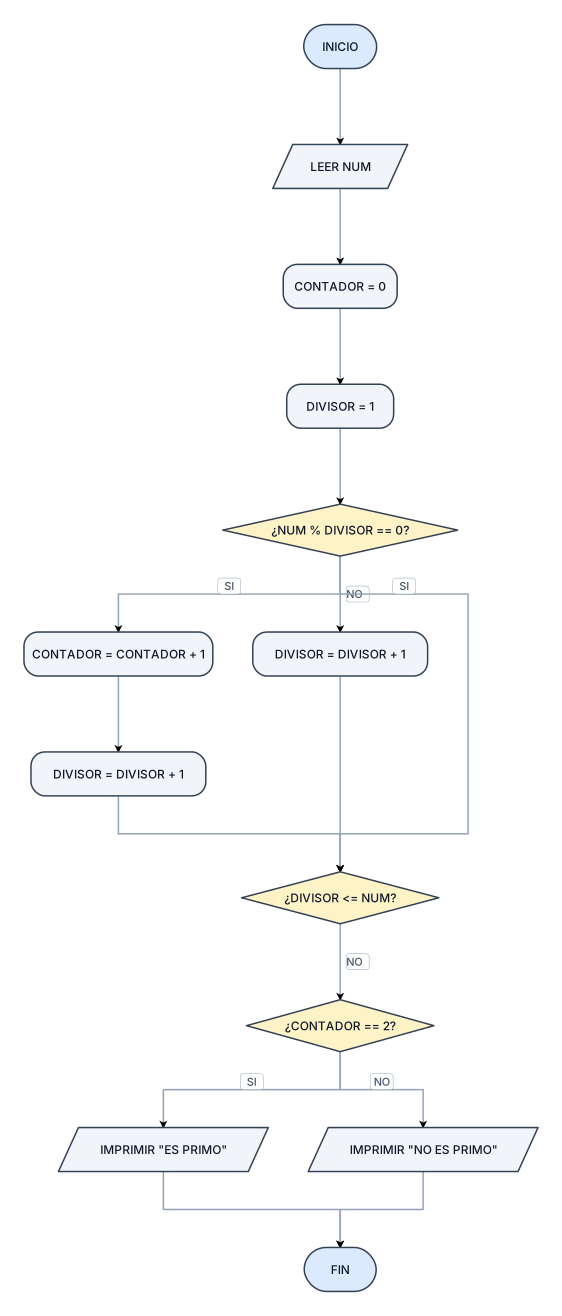
Haz un diagrama de flujo sencillo de pseudolenguaje, para un estudiante que está iniciando en algoritmos. Quiero que tenga un estilo parecido a un ejercicio de clase, sencillo y sin diseño profesional o decorativo. Utiliza óvalos para INICIO y FIN, paralelogramos para LEER e IMPRIMIR, rectángulos para procesos y rombos para las condiciones. Las decisiones deben tener claramente las salidas SI y NO. Usa flechas para mostrar el ciclo y regresar al paso correspondiente. Algoritmo: Leer un número e indicar si es primo o no. INICIO ↓ LEER NUM ↓ CONTADOR = 0 DIVISOR = 1 ↓ ¿NUM % DIVISOR == 0? SI: CONTADOR = CONTADOR + 1 ↓ DIVISOR = DIVISOR + 1 NO: DIVISOR = DIVISOR + 1 Después de ambas opciones llegar a: ¿DIVISOR <= NUM? SI: regresar a la condición: ¿NUM % DIVISOR == 0? NO: continuar con: ¿CONTADOR == 2? SI: IMPRIMIR “ES PRIMO” NO: IMPRIMIR “NO ES PRIMO” Ambas opciones deben terminar en FIN. No utilices FOR, WHILE, código de programación ni palabras que no aparezcan en este algoritmo. Mantén exactamente la lógica indicada y utiliza las palabras SI y NO en los rombos, como en un ejercicio básico de clase. ⚠️ Una cosa importante En este segundo, el DIVISOR = DIVISOR + 1 debe quedar después de revisar si divide o no, y las dos ramas deben regresar a la decisión ¿DIVISOR <= NUM?.
Focused examples and prompt ideas
Start with the complete visitor wall above, then use these focused collections when you want a narrower subject and more prompt context.
The first curated collection is being prepared.