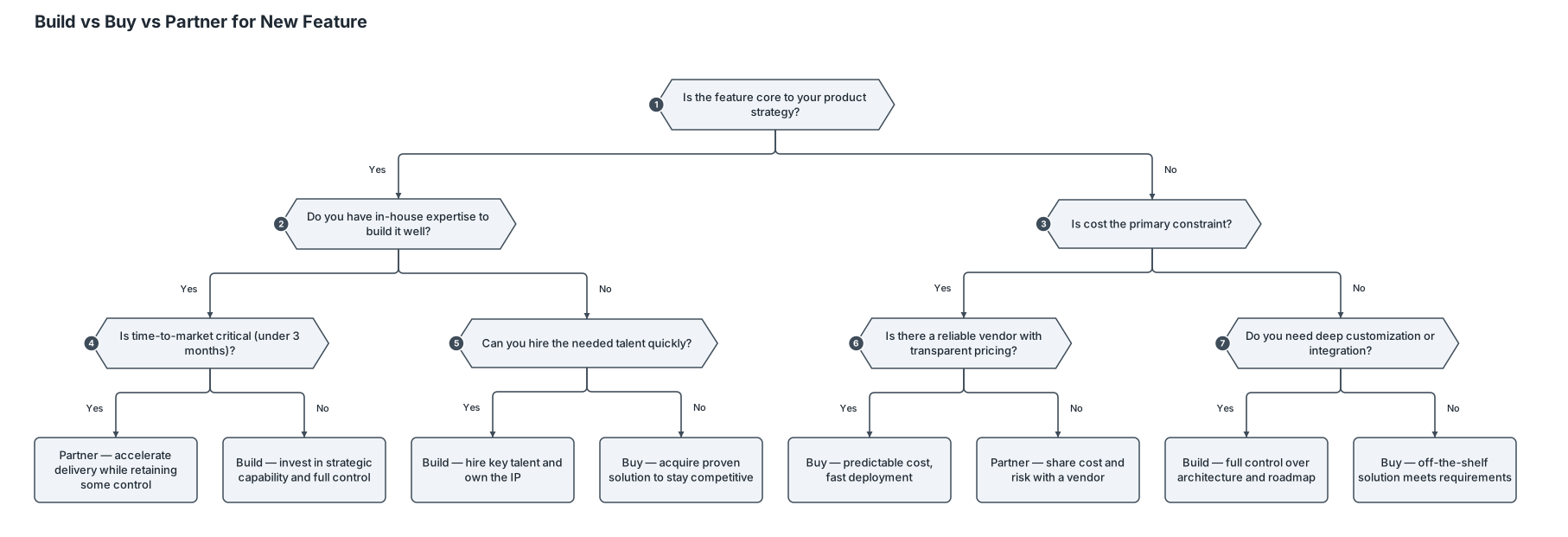
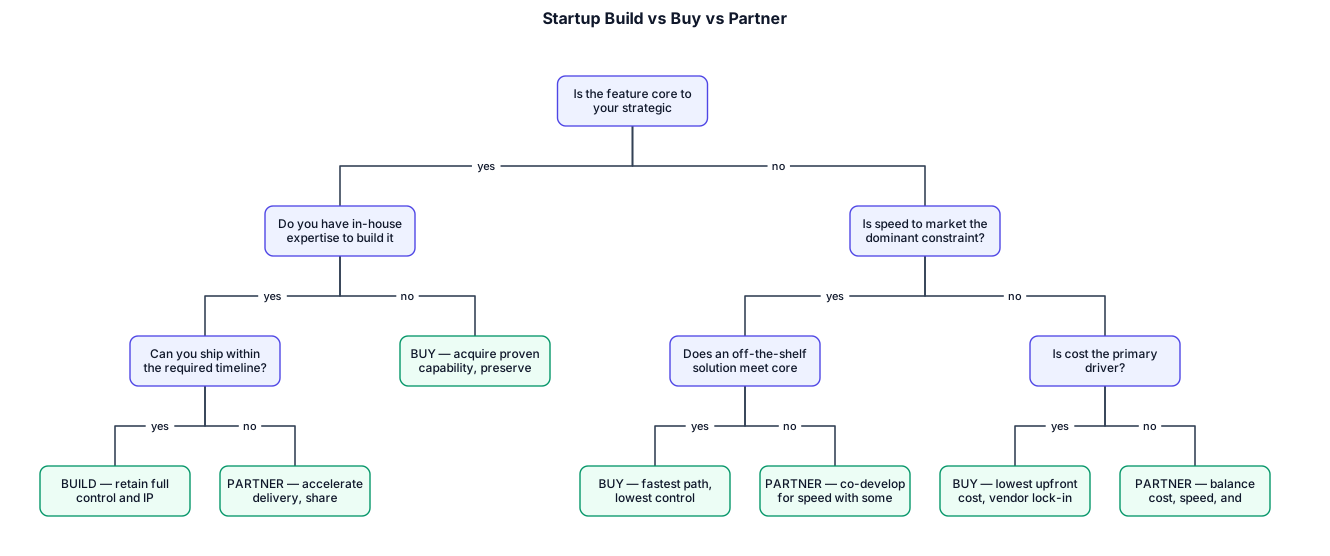
A decision tree for whether a startup should build, buy, or partner for a new feature, evaluating cost, speed, and strategic control
NODE ARCHIVE · REAL DIAGRAM BRIEFS
Diagram Examples from Real Visitor Prompts
Browse eligible diagrams shared by FreeDiagram visitors, inspect the exact prompts, and build your own version.
Browse 3261 real creationsCOMMUNITY OUTPUTS · EXACT PROMPTS
Decision Tree
Showing 1–18 of 18. No stock examples or system defaults. Choose a tool, study a real result, then reopen its prompt as your starting point.
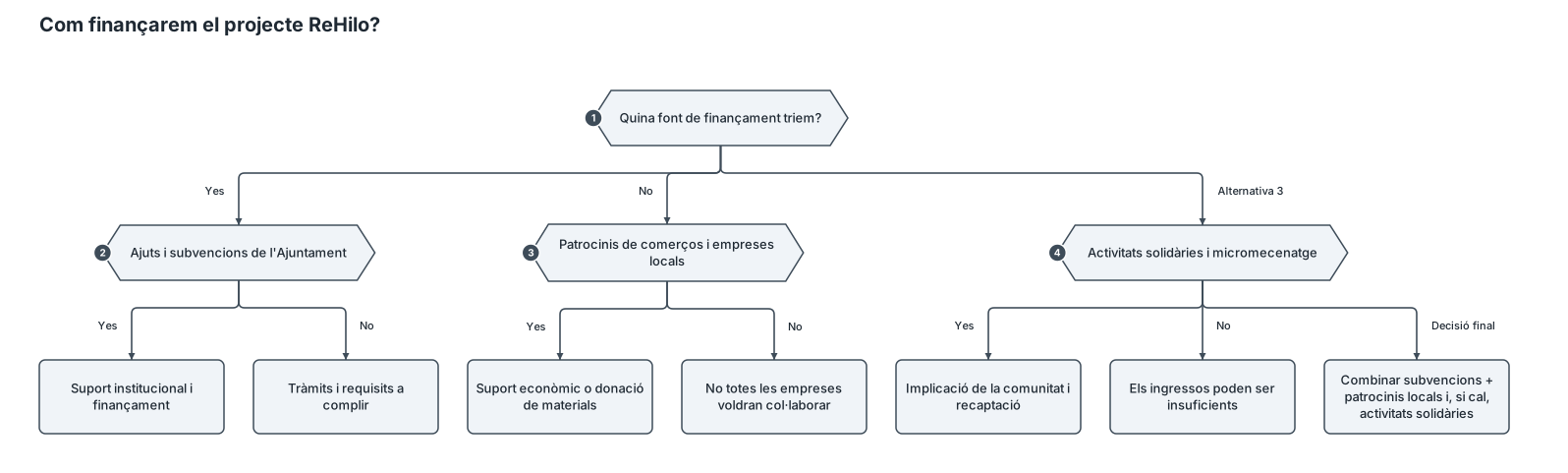
Crea un arbre de decisions visual, clar i ben organitzat en català sobre el projecte ReHilo, una desfilada de moda sostenible que uneix joves i persones grans mitjançant la reutilització de roba. **Pregunta principal:** Com finançarem el projecte? Divideix l’arbre en tres alternatives: 1. **Ajuts i subvencions de l’Ajuntament** - Avantatges: suport institucional i possibilitat d’obtenir finançament. - Inconvenients: tràmits i requisits per complir. 2. **Patrocinis de comerços i empreses locals** - Avantatges: suport econòmic o donació de materials. - Inconvenients: no totes les empreses voldran col·laborar. 3. **Activitats solidàries i micromecenatge** - Avantatges: implicació de la comunitat i recaptació de diners. - Inconvenients: els ingressos poden ser insuficients. **Decisió final recomanada:** combinar les subvencions de l’Ajuntament amb els patrocinis locals i, si cal, organitzar activitats solidàries. Afegeix connectors entre les opcions i la decisió final. Utilitza un disseny modern, sostenible i professional, amb tons verds i beix, icones de diners, comunitat i sostenibilitat. El text ha de ser breu, llegible i adequat per a un treball escolar.
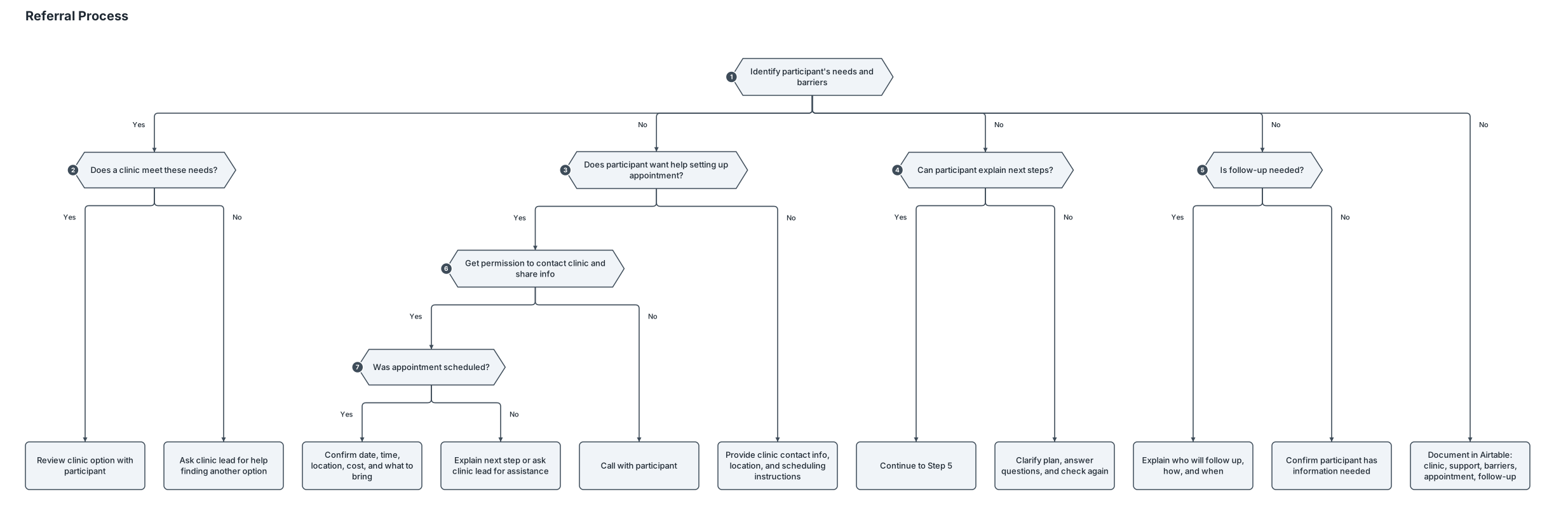
BEGIN REFERRAL │ ▼ 1. Identify the participant’s needs and barriers Consider cost/insurance, location, transportation, availability, language, accessibility, and scheduling needs. │ ▼ 2. Using the referral directory, is there a clinic that meets these needs? │ ├── YES → Review the clinic option with the participant. │ └── NO → Ask the clinic lead for help finding another option. Then return to Step 2. │ ▼ 3. Does the participant want help setting up the appointment? │ ├── YES → Get permission to contact the clinic and share the necessary │ information → Call with the participant. │ │ │ ▼ │ Was the appointment scheduled? │ ├── YES → Confirm the date, time, location, cost, │ │ and what the participant should bring. │ └── NO → Explain the next step or ask the clinic lead │ for assistance. │ └── NO → Provide the clinic’s contact information, location, and instructions for scheduling independently. │ ▼ 4. Can the participant explain what they need to do next? │ ├── YES → Continue to Step 5. │ └── NO → Clarify the plan, answer questions, and check again. │ ▼ 5. Is follow-up needed? │ ├── YES → Explain who will follow up, how, and when. │ └── NO → Confirm that the participant has the information needed. │ ▼ 6. Document the clinic selected, support provided, barriers, appointment details, and follow-up plan in Airtable. │ ▼ END
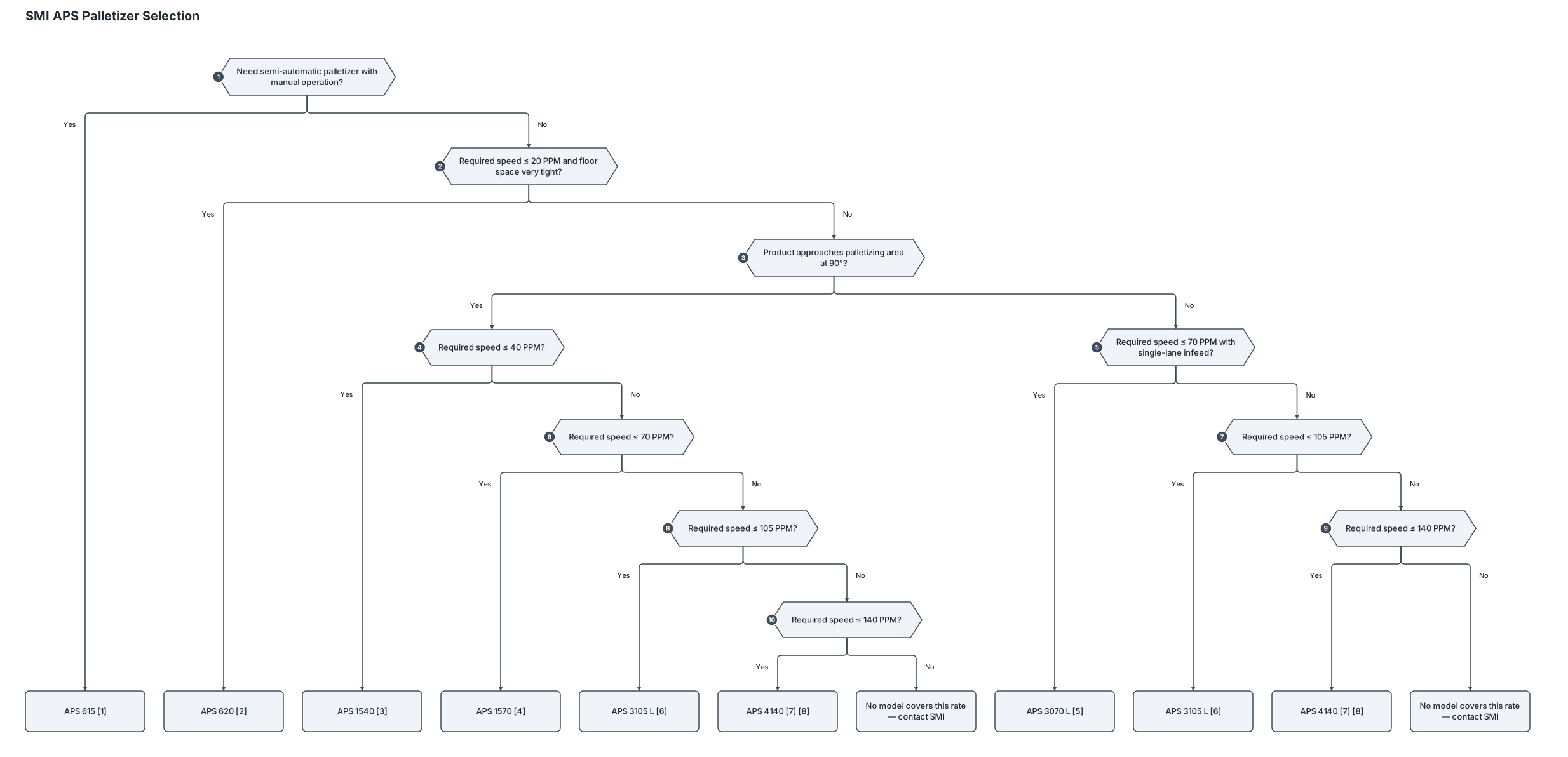
- Do you need a semi-automatic palletizer with manual operation (small winery, craft brewery, manually loaded line, limited budget)? - YES → APS 615 [1] - NO → go to 2 - Is your required speed 20 PPM or less (60 layers/hour) and floor space very tight? - YES → APS 620 [2] - NO → go to 3 - Does your end-of-line layout allow the product to approach the palletizing area at 90°? - YES → go to 4 - NO (palletizer must sit in-line with the conveyor flow) → go to 6 - Is your required speed 40 PPM or less (120 layers/hour)? - YES → APS 1540 (90° batch layer-forming infeed) [3] - NO → go to 5 - Is your required speed 70 PPM or less (200 layers/hour)? - YES → APS 1570 (90° batch infeed, rotation by pneumatic contrast or motorized manipulator) [4] - NO → go to 6 - Is your required speed 70 PPM or less (200 layers/hour) with a single-lane infeed? - YES → APS 3070 L (in-line continuous layer pre-forming, one manipulator, most compact end-of-line footprint) [5] - NO → go to 7 - Is your required speed 105 PPM or less (300 layers/hour)? - YES → APS 3105 L (in-line continuous pre-forming, two manipulators, double-lane infeed) [6] - NO → go to 8 - Is your required speed 140 PPM or less (400 layers/hour)? - YES → APS 4140 (two-column, in-line continuous layer pre-formation, highest speed of the range) [7] [8] - NO → no model in the documented APS series covers this rate; contact SMI for a larger system.
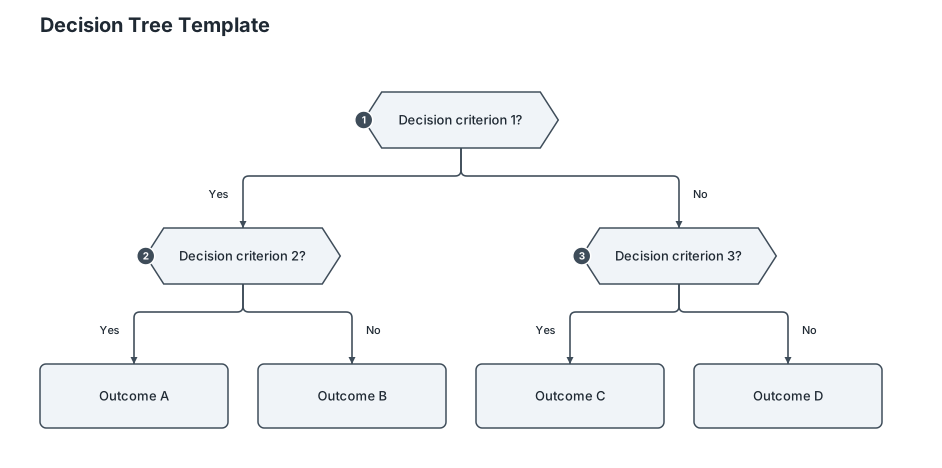
A decision tree template that I can edit myself
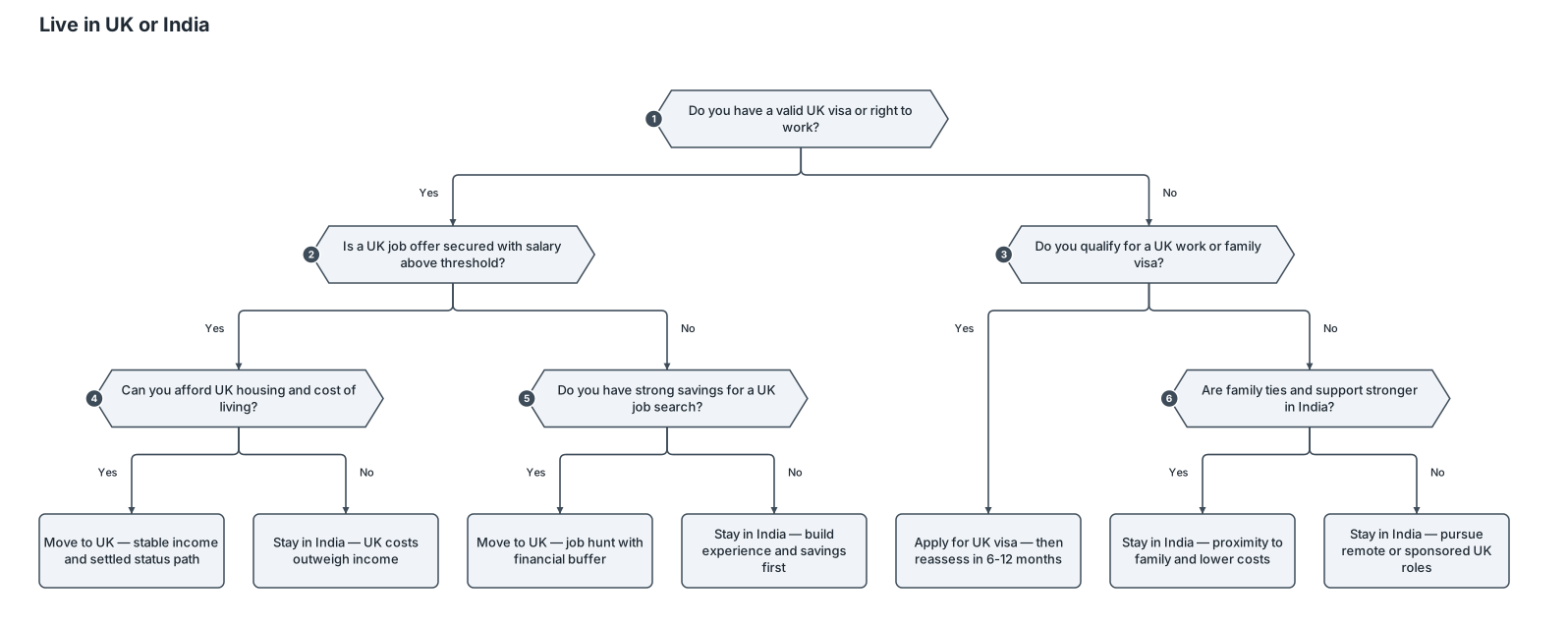
A decision tree for whether my family should live in UK or in India
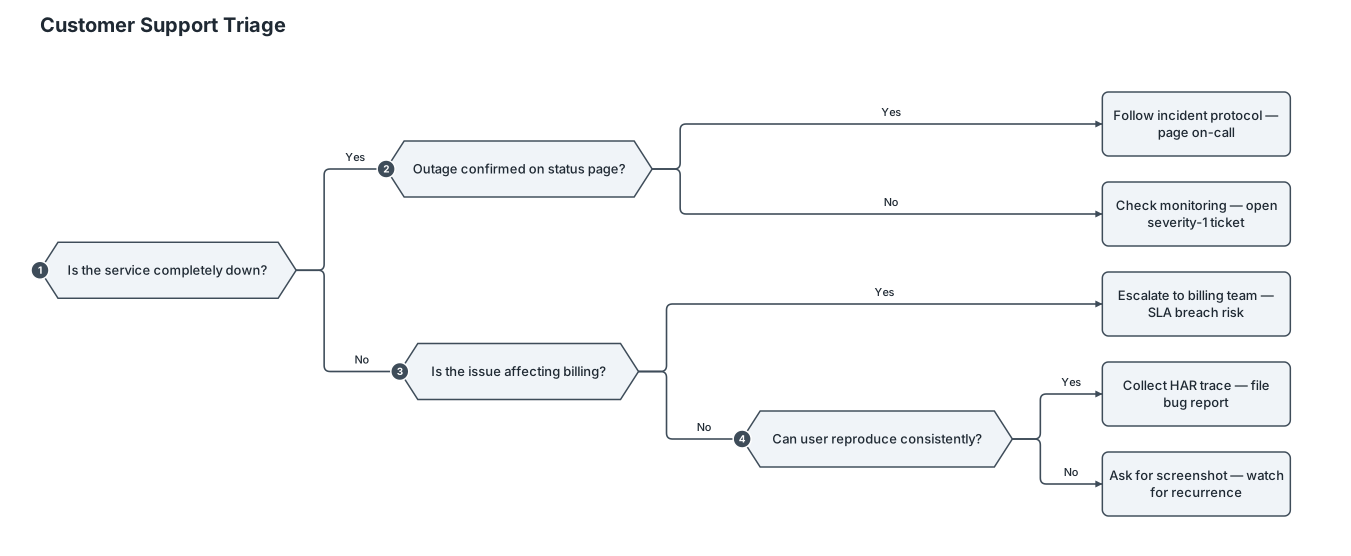
Example of decision tree left to right with terminal nodes.
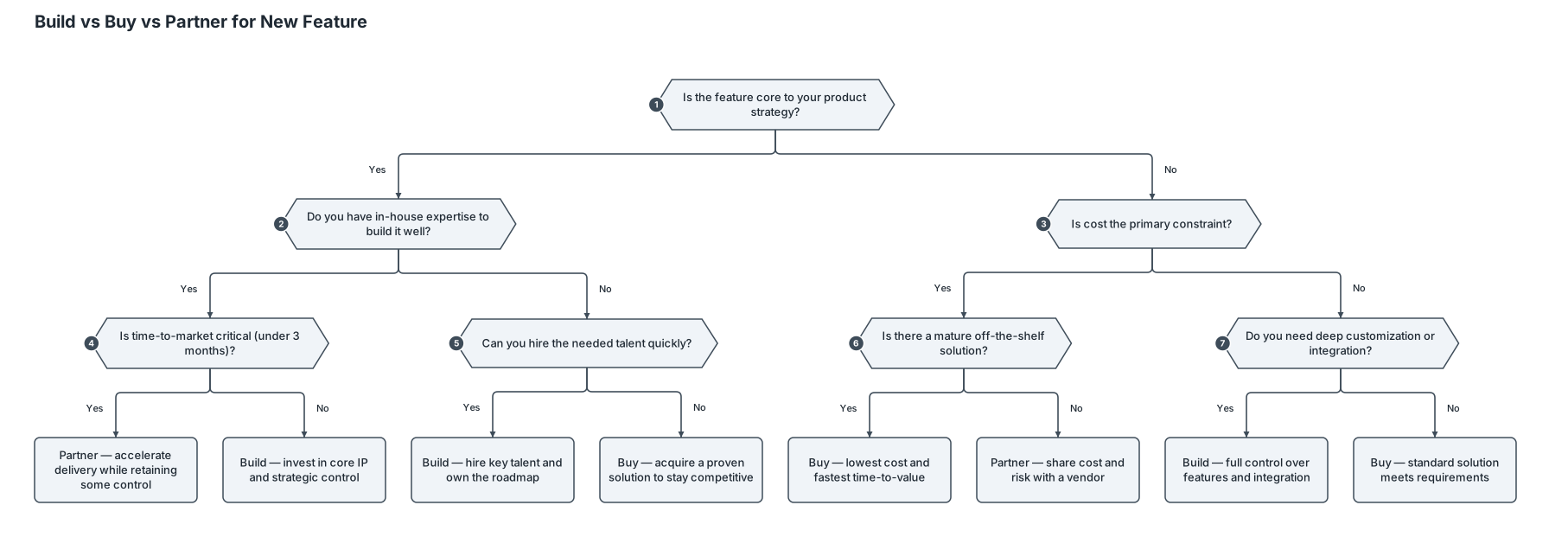
A decision tree for whether a startup should build, buy, or partner for a new feature, evaluating cost, speed, and strategic control
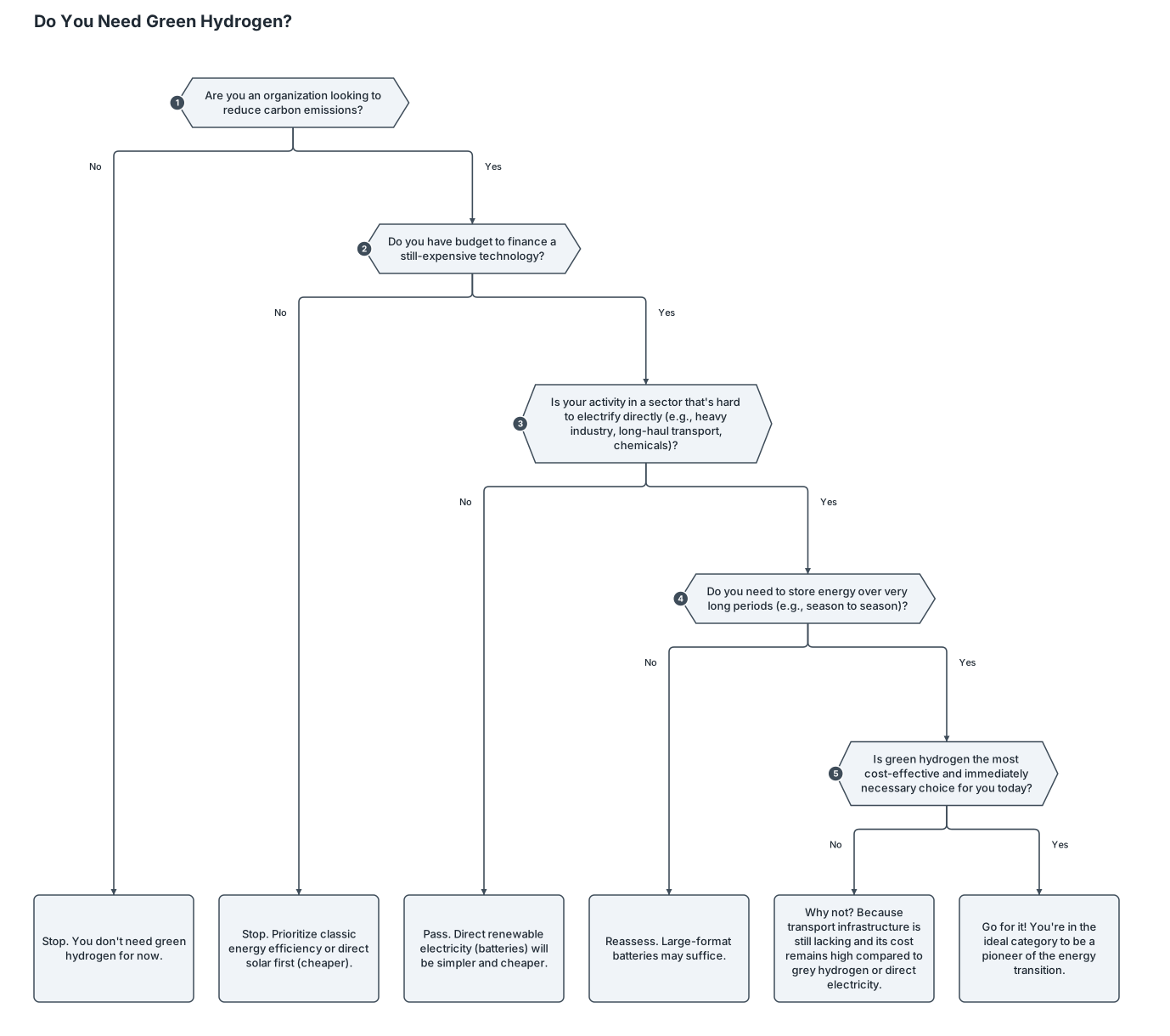
1. Es-tu une organisation qui cherche à réduire ses émissions de carbone ? NON \rightarrow Stop. Tu n'as pas besoin d'hydrogène vert pour l'instant. OUI \rightarrow Question 2 2. As-tu un budget disponible pour financer une technologie encore coûteuse ? NON \rightarrow Stop. Privilégie d'abord l'efficacité énergétique classique ou le solaire direct (moins cher). OUI \rightarrow Question 3 3. Ton activité fait-elle partie d'un secteur difficile à électrifier directement (ex: industrie lourde, transports longs, chimie) ? NON \rightarrow Passe ton chemin. L'électricité renouvelable directe (batteries) sera plus simple et moins chère. OUI \rightarrow Question 4 4. As-tu besoin d'un moyen de stocker de l'énergie sur de très longues périodes (ex: d'une saison à l'autre) ? NON \rightarrow Réévalue. Des batteries grand format peuvent suffire. OUI \rightarrow Question 5 5. L'hydrogène vert est-il le choix le plus rentable et immédiatement nécessaire pour toi aujourd'hui ? NON \rightarrow Pourquoi ? Parce qu'il manque encore d'infrastructures de transport et que son coût reste élevé comparé à l'hydrogène gris ou à l'électricité directe. OUI \rightarrow Fonce ! Tu es dans la catégorie idéale pour être un pionnier de la transition énergétique. English version
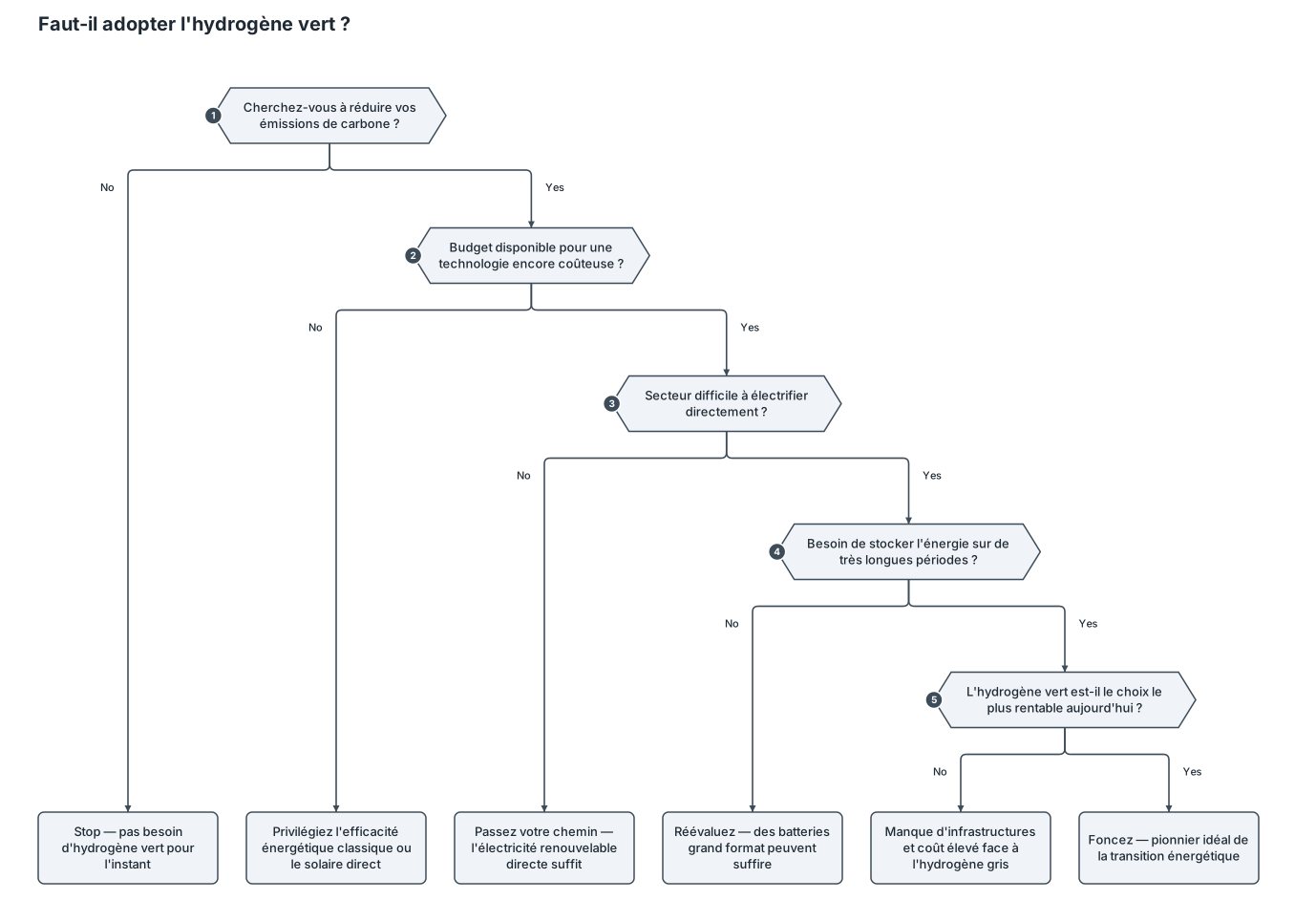
1. Es-tu une organisation qui cherche à réduire ses émissions de carbone ? NON \rightarrow Stop. Tu n'as pas besoin d'hydrogène vert pour l'instant. OUI \rightarrow Question 2 2. As-tu un budget disponible pour financer une technologie encore coûteuse ? NON \rightarrow Stop. Privilégie d'abord l'efficacité énergétique classique ou le solaire direct (moins cher). OUI \rightarrow Question 3 3. Ton activité fait-elle partie d'un secteur difficile à électrifier directement (ex: industrie lourde, transports longs, chimie) ? NON \rightarrow Passe ton chemin. L'électricité renouvelable directe (batteries) sera plus simple et moins chère. OUI \rightarrow Question 4 4. As-tu besoin d'un moyen de stocker de l'énergie sur de très longues périodes (ex: d'une saison à l'autre) ? NON \rightarrow Réévalue. Des batteries grand format peuvent suffire. OUI \rightarrow Question 5 5. L'hydrogène vert est-il le choix le plus rentable et immédiatement nécessaire pour toi aujourd'hui ? NON \rightarrow Pourquoi ? Parce qu'il manque encore d'infrastructures de transport et que son coût reste élevé comparé à l'hydrogène gris ou à l'électricité directe. OUI \rightarrow Fonce ! Tu es dans la catégorie idéale pour être un pionnier de la transition énergétique.
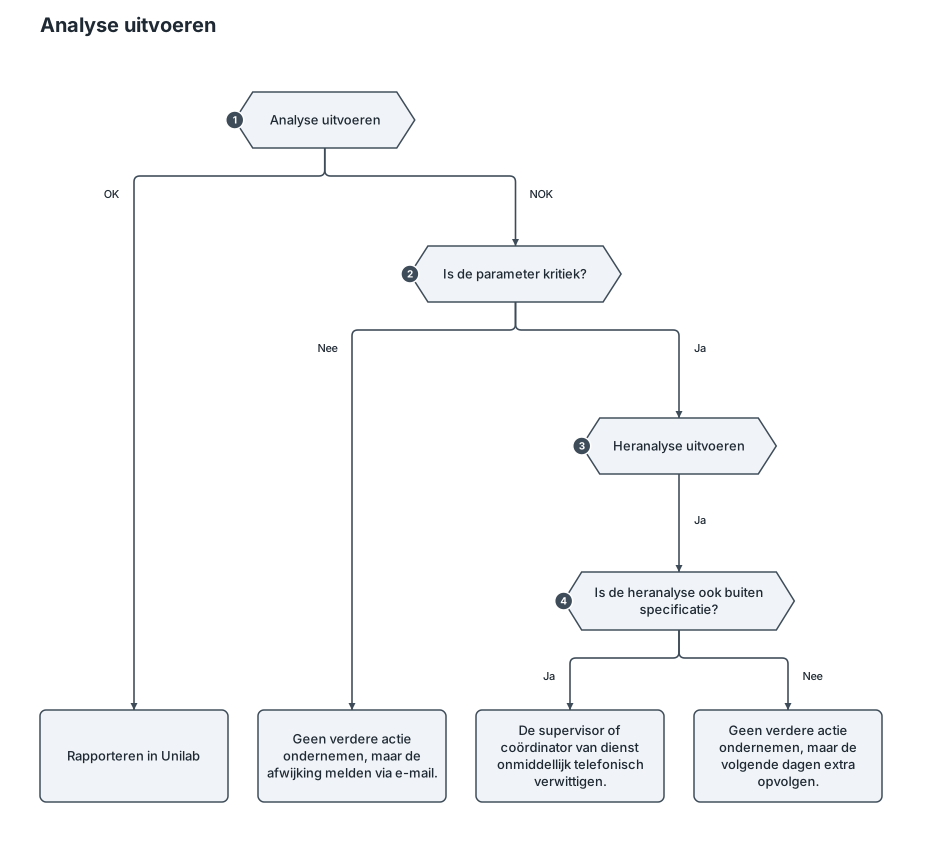
All text should stay the same: ┌──────────────────────────┐ │ Analyse uitvoeren │ └────────────┬─────────────┘ │ ┌──────┴──────┐ │ │ OK NOK │ │ ▼ ▼ ┌──────────────┐ ┌──────────────────────┐ │ Rapporteren │ │ Is de parameter │ │ in Unilab │ │ kritiek? │ └──────────────┘ └──────────┬───────────┘ │ ┌─────────┴─────────┐ │ │ Nee Ja │ │ ▼ ▼ ┌──────────────────────┐ ┌──────────────────┐ │ Geen verdere actie │ │ Heranalyse │ │ ondernemen, maar de │ │ uitvoeren │ │ afwijking melden via │ └────────┬─────────┘ │ e-mail. │ │ └──────────────────────┘ ▼ ┌──────────────────────┐ │ Is de heranalyse ook │ │ buiten specificatie? │ └──────────┬───────────┘ │ ┌──────────┴──────────┐ │ │ Ja Nee │ │ ▼ ▼ ┌─────────────────────┐ ┌──────────────────────┐ │ De supervisor of │ │ Geen verdere actie │ │ coördinator van │ │ ondernemen, maar de │ │ dienst onmiddellijk │ │ volgende dagen extra │ │ telefonisch │ │ opvolgen. │ │ verwittigen. │ └──────────────────────┘ └─────────────────────┘
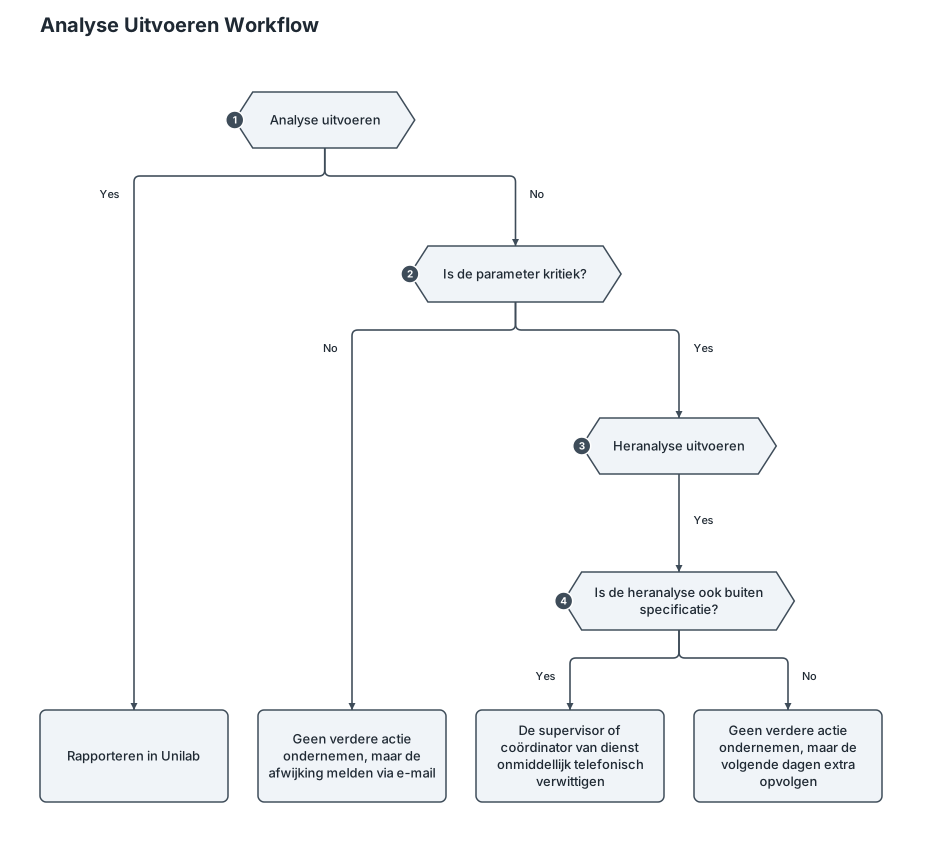
┌──────────────────────────┐ │ Analyse uitvoeren │ └────────────┬─────────────┘ │ ┌──────┴──────┐ │ │ OK NOK │ │ ▼ ▼ ┌──────────────┐ ┌──────────────────────┐ │ Rapporteren │ │ Is de parameter │ │ in Unilab │ │ kritiek? │ └──────────────┘ └──────────┬───────────┘ │ ┌─────────┴─────────┐ │ │ Nee Ja │ │ ▼ ▼ ┌──────────────────────┐ ┌──────────────────┐ │ Geen verdere actie │ │ Heranalyse │ │ ondernemen, maar de │ │ uitvoeren │ │ afwijking melden via │ └────────┬─────────┘ │ e-mail. │ │ └──────────────────────┘ ▼ ┌──────────────────────┐ │ Is de heranalyse ook │ │ buiten specificatie? │ └──────────┬───────────┘ │ ┌──────────┴──────────┐ │ │ Ja Nee │ │ ▼ ▼ ┌─────────────────────┐ ┌──────────────────────┐ │ De supervisor of │ │ Geen verdere actie │ │ coördinator van │ │ ondernemen, maar de │ │ dienst onmiddellijk │ │ volgende dagen extra │ │ telefonisch │ │ opvolgen. │ │ verwittigen. │ └──────────────────────┘ └─────────────────────┘
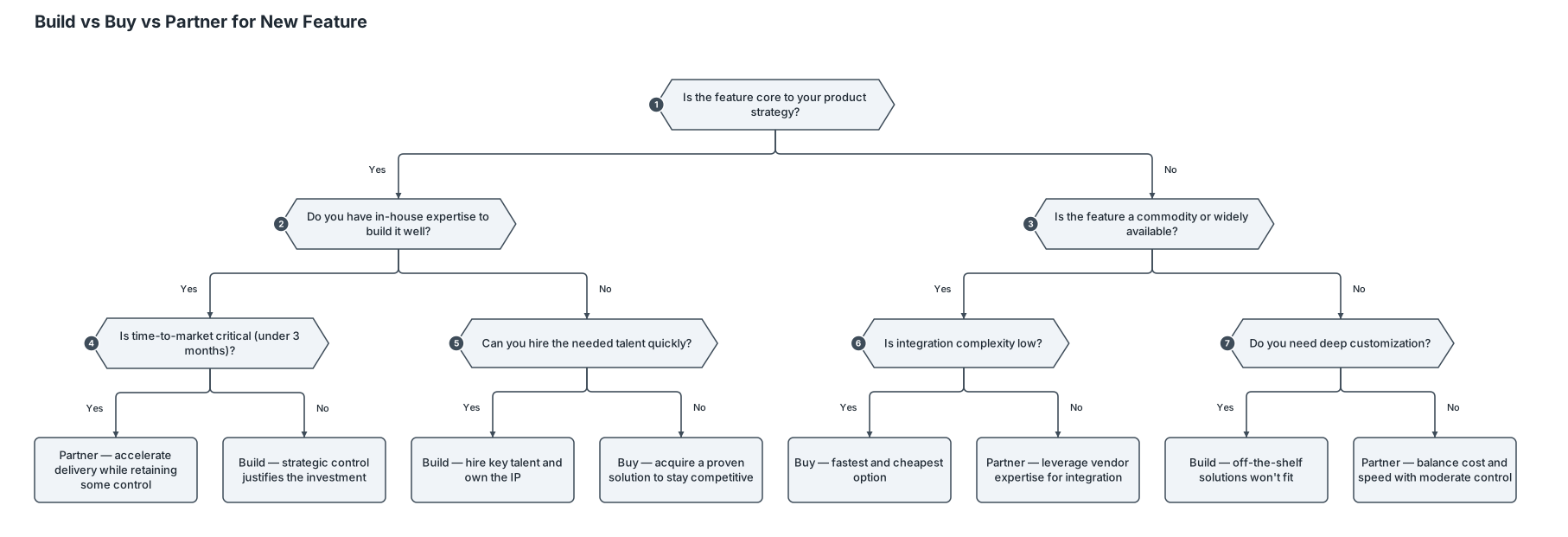
A decision tree for whether a startup should build, buy, or partner for a new feature, evaluating cost, speed, and strategic control
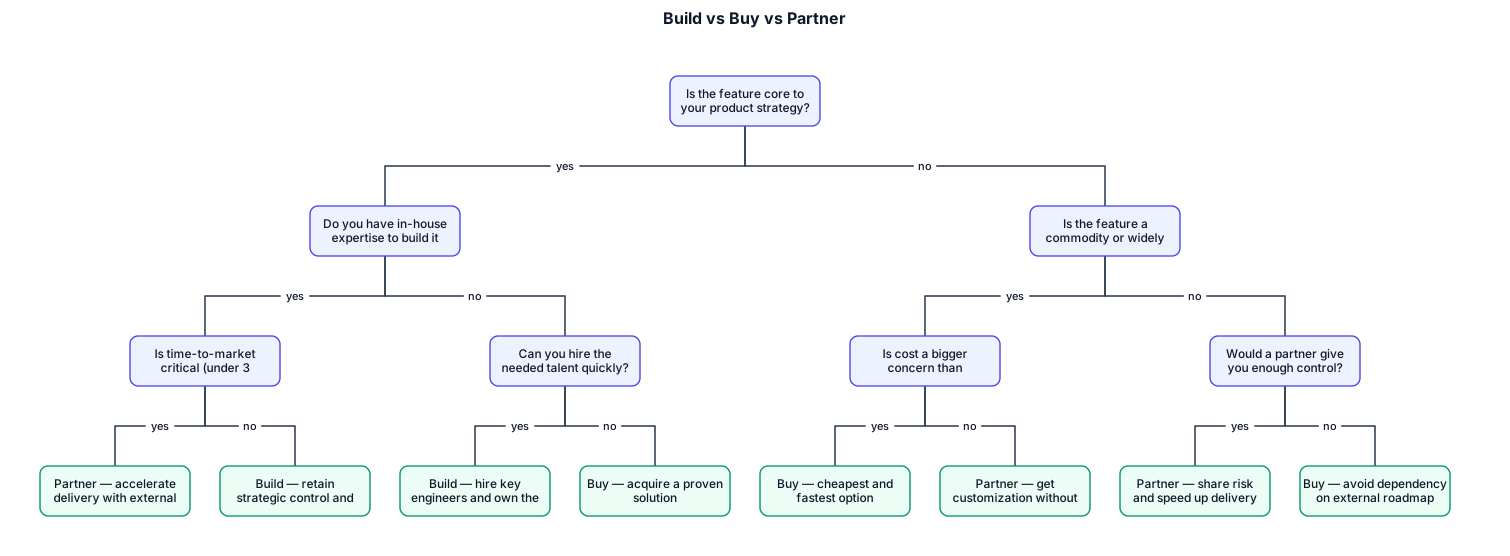
A decision tree for whether a startup should build, buy, or partner for a new feature, evaluating cost, speed, and strategic control
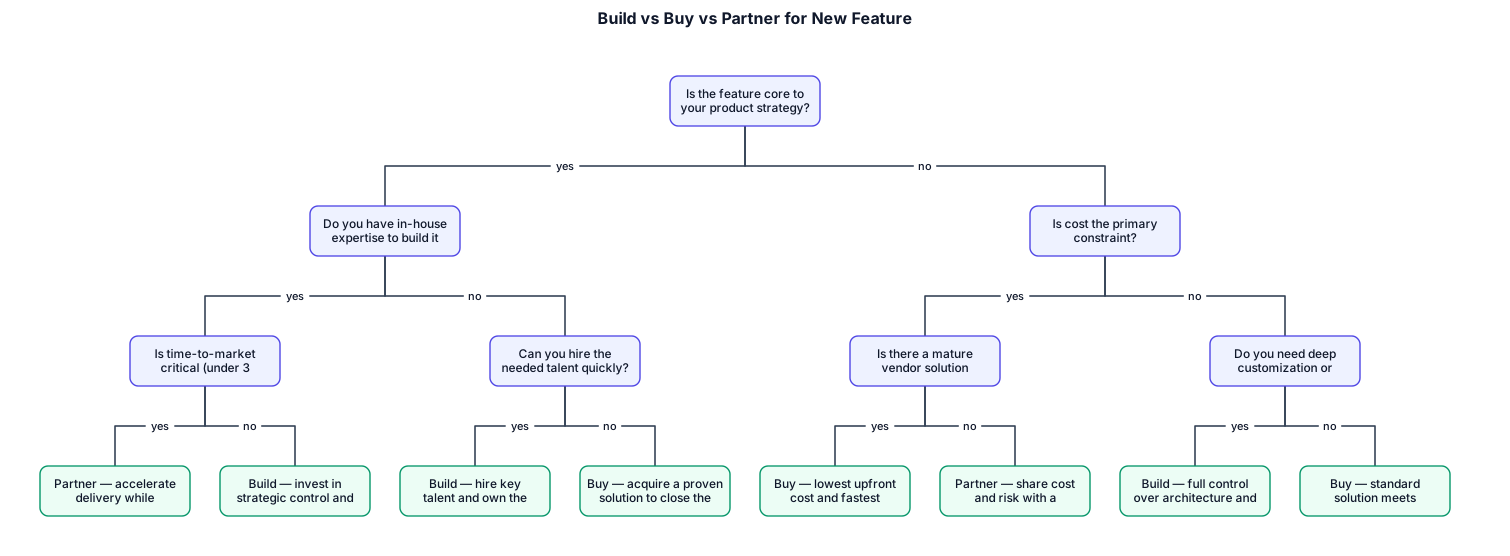
A decision tree for whether a startup should build, buy, or partner for a new feature, evaluating cost, speed, and strategic control
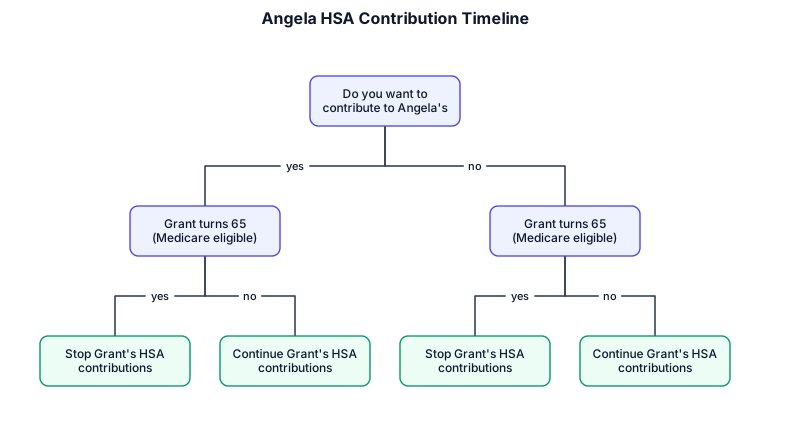
A decision tree that starts with "Do you want to contribute to Angela's HSA when Grant reaches 65. Paths are "Yes" and "No", after answering that the next part of the diagram will be timelines with dates and actions
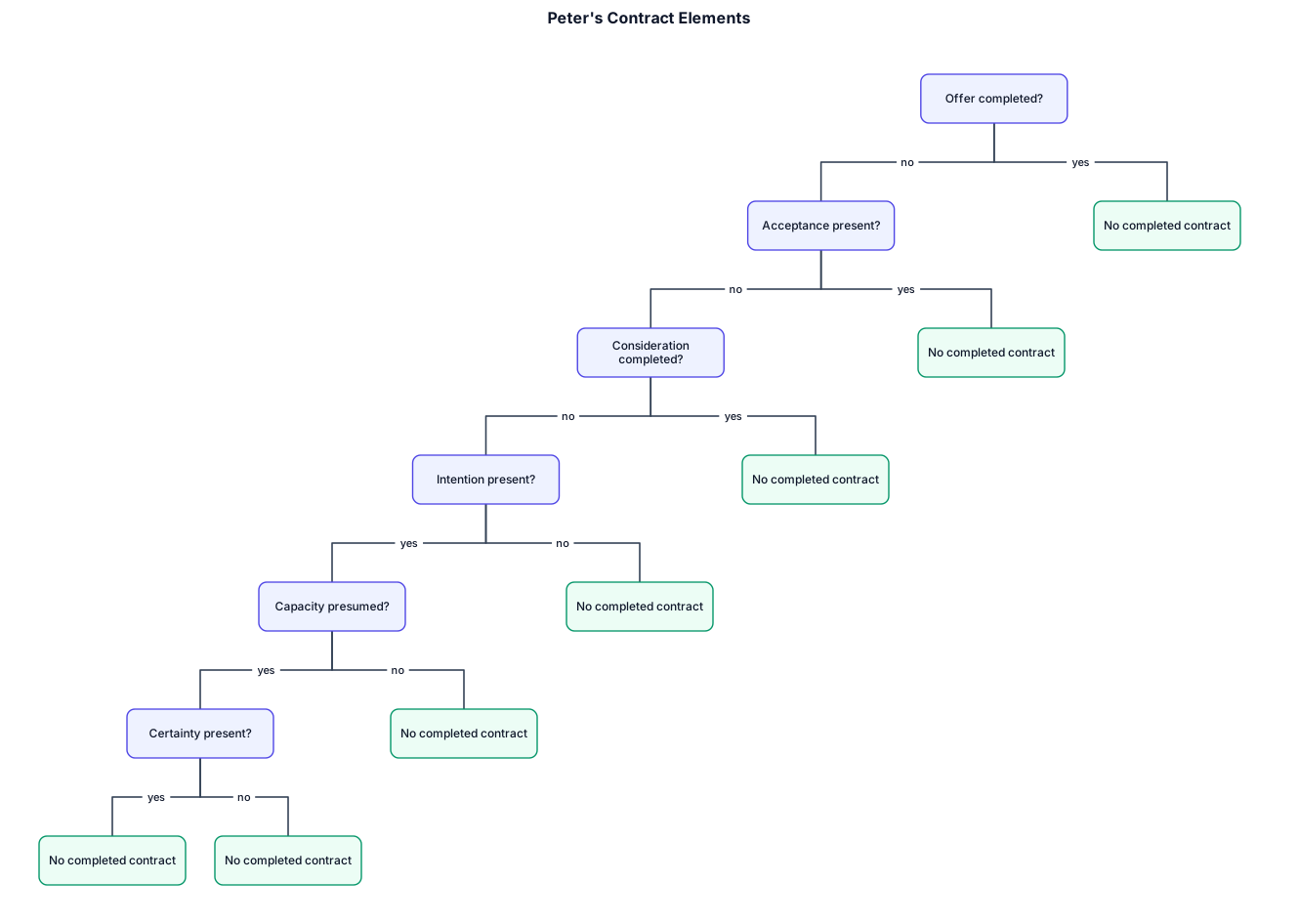
Peter's six contract elements: Offer – not yet completed; Acceptance – absent; Consideration – not completed; Intention – present; Capacity – presumed; Certainty – present; Result – no completed contract.
A decision tree for whether a startup should build, buy, or partner for a new feature, evaluating cost, speed, and strategic control Peter's six contract elements: Offer – not yet completed; Acceptance – absent; Consideration – not completed; Intention – present; Capacity – presumed; Certainty – present; Result – no completed contract.