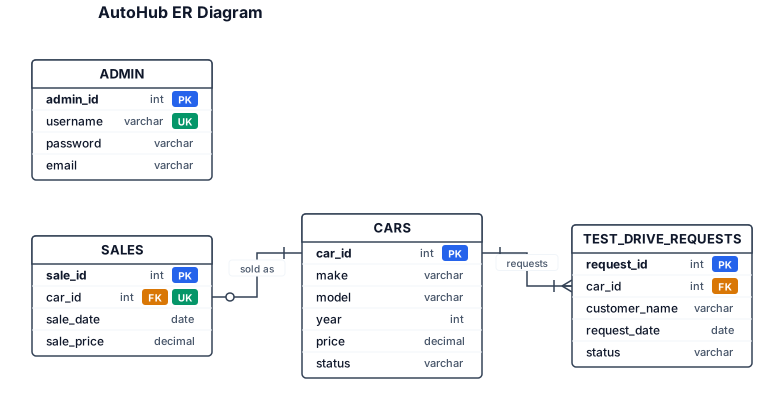
Create an ER diagram for AutoHub using exactly four tables: ADMIN, CARS, TEST_DRIVE_REQUESTS, and SALES. CARS has a 1-to-many relationship with TEST_DRIVE_REQUESTS through car_id. CARS has a 1-to-zero-or-one relationship with SALES through car_id because SALES.car_id is UNIQUE. ADMIN is standalone. Use the exact fields from the provided database schema and do not add any other tables.
NODE ARCHIVE · REAL DIAGRAM BRIEFS
Diagram Examples from Real Visitor Prompts
Browse eligible diagrams shared by FreeDiagram visitors, inspect the exact prompts, and build your own version.
Browse 1008 real creationsCOMMUNITY OUTPUTS · EXACT PROMPTS
Er Diagrams
Showing 1–16 of 16. No stock examples or system defaults. Choose a tool, study a real result, then reopen its prompt as your starting point.
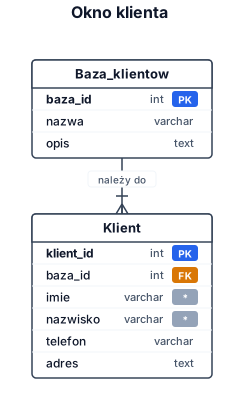
Utwórz okno klient. Dla klienta zapisywane są Imię, Nazwisko, Telefon, adres Klienta podłącz do Baza klientów
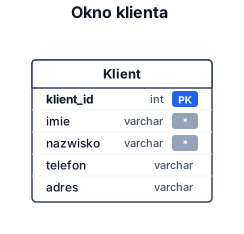
Utwórz okno klient. Dla klienta zapisywane są Imię, Nazwisko, Telefon, adres
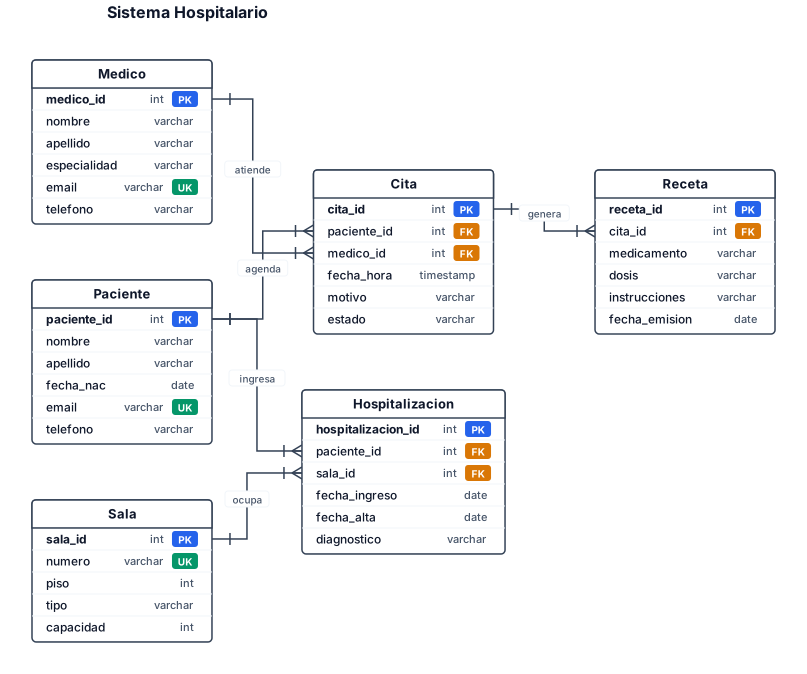
Un sistema hospitalario con pacientes, médicos, citas, recetas y salas de hospitalización.
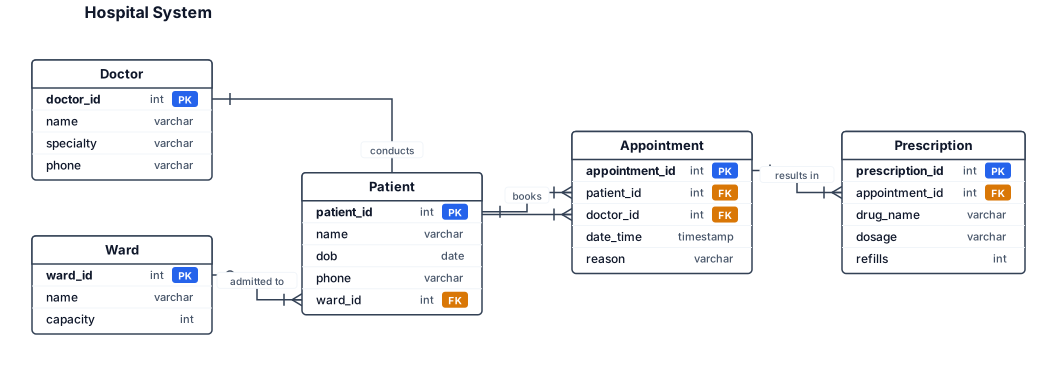
A hospital system with patients, doctors, appointments, prescriptions, and wards
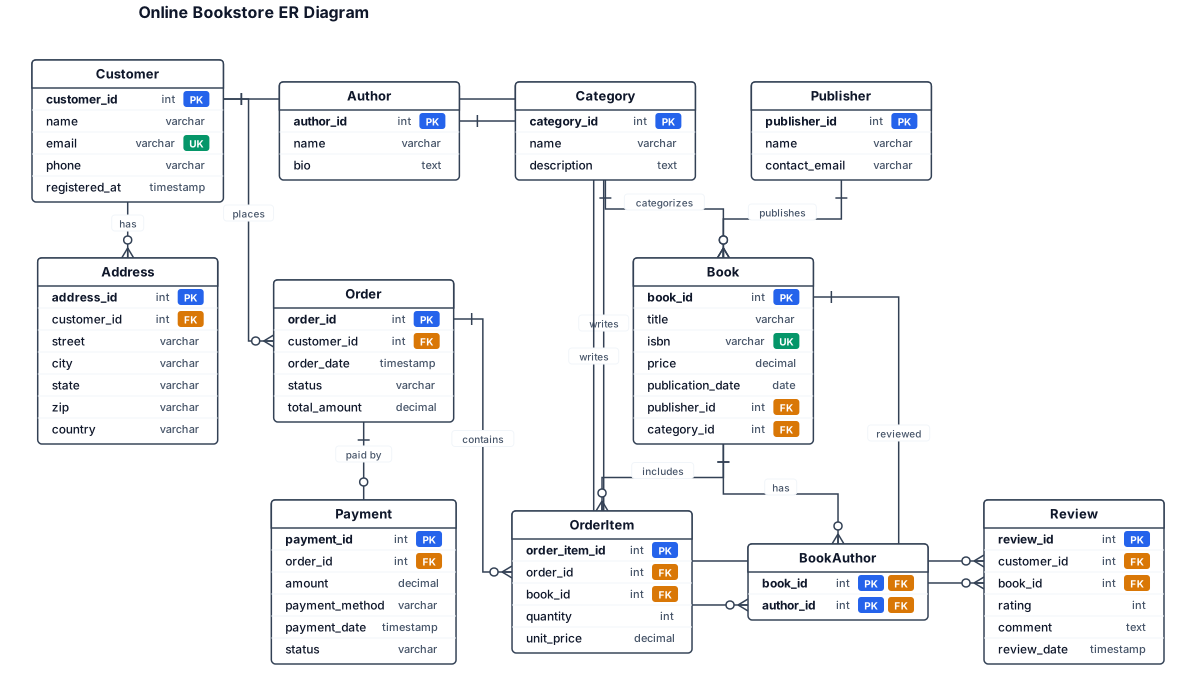
Create a classic ER diagram for an online bookstore with entities Customer, Book, Author, Category, Publisher, Order, Order Item, Payment, Address and Review. Use rectangles for entities, ovals for attributes, diamonds for relationships, primary keys underlined, and show cardinalities.
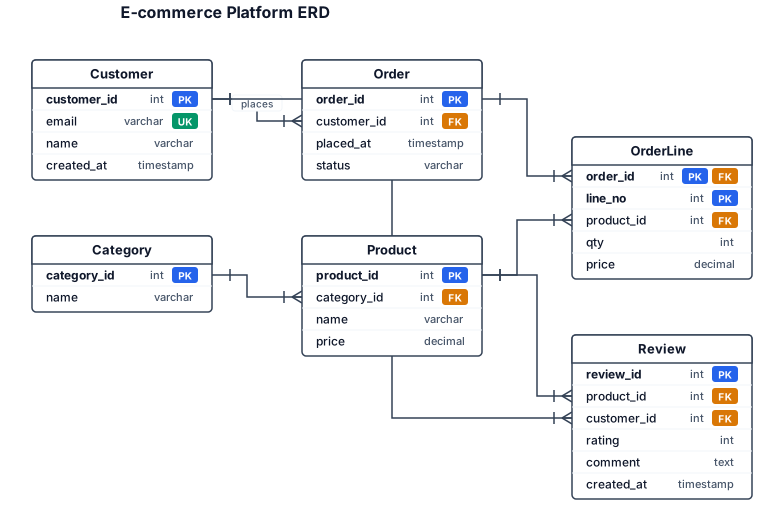
An ER diagram for an e-commerce platform with customers, orders, products, categories, and reviews — include primary keys and foreign key relationships
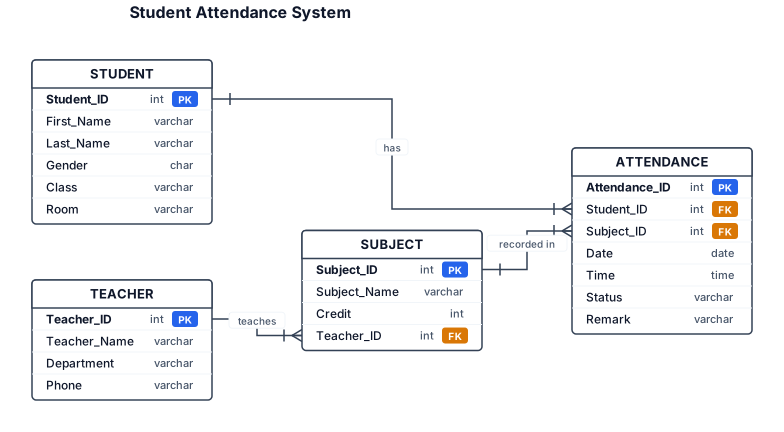
Create a database diagram for a Student Attendance System. Create exactly 4 tables: STUDENT Student_ID (PK) First_Name Last_Name Gender Class Room TEACHER Teacher_ID (PK) Teacher_Name Department Phone SUBJECT Subject_ID (PK) Subject_Name Credit Teacher_ID (FK) ATTENDANCE Attendance_ID (PK) Student_ID (FK) Subject_ID (FK) Date Time Status Remark ONLY these 3 relationships are allowed: 1. TEACHER 1:N SUBJECT Teacher_ID connects TEACHER to SUBJECT. 2. STUDENT 1:N ATTENDANCE Student_ID connects STUDENT to ATTENDANCE. 3. SUBJECT 1:N ATTENDANCE Subject_ID connects SUBJECT to ATTENDANCE. IMPORTANT: - Do NOT connect STUDENT to SUBJECT. - There must be NO direct line between STUDENT and SUBJECT. - ATTENDANCE is the ONLY table connecting STUDENT and SUBJECT. - Show PK and FK clearly. - Show 1:N cardinality. - Do not create any additional relationships.
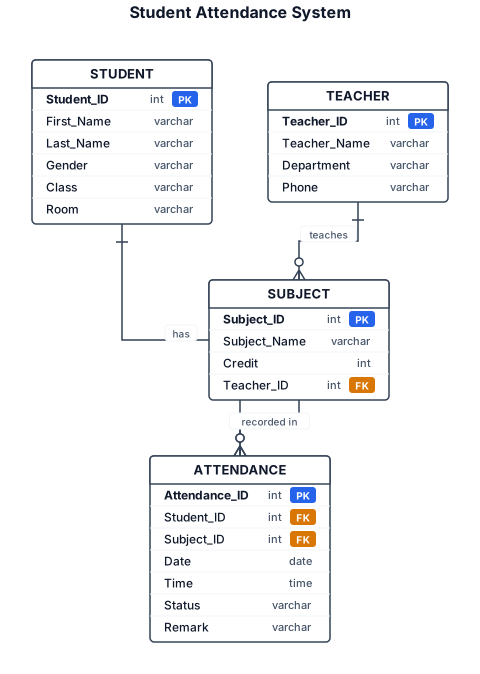
Create a database diagram for a Student Attendance System. Use 4 tables only: STUDENT - Student_ID (PK) - First_Name - Last_Name - Gender - Class - Room TEACHER - Teacher_ID (PK) - Teacher_Name - Department - Phone SUBJECT - Subject_ID (PK) - Subject_Name - Credit - Teacher_ID (FK) ATTENDANCE - Attendance_ID (PK) - Student_ID (FK) - Subject_ID (FK) - Date - Time - Status - Remark Connections: TEACHER 1:N SUBJECT One teacher teaches many subjects. STUDENT 1:N ATTENDANCE One student has many attendance records. SUBJECT 1:N ATTENDANCE One subject has many attendance records. Important: Do NOT connect STUDENT directly to SUBJECT. ATTENDANCE must be the bridge between STUDENT and SUBJECT. Connect: TEACHER.Teacher_ID → SUBJECT.Teacher_ID STUDENT.Student_ID → ATTENDANCE.Student_ID SUBJECT.Subject_ID → ATTENDANCE.Subject_ID Show PK, FK, and 1:N on the relationship lines. Use simple table boxes and a clean layout.
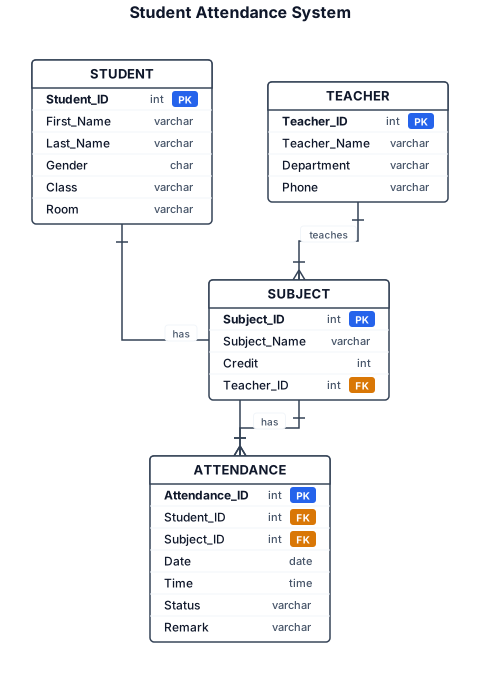
Create a database diagram for a Student Attendance System. There are 4 tables: STUDENT - Student_ID (PK) - First_Name - Last_Name - Gender - Class - Room TEACHER - Teacher_ID (PK) - Teacher_Name - Department - Phone SUBJECT - Subject_ID (PK) - Subject_Name - Credit - Teacher_ID (FK) ATTENDANCE - Attendance_ID (PK) - Student_ID (FK) - Subject_ID (FK) - Date - Time - Status - Remark Connections: - One TEACHER teaches many SUBJECTS. - One STUDENT has many ATTENDANCE records. - One SUBJECT has many ATTENDANCE records. Connect the foreign keys to the correct primary keys. Show PK, FK, and 1:N relationships. Keep the diagram simple and easy to read. Show each table as a box. Put the column names inside each box. Show primary keys and foreign keys clearly. Draw lines between related tables. Use one-to-many (1:N) relationships.
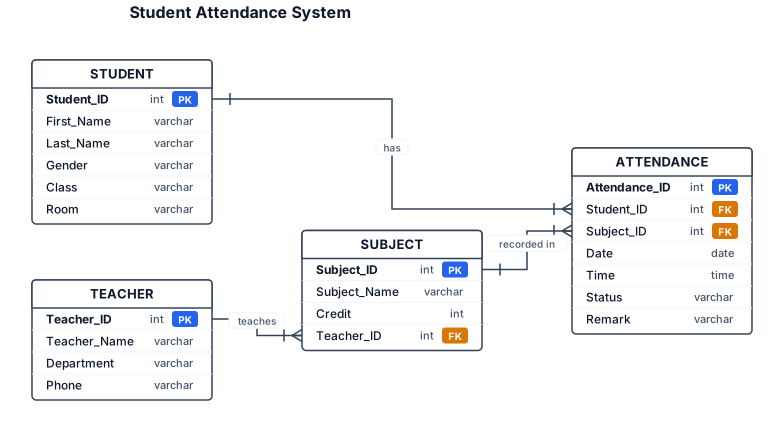
Create an ER Diagram for a **Student Attendance System**. Entities: **STUDENT** * Student_ID (PK) * First_Name * Last_Name * Gender * Class * Room **TEACHER** * Teacher_ID (PK) * Teacher_Name * Department * Phone **SUBJECT** * Subject_ID (PK) * Subject_Name * Credit * Teacher_ID (FK → TEACHER.Teacher_ID) **ATTENDANCE** * Attendance_ID (PK) * Student_ID (FK → STUDENT.Student_ID) * Subject_ID (FK → SUBJECT.Subject_ID) * Date * Time * Status * Remark Relationships: * TEACHER 1:N SUBJECT * STUDENT 1:N ATTENDANCE * SUBJECT 1:N ATTENDANCE Show PK, FK, attributes, relationship lines, and cardinality clearly. Use a clean and simple layout.
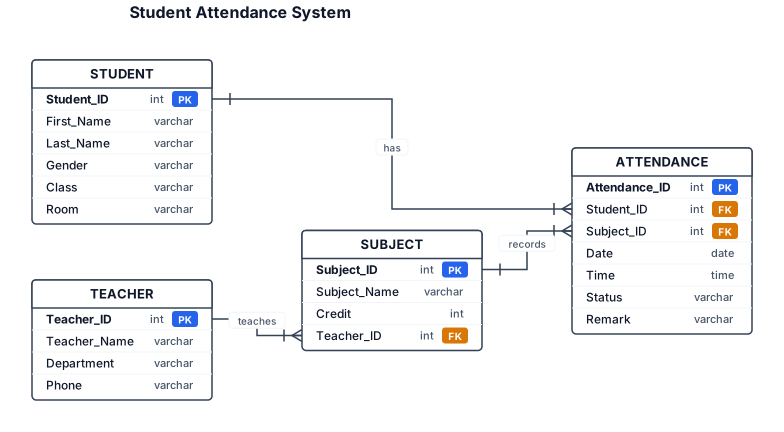
สร้าง ER Diagram สำหรับระบบเช็คชื่อนักเรียน STUDENT (นักเรียน) * Student_ID (PK) * First_Name * Last_Name * Gender * Class * Room TEACHER (ครู) * Teacher_ID (PK) * Teacher_Name * Department * Phone SUBJECT (วิชา) * Subject_ID (PK) * Subject_Name * Credit * Teacher_ID (FK) ATTENDANCE (การเช็คชื่อ) * Attendance_ID (PK) * Student_ID (FK) * Subject_ID (FK) * Date * Time * Status * Remark ความสัมพันธ์: * TEACHER 1:N SUBJECT * STUDENT 1:N ATTENDANCE * SUBJECT 1:N ATTENDANCE แสดง PK, FK, Attribute และ Cardinality ให้ชัดเจน จัดแผนผังให้เป็นระเบียบและอ่านง่าย
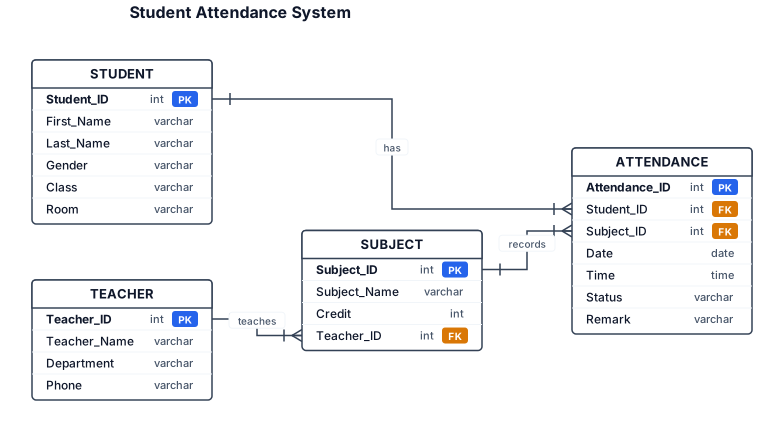
Create an ERD for a Student Attendance System. STUDENT(Student_ID PK, First_Name, Last_Name, Gender, Class, Room) TEACHER(Teacher_ID PK, Teacher_Name, Department, Phone) SUBJECT(Subject_ID PK, Subject_Name, Credit, Teacher_ID FK) ATTENDANCE(Attendance_ID PK, Student_ID FK, Subject_ID FK, Date, Time, Status, Remark) Relationships: TEACHER 1:N SUBJECT STUDENT 1:N ATTENDANCE SUBJECT 1:N ATTENDANCE Show all PKs, FKs, attributes, and cardinalities.
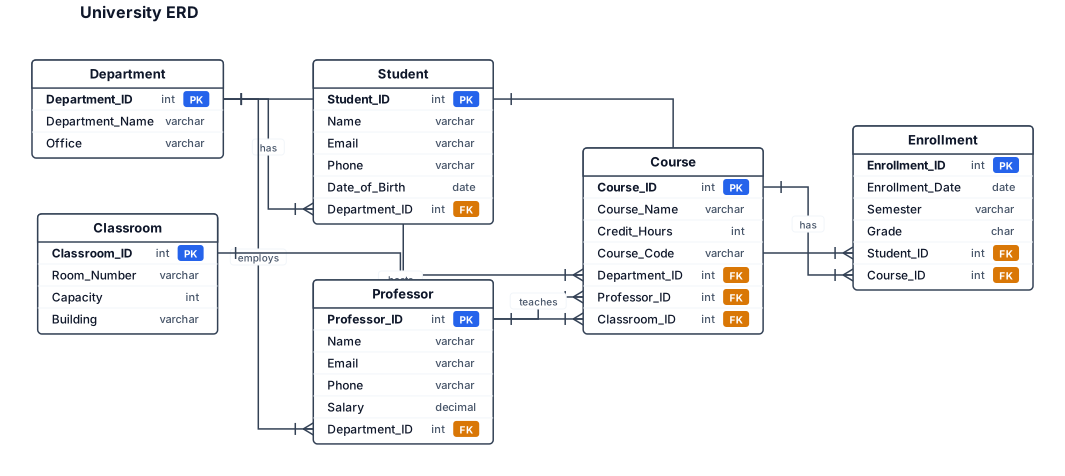
Identify Entities No. Entity 1 Student 2 Professor 3 Course 4 Department 5 Enrollment 6 Classroom 2. Define Attributes Entity Attributes Student Student_ID (PK), Name, Email, Phone, Date_of_Birth Professor Professor_ID (PK), Name, Email, Phone, Salary Course Course_ID (PK), Course_Name, Credit_Hours, Course_Code Department Department_ID (PK), Department_Name, Office Enrollment Enrollment_ID (PK), Enrollment_Date, Semester, Grade Classroom Classroom_ID (PK), Room_Number, Capacity, Building PK = Primary Key 3. Establish Relationships Relationship Cardinality Description Department — Student 1 : N One department can have many students; each student belongs to one department. Department — Professor 1 : N One department can have many professors; each professor belongs to one department. Department — Course 1 : N One department can offer many courses; each course is offered by one department. Student — Course M : N A student can enroll in many courses and a course can have many students; resolved by Enrollment. Professor — Course 1 : N One professor can teach many courses; each course is taught by one professor. Course — Classroom 1 : N A classroom can be used for many course classes; a course is assigned to a classroom f
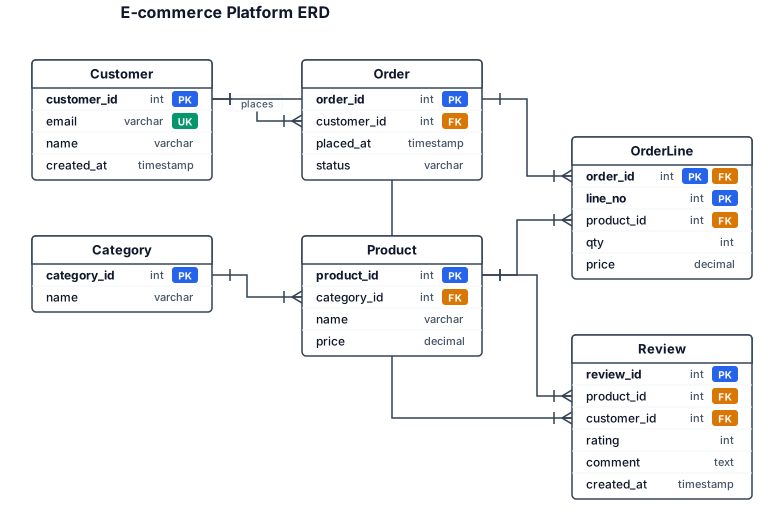
An ER diagram for an e-commerce platform with customers, orders, products, categories, and reviews — include primary keys and foreign key relationships
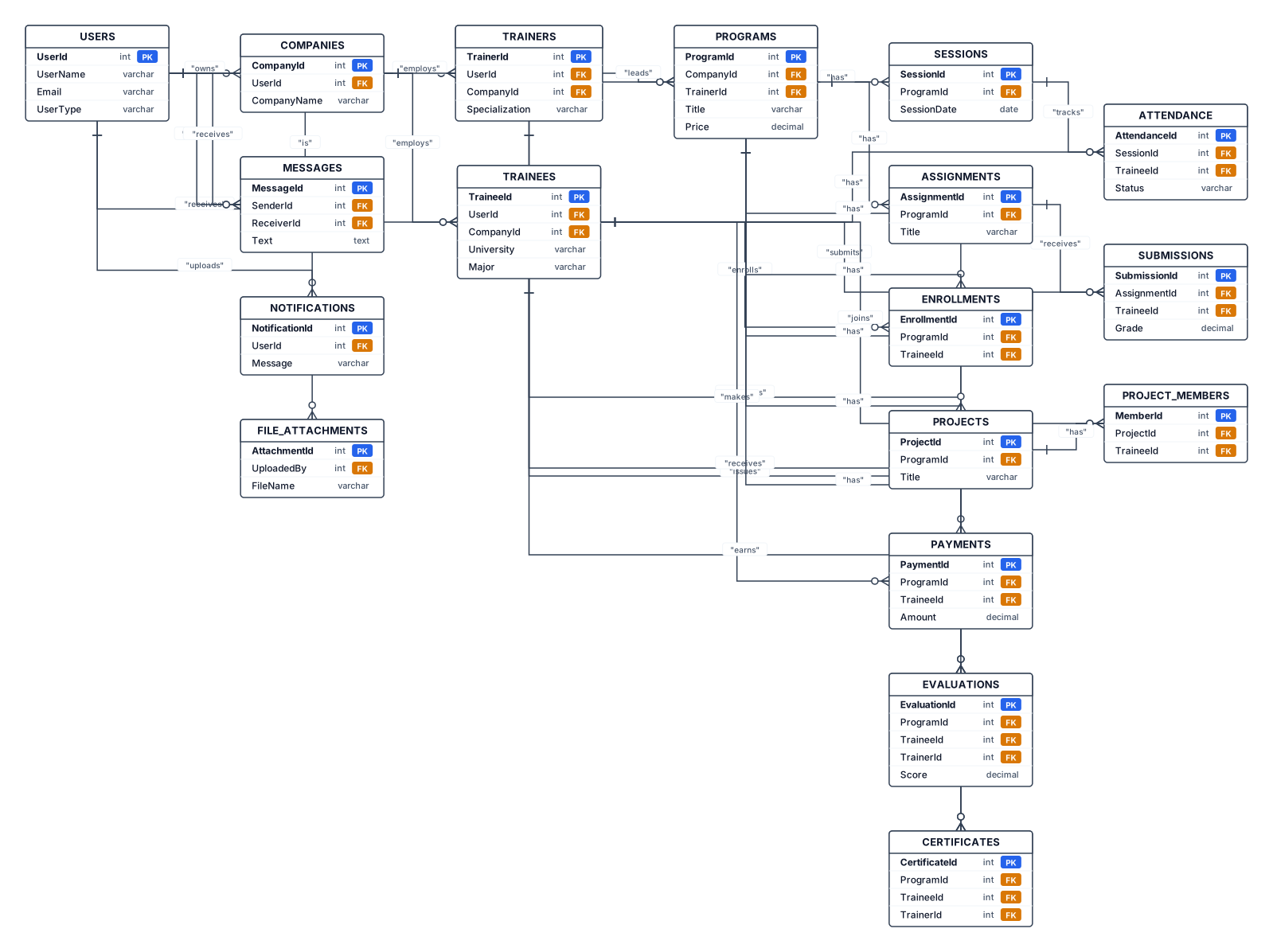
ERD for Training Management System. PK/FK included. Entities: - USERS: UserId(PK), UserName, Email, UserType - COMPANIES: CompanyId(PK), UserId(FK), CompanyName - TRAINERS: TrainerId(PK), UserId(FK), CompanyId(FK), Specialization - TRAINEES: TraineeId(PK), UserId(FK), CompanyId(FK), University, Major - PROGRAMS: ProgramId(PK), CompanyId(FK), TrainerId(FK), Title, Price - SESSIONS: SessionId(PK), ProgramId(FK), SessionDate - ATTENDANCE: AttendanceId(PK), SessionId(FK), TraineeId(FK), Status - ASSIGNMENTS: AssignmentId(PK), ProgramId(FK), Title - SUBMISSIONS: SubmissionId(PK), AssignmentId(FK), TraineeId(FK), Grade - ENROLLMENTS: EnrollmentId(PK), ProgramId(FK), TraineeId(FK) - PAYMENTS: PaymentId(PK), ProgramId(FK), TraineeId(FK), Amount - EVALUATIONS: EvaluationId(PK), ProgramId(FK), TraineeId(FK), TrainerId(FK), Score - CERTIFICATES: CertificateId(PK), ProgramId(FK), TraineeId(FK), TrainerId(FK) - PROJECTS: ProjectId(PK), ProgramId(FK), Title - PROJECT_MEMBERS: MemberId(PK), ProjectId(FK), TraineeId(FK) - MESSAGES: MessageId(PK), SenderId(FK), ReceiverId(FK), Text - NOTIFICATIONS: NotificationId(PK), UserId(FK), Message - FILE_ATTACHMENTS: AttachmentId(PK), UploadedBy(FK), FileName Relations: Users link to companies, trainers, trainees. Programs have sessions, assignments, enrollments, payments, evaluations, certificates, projects. Trainees interact with attendance, submissions, projects, messages.
Focused examples and prompt ideas
Start with the complete visitor wall above, then use these focused collections when you want a narrower subject and more prompt context.
The first curated collection is being prepared.