
Ishikawa scheme
NODE ARCHIVE · REAL DIAGRAM BRIEFS
Diagram Examples from Real Visitor Prompts
Browse eligible diagrams shared by FreeDiagram visitors, inspect the exact prompts, and build your own version.
Browse 1008 real creationsCOMMUNITY OUTPUTS · EXACT PROMPTS
Main diagram studio
Showing 265–288 of 601. No stock examples or system defaults. Choose a tool, study a real result, then reopen its prompt as your starting point.
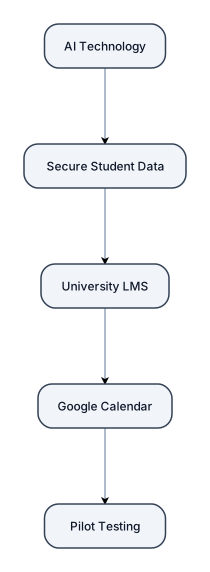
AI Technology ↓ Secure Student Data ↓ University LMS Google Calendar ↓ Pilot Testing
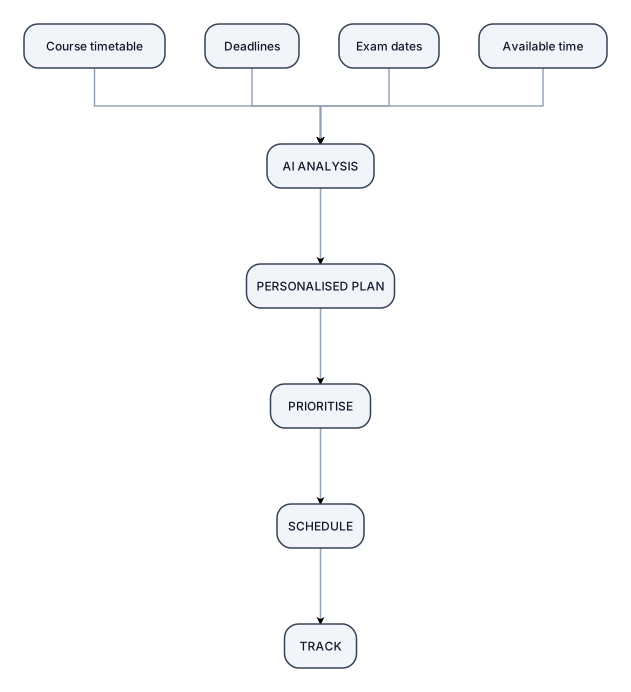
STUDENT INPUT Course timetable Deadlines Exam dates Available time ↓ AI ANALYSIS ↓ PERSONALISED PLAN ↓ PRIORITISE → SCHEDULE → TRACK
یه دیاگرام بساز از مرحله ثبت سفارش تا ارسال به تولید کننده و از اونجا ارسال برای مدیر پخش و بعدش پخش کنندگان و بعدش مشتری

Protein Precipitation & Extraction 300µL sample → Transfer to an Abgene 2.2 mL deep-well plate → 1200µL ACN + 1% FA + IS → Vortex 10min → Centrifuge 3,940g, 15min, 4°C. Conditioning EMR-PFAS Food II Plate Wash twice with 500µL of ACN/MeOH (1:1, v/v) + 1% FA → eluted under gravity Plate Pre-equilibration 150µL sample supernatant ( replace residual rinsing dead volume) → waste Dry EMR-PFAS plate Completely dryness with Ultra-high-purity N₂ at 20 psi (1min approx.) Loaded sample extract Place 96-well collection plate underneath EMR-PFAS plate → 1000 µL sample extract into each well → Allow to elute under gravity → Apply positive pressure to completely elute solvent Prevent analyte loss 30 µL of 1% ammonium hydroxide in acetonitrile to the collected eluate → Vortex for 5 min Evaporation Evaporate to complete dryness (ultra-high-purity N₂, 50 °C, 2h approx.) Reconstitution 50 µL water/methanol (20:80, v/v) Final mixing & clarification Vortex 5 min → Sonicate 5 min → Centrifuge 3,940 × g for 3 min
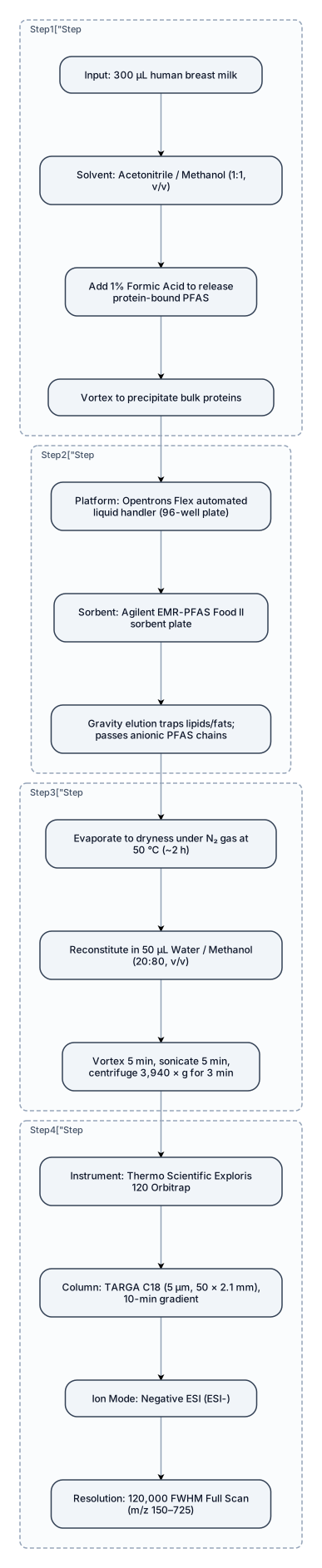
Step 1: Extraction & Protein DisruptionSample Input: 300 µL human breast milk.Solvent: Acetonitrile / Methanol (1:1, v/v).Critical Modifier: Add 1% Formic Acid to release protein-bound PFAS.Mixing: Thorough vortexing to precipitate bulk proteins.Step 2: Automated Matrix CleanupPlatform: Opentrons Flex automated liquid handler (96-well plate format).Sorbent Chemistry: Agilent EMR-PFAS Food II sorbent plate.Mechanism: Gravity elution traps lipids/fats while selectively passing anionic PFAS chains through the plate.Step 3: Concentration & ReconstitutionEvaporation: Blow down to absolute dryness under a gentle stream of \(N_{2}\) gas at 50 °C (~2 hours).Reconstitution: 50 µL of Water / Methanol (20:80, v/v).Final Clarification: 5 min vortex, 5 min sonication, and centrifugation at 3,940 × g for 3 min.Step 4: Orbitrap HRMS AnalysisInstrument: Thermo Scientific Exploris 120 Orbitrap.Column: TARGA C18 (5 µm, 50 × 2.1 mm) running a 10-minute total gradient block.Ion Mode: Negative Electrospray Ionization (ESI-).Resolution: 120,000 FWHM Full Scan (m/z 150–725) to eliminate heavy milk matrix backgrounds.
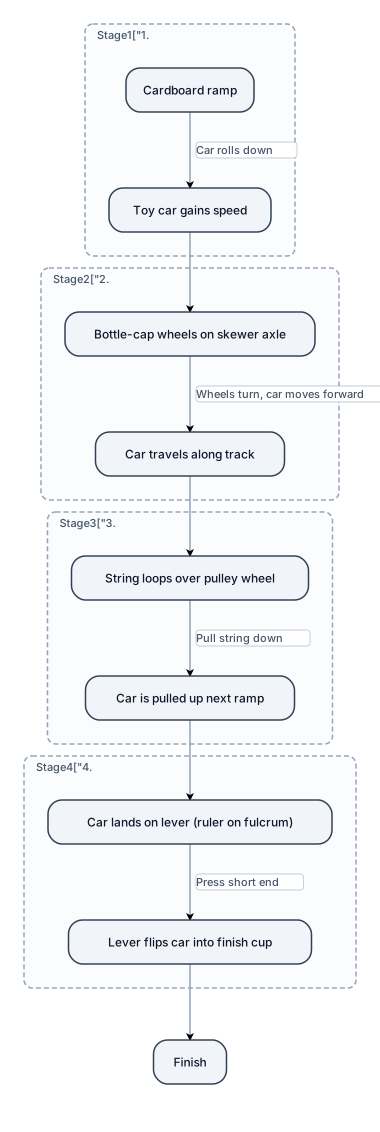
Create a simple diagram of a homemade machine that moves a small toy car. Use 4 simple machines: an inclined plane (ramp), wheel and axle, pulley, and lever. Make it easy to build at home using cardboard, string, bottle caps, LEGO or paper. Label each simple machine and show arrows explaining how the machine moves the car.

Create a horizontal left-to-right workflow for an on-site diagnostic mobile medical van. There is no AI involved. Show the complete patient journey from arrival to leaving with the report. The workflow should include four roles: Patient, Registration Staff, Nurse, Doctor, and Lab Technician. Start with Patient Arrival → Registration → Waiting Queue → Nurse Vitals Check → Symptoms & Basic History → Doctor Clinical Assessment → Doctor Decides Test Is Required → Select On-Site Test → Nurse Prepares Patient → Nurse Collects Sample → Lab Technician Checks Sample → Lab Technician Performs Test → Result Generated On-Site → Lab Technician Verifies Result → Result Recorded → Doctor Reviews Result → Clinical Diagnosis/Finding → Treatment/Advice/Referral → Report Generation → Doctor/Nurse Verifies Report → Patient Receives Report → Patient Leaves. Use clear boxes and arrows, with different visual styles for major stages, decisions, staff actions, and patient actions. Keep the workflow simple, professional, and easy to understand.

i want a mule 4 flow chart I want something like this sap-papi will send IDOC to awi-sap-cust-to-aero-papi awi-sap-cust-to-aero-papi will send IDOC to awi-sap-
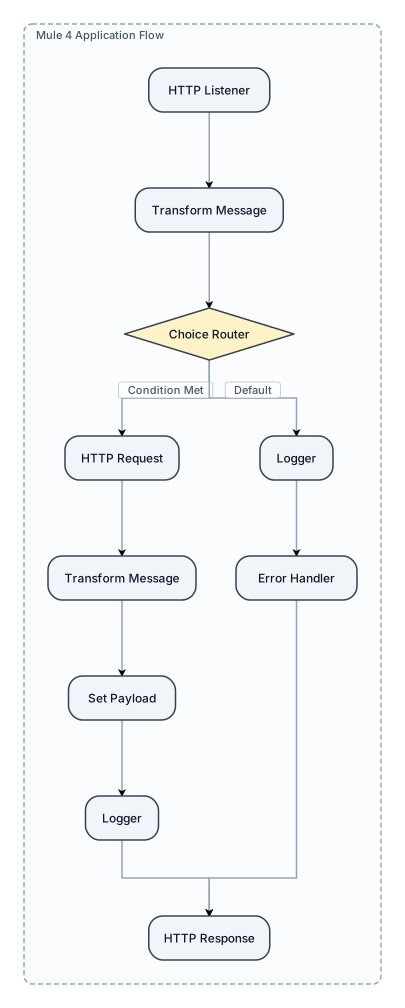
i want a mule 4 flow chart I want something like this
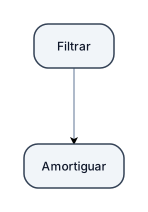
Necesito un diagrama de la palabra filtrar o amortiguar

Create a simple, clean one-page landscape flowchart titled: “Learning Environment Registration & Assessment Journey” Show these 7 stages as large boxes connected by arrows: 1. REGISTER Register the learning environment with NSS ↓ 2. CONFIRM SCOPE Confirm assessment requirements ↓ 3. PREPARE Prepare the environment and required evidence ↓ 4. ASSESS Independent assessment ↓ 5. ACTION Address findings or provide further evidence ↓ 6. RECOGNISE NSS assessment outcome awarded ↓ 7. MAINTAIN Ongoing compliance and reassessment After ASSESS, show a simple decision: Meets requirements? YES → RECOGNISE NO → ACTION → REASSESS Use a professional certification-scheme style with large boxes, clear arrows, minimal text, simple icons and generous white space. Avoid complex branching or detailed explanations.
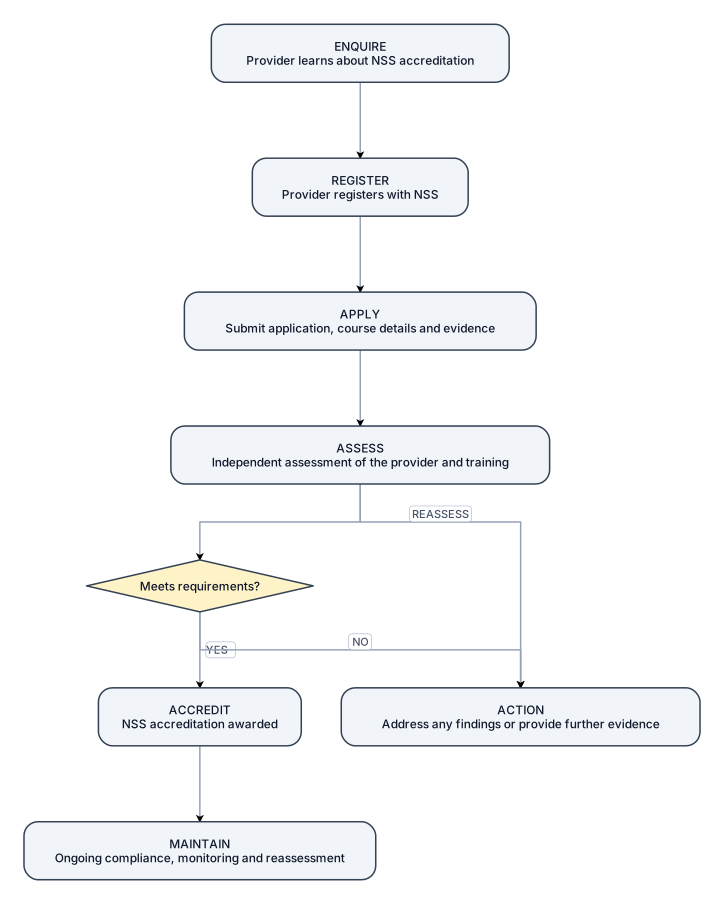
Create a simple, clean one-page landscape flowchart titled: “Education & Training Provider Accreditation Journey” Show these 7 stages as large boxes connected by arrows: 1. ENQUIRE Provider learns about NSS accreditation ↓ 2. REGISTER Provider registers with NSS ↓ 3. APPLY Submit application, course details and evidence ↓ 4. ASSESS Independent assessment of the provider and training ↓ 5. ACTION Address any findings or provide further evidence ↓ 6. ACCREDIT NSS accreditation awarded ↓ 7. MAINTAIN Ongoing compliance, monitoring and reassessment After ASSESS, show a simple decision: Meets requirements? YES → ACCREDIT NO → ACTION → REASSESS Use a professional certification-scheme style with large boxes, clear arrows, minimal text, simple icons and generous white space. Avoid complex branching or detailed explanations.

Create a simple, clean one-page landscape flowchart titled: “Client / Framework Mandating Journey” Show these 6 stages as large boxes connected by arrows: 1. DEFINE Confirm scope and NSS requirements ↓ 2. AGREE Agree implementation and procurement approach ↓ 3. MANDATE Sign NSS Client Mandating Agreement ↓ 4. IMPLEMENT Add NSS requirements to procurement and contracts ↓ 5. COMMUNICATE Notify contractors and supply chain ↓ 6. ASSURE Monitor accreditation and site compliance At DEFINE, show two simple decisions: Organisation Accreditation? → Already accredited / Must achieve accreditation Site Assessment? → Required / Not required Use a professional certification-scheme style with large boxes, clear arrows, minimal text, simple icons and generous white space. Keep the diagram straightforward and avoid complex branching or detailed explanations.

Create a simple, clean one-page landscape flowchart titled: “Site Registration & Assessment Journey” Show these 7 stages as large boxes connected by arrows: 1. REGISTER SITE Register the site with NSS ↓ 2. CONFIRM SCOPE Confirm assessment requirements and assessment date ↓ 3. PREPARE Site prepares required evidence and documentation ↓ 4. ASSESS Independent assessor visits / reviews the site ↓ 5. OUTCOME Assessment score and outcome determined ↓ 6. RECOGNISE Site receives its NSS Site Recognition outcome ↓ 7. MAINTAIN Maintain performance and complete reassessment After OUTCOME, show a simple branch: Meets requirements? YES → SITE RECOGNITION NO → ACTION REQUIRED → REASSESS Show the possible Site Recognition outcomes: Conforming | Commended | Excellent | Outstanding Use a professional certification-scheme style with large boxes, clear arrows, minimal text, simple icons and generous white space. Avoid complex branching or additional information.
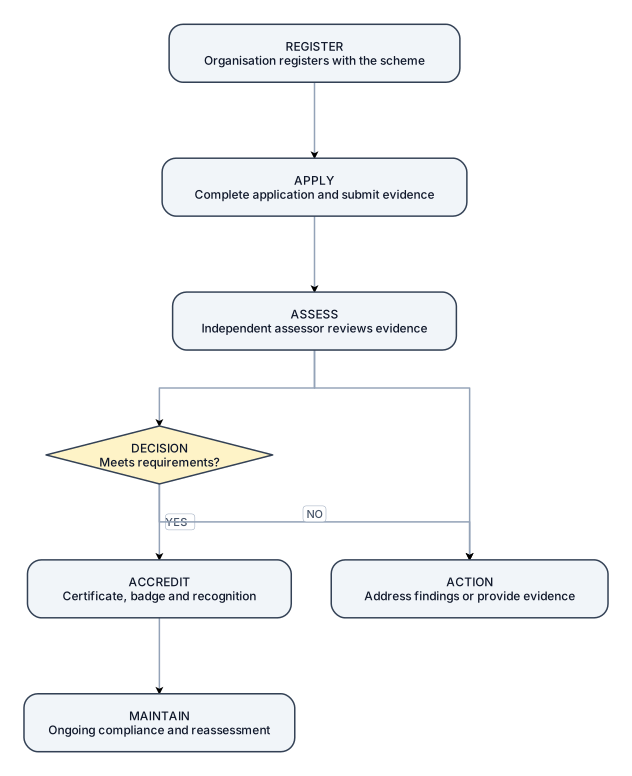
Create a simple, clean one-page landscape flowchart titled: “Contractor Accreditation Journey” Show these 7 stages as large boxes connected by arrows: 1. REGISTER Organisation registers with the scheme ↓ 2. APPLY Complete application and submit required evidence ↓ 3. ASSESS Independent assessor reviews evidence / conducts assessment ↓ 4. ACTION Address any findings or provide additional evidence ↓ 5. DECISION Accreditation decision made ↓ 6. ACCREDIT Certificate, badge and public recognition awarded ↓ 7. MAINTAIN Ongoing compliance, monitoring and reassessment After DECISION, show a simple branch: Meets requirements? YES → ACCREDIT NO → ACTION → REASSESS Use a professional certification-scheme style. Keep the wording very short, use large boxes, clear arrows and plenty of white space. Avoid paragraphs, complex branching or additional information.
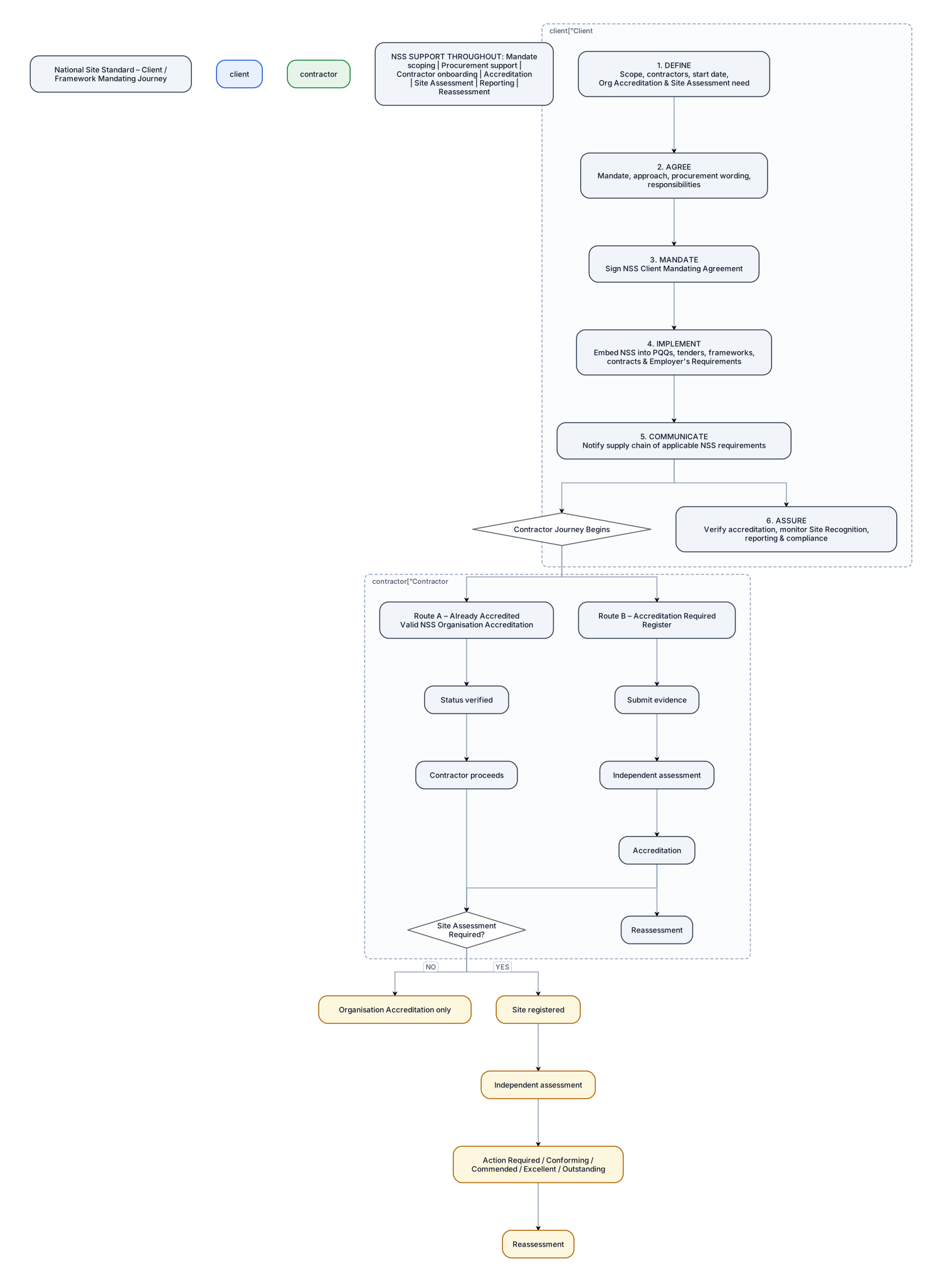
Create a professional one-page landscape process map titled “National Site Standard – Client / Framework Mandating Journey”. Show the main client journey as six clear stages: 1. DEFINE Confirm scope, contractors, start date, Organisation Accreditation requirement and whether Site Assessment is required. 2. AGREE Agree the mandate, implementation approach, procurement wording and responsibilities. 3. MANDATE Complete and sign the NSS Client Mandating Agreement. 4. IMPLEMENT Embed NSS requirements into existing PQQs, tenders, frameworks, contracts and Employer’s Requirements. Brief relevant internal teams. 5. COMMUNICATE Notify the supply chain and explain which NSS requirements apply. 6. ASSURE Verify contractor accreditation, monitor Site Recognition where required, manage reporting and maintain ongoing compliance. At COMMUNICATE, show a clear branch labelled “Contractor Journey Begins”. Show two contractor routes: Route A – Already Accredited Valid NSS Organisation Accreditation → Status verified → Contractor proceeds. Route B – Accreditation Required Register → Submit evidence → Independent assessment → Accreditation → Reassessment. From the contractor journey, show a separate decision: Site Assessment Required? YES: Site registered → Independent assessment → Action Required / Conforming / Commended / Excellent / Outstanding → Reassessment. NO: Organisation Accreditation only. Add a simple footer: NSS SUPPORT THROUGHOUT: Mandate scoping | Procurement support | Contractor onboarding | Accreditation | Site Assessment | Reporting | Reassessment Use a clean corporate style, minimal text, clear arrows and decision points, strong visual hierarchy, generous white space, and distinct colours for the Client, Contractor and Site Assessment journeys. The finished diagram should be understandable at a glance and suitable for inclusion in an NSS client guide.
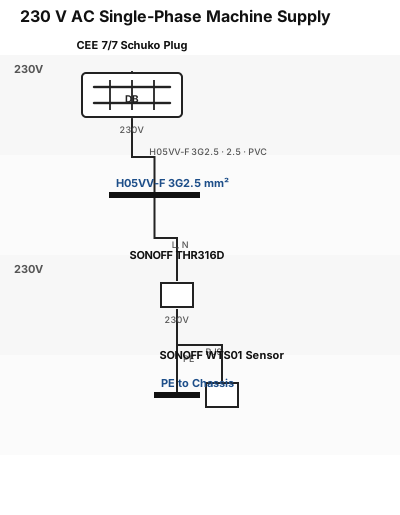
Create an IEC-style electrical schematic for a 230 V AC single-phase machine. Power supply through a CEE 7/7 Schuko plug -X1 and H05VV-F 3G2.5 mm² cable -W1. Show L, N and PE separately. The circuit feeds a SONOFF THR316D temperature controller -K1. A SONOFF WTS01 temperature sensor -BT1 is connected to the THR316D with its original RJ9 cable. Include protective earth connection to the metallic chassis. Use IEC electrical symbols and component reference designations.
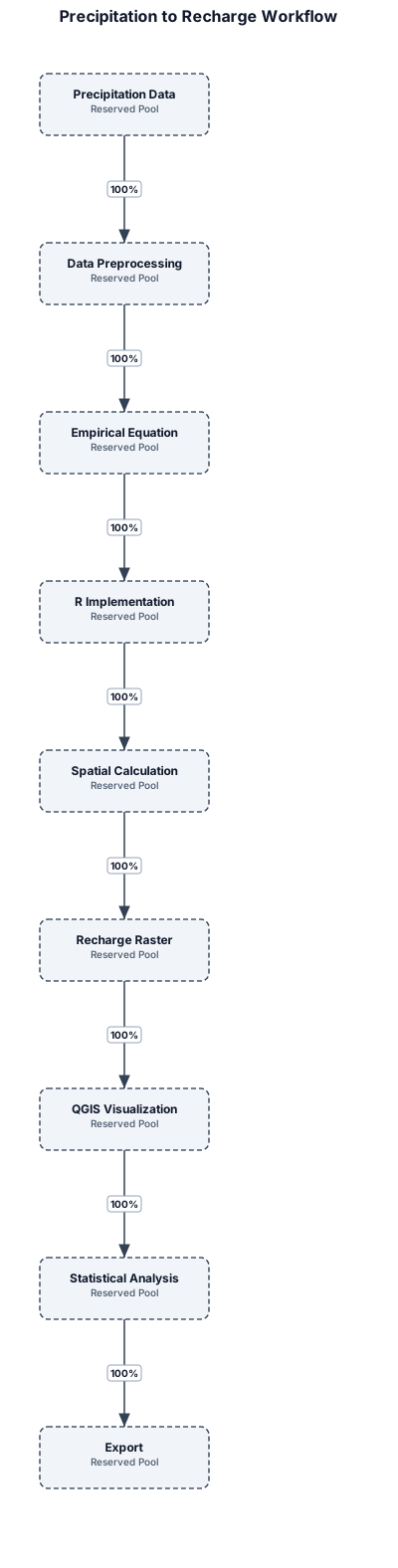
Precipitation data → Data preprocessing → Empirical equation → R implementation → Spatial calculation → Recharge raster → QGIS visualization → Statistical analysis → Export
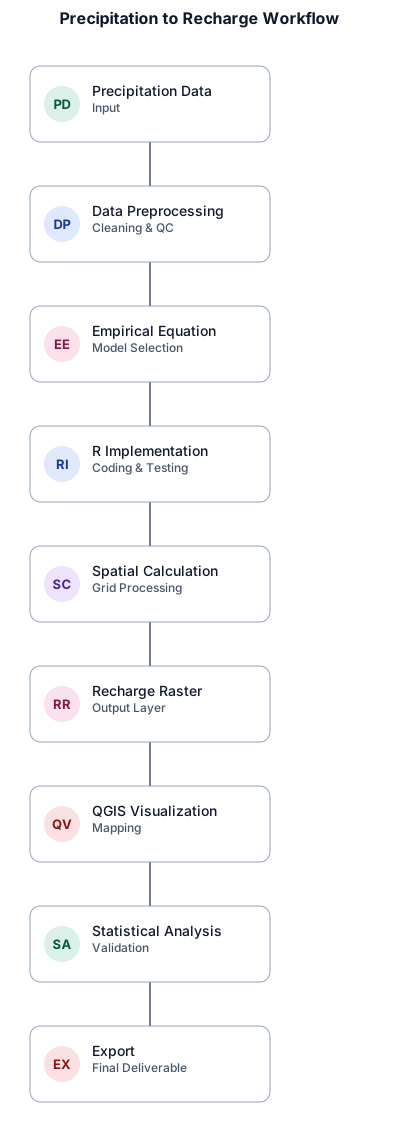
Precipitation data → Data preprocessing → Empirical equation → R implementation → Spatial calculation → Recharge raster → QGIS visualization → Statistical analysis → Export,please make itb that fits in pargarph of word docuemnt in A4 size,please make it horizontal or that best fits and increase teh fonts
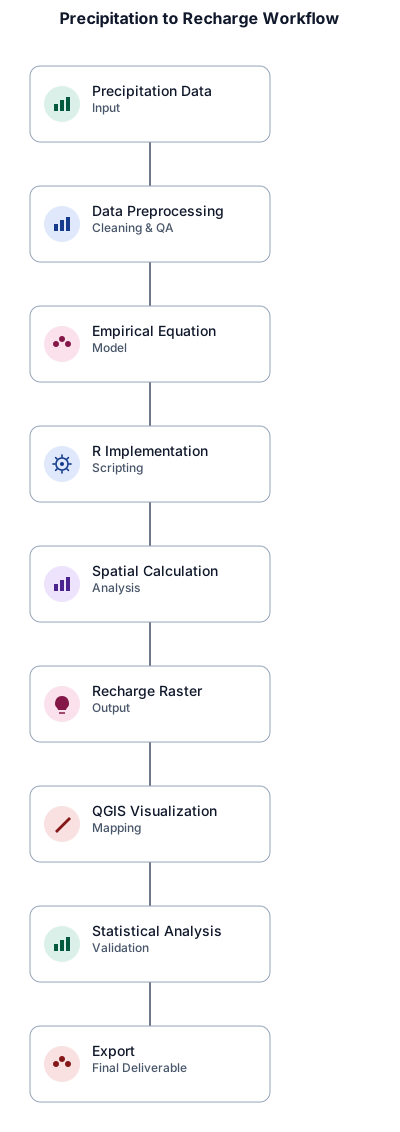
Precipitation data → Data preprocessing → Empirical equation → R implementation → Spatial calculation → Recharge raster → QGIS visualization → Statistical analysis → Export,please make itb that fits in pargarph of word docuemnt in A4 size
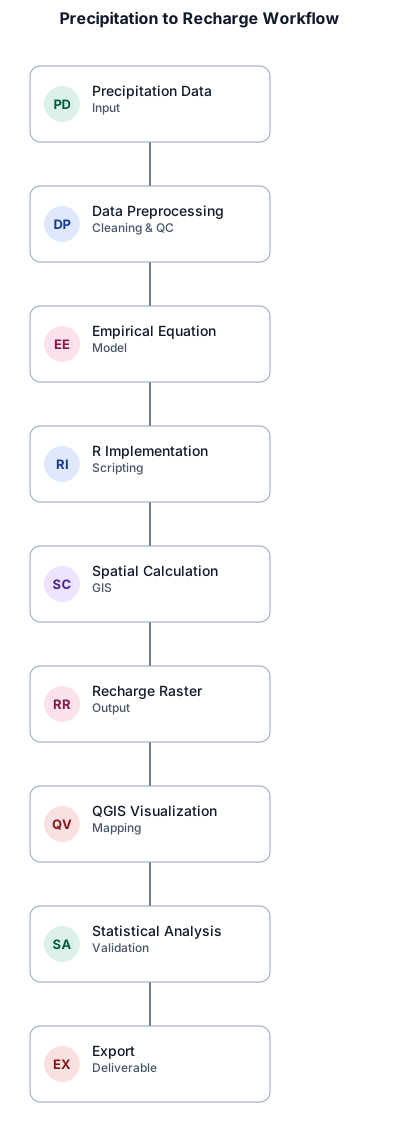
Precipitation data → Data preprocessing → Empirical equation → R implementation → Spatial calculation → Recharge raster → QGIS visualization → Statistical analysis → Export

An org chart for a 30-person startup with engineering, product, sales, and operations teams
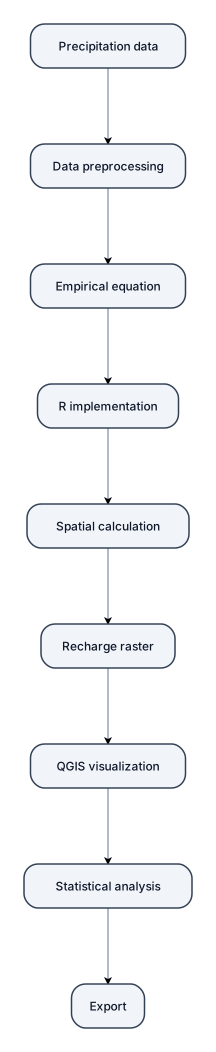
please generate or develope flow chart :Precipitation data → Data preprocessing → Empirical equation → R implementation → Spatial calculation → Recharge raster → QGIS visualization → Statistical analysis → Export
Focused examples and prompt ideas
Start with the complete visitor wall above, then use these focused collections when you want a narrower subject and more prompt context.
The first curated collection is being prepared.