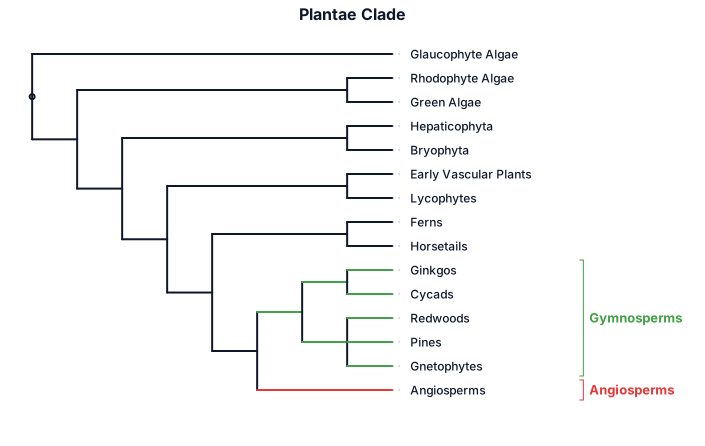
A cladogram with square branches of the plantae clade showing glaucophyte algae as an outgroup, then rhodophyte algae (red algae), then green algae, then hepaticophyta (liverworts), bryophta (mosses), then early vascular plants, then lycophytes, then a branch that splits into ferns and horsetails, then a clade made up of the gymnosperms, and angiosperms. Within the gymnosperms there are two groups - the ginkos and cycads and another group the redwoods, pines and gnetophytes which originate in a polytomy
NODE ARCHIVE · REAL DIAGRAM BRIEFS
Diagram Examples from Real Visitor Prompts
Browse eligible diagrams shared by FreeDiagram visitors, inspect the exact prompts, and build your own version.
Browse 3261 real creationsCOMMUNITY OUTPUTS · EXACT PROMPTS
Phylogenetic Tree
Showing 121–144 of 193. No stock examples or system defaults. Choose a tool, study a real result, then reopen its prompt as your starting point.
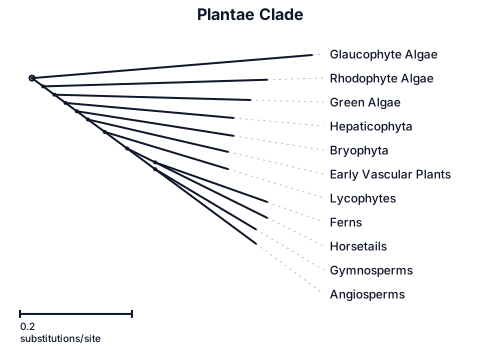
A phylogenetic tree with square branches of the plantae clade showing glaucophyte algae as an outgroup, then rhodophyte algae (red algae), then green algae, then hepaticophyta (liverworts), bryophta (mosses), then early vascular plants, then lycophytes, then a branch that splits into ferns and horsetails, then a clade made up of the gymnosperms, and angiosperms. Within the gymnosperms there are two groups - the ginkos and cycads and another group the redwoods, pines and gnetophytes which originate in a polytomy
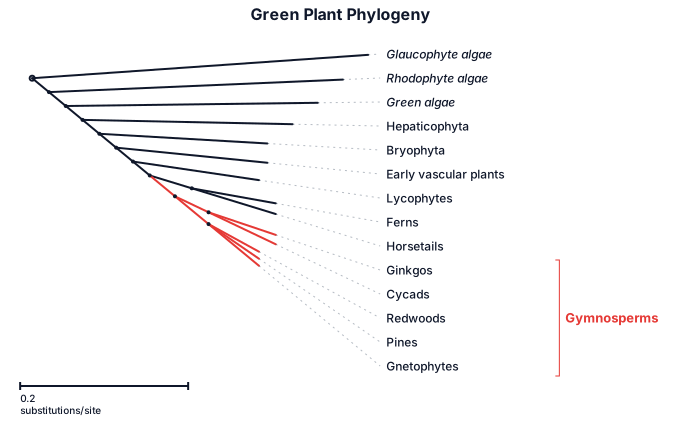
A phylogenetic tree of the green plants showing glaucophyte algae as an outgroup, then rhodophyte algae (red algae), then green algae, then hepaticophyta (liverworts), bryophta (mosses), then early vascular plants, then lycophytes, then a branch that splits into ferns and horsetails, then a clade showing gymnosperms, and angiosperms. Within the gymnosperms there are two groups - the ginkos and cycads and another group the redwoods, pines and gnetophytes which originate in a polytomy
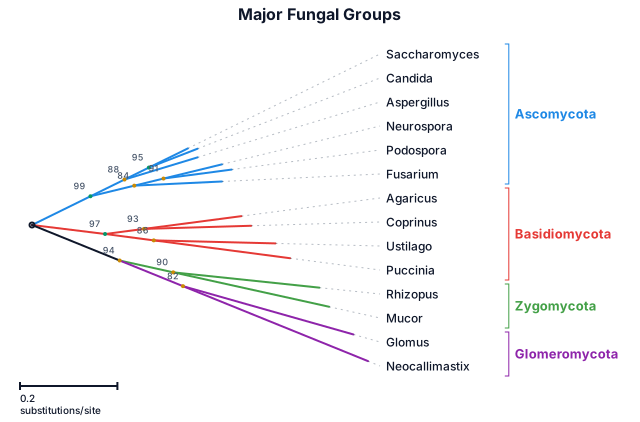
A phylogenetic tree of the major fungal groups, with branch lengths and bootstrap support values
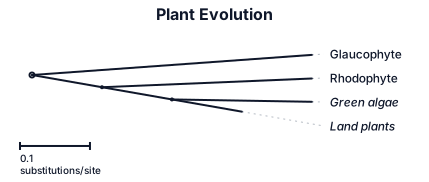
a phylogenetic tree with squared off brthat shows glaucophyte algae as an outgroup, then rhodophyte (red) algae, then green algae, then land plants; please make the branches separate at 90 degrees
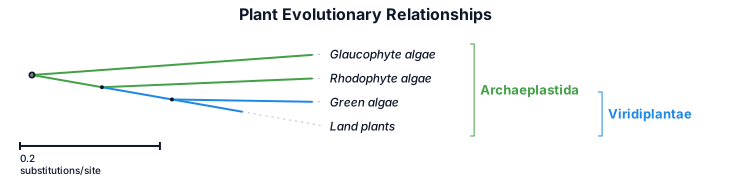
a phylogenetic tree with squared off brthat shows glaucophyte algae as an outgroup, then rhodophyte (red) algae, then green algae, then land plants
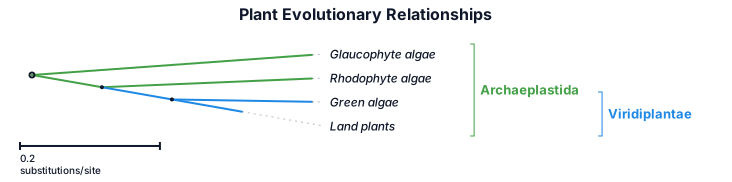
a phylogenetic tree that shows glaucophyte algae as an outgroup, then rhodophyte (red) algae, then green algae, then land plants
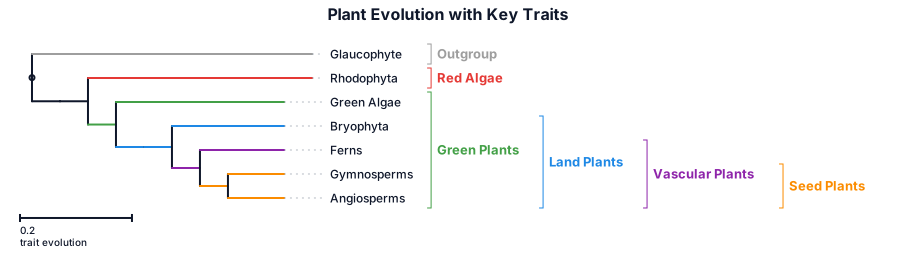
a phylogenetic tree with square corners that shows the Glaucophyte algae as an outgroup, then includes (in this order): Rhodophyta (red algae), Green Algae, Bryophyta (mosses), Ferns, Gymnosperms (cone producers), Angiosperms (flowering plants). Add to that cuticle, chlorophyll a, phycoerythrin, vessel elements, roots, true leaves, wood, and tracheids, each of which are shown as tick marks along the phylogeny and the phylogeny has squared off corners
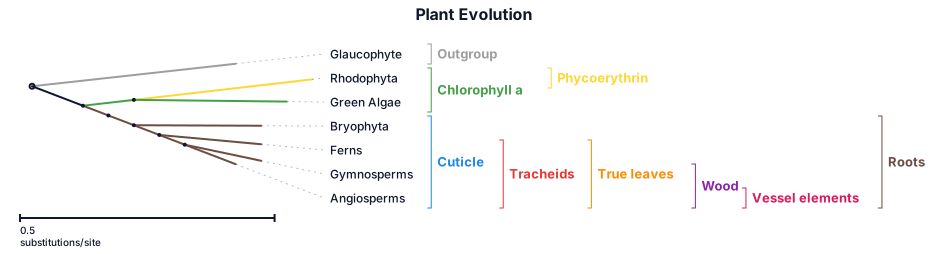
a phylogenetic tree with square corners that shows the Glaucophyte algae as an outgroup, then includes (in this order): Rhodophyta (red algae), Green Algae, Bryophyta (mosses), Ferns, Gymnosperms (cone producers), Angiosperms (flowering plants). Add to that cuticle, chlorophyll a, phycoerythrin, vessel elements, roots, true leaves, wood, and tracheids
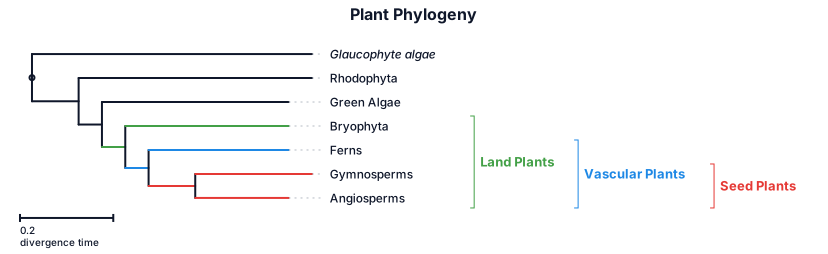
a phylogenetic tree with square corners that shows the Glaucophyte algae as an outgroup, then includes (in this order): Rhodophyta (red algae), Green Algae, Bryophyta (mosses), Ferns, Gymnosperms (cone producers), Angiosperms (flowering plants)
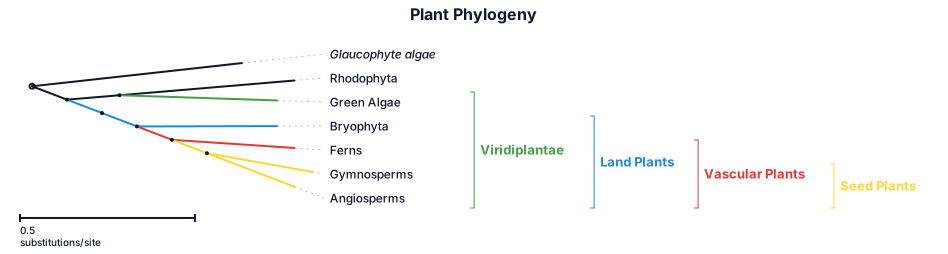
a phylogenetic tree that shows the Glaucophyte algae as an outgroup, then includes (in this order): Rhodophyta (red algae), Green Algae, Bryophyta (mosses), Ferns, Gymnosperms (cone producers), Angiosperms (flowering plants)
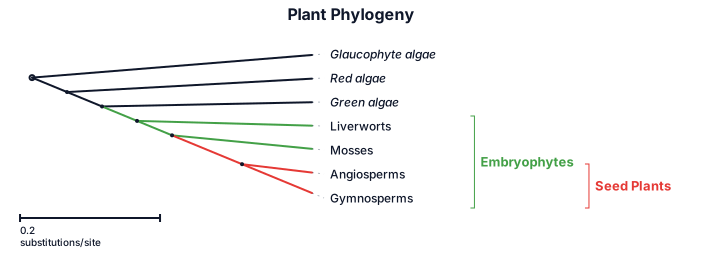
(glaucophyte algae (red algae (green algae (liverworts (mosses (angiosperms, gymnosperms))))))
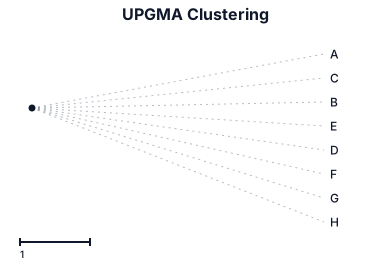
A: (1,0,1,0,0,0,0 B: (1,1,0,1,1,1,1) C: (1,0,1,0,0,0,0) D: (1,1,0,1,0,0,0) E: (1,1,0,1,1,1,1) F: (1,1,0,1,1,0,0) G: (1,1,0,0,0,0,0) H: (1,1,0,1,1,1,0)
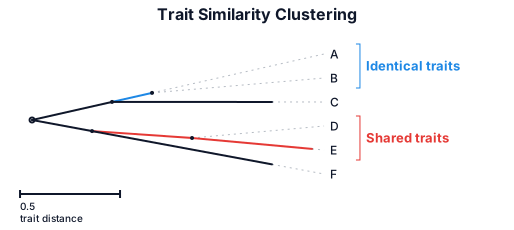
A: (1,1,1,0,0) B: (1,1,1,0,0) C: (0,0,1,1,1) D: (0,0,1,1,1 E: (1,0,1,0,0) F: (0,0,1,0,1)
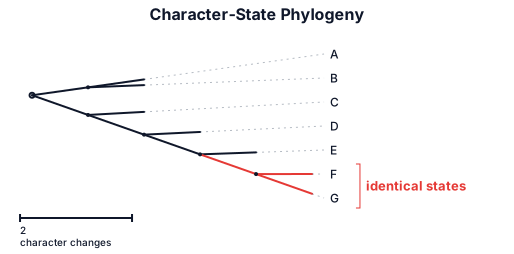
A: (1,0,0,0,0,0) B: (1,1,0,0,0,0) C: (1,1,1,0,0,0) D: (1,1,1,1,0,0) E: (1,1,1,1,1,0) F: (1,1,1,1,1,1) G: (1,1,1,1,1,1)
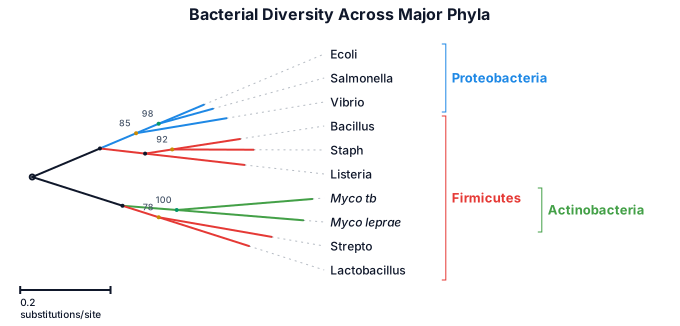
Bacterial diversity across the major phyla including Firmicutes, Proteobacteria, and Actinobacteria
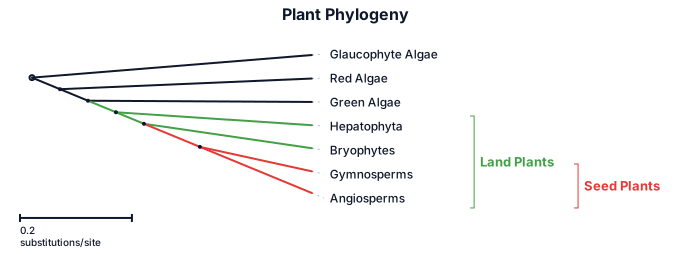
can you help me generate a phylogenetic tree that shows relationships among the mosses, ferns, horsetails, gymnosperms, angiosperms, glaucophyte algae, green algae, and red algae. Glaucophyte algae branches off first and is an outgroup. Then rhodophyta (red algae) branches off. Then green algae branches off. Next hepatophyta (liverworts), then bryophytes (mosses), finally the clade that shares the most recent common ancestor is gymnosperms and angiosperms.
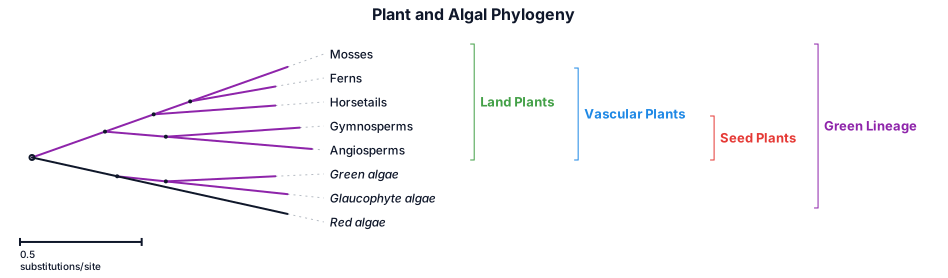
can you help me generate a phylogenetic tree that shows relationships among the mosses, ferns, horsetails, gymnosperms, angiosperms, glaucophyte algae, green algae, and red algae
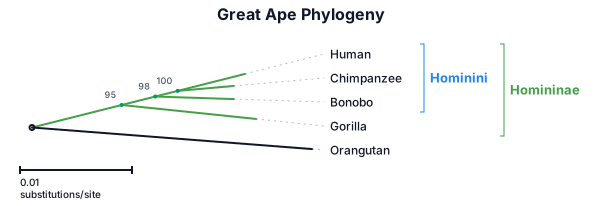
A phylogenetic tree of the great apes: humans, chimpanzees, bonobos, gorillas, and orangutans, with branch lengths and bootstrap support values
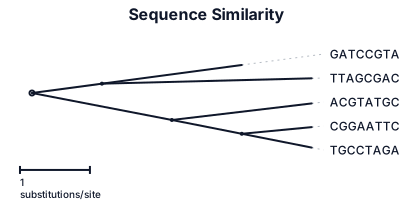
GATCCGTA TTAGCGAC ACGTATGC CGGAATTC TGCCTAGA
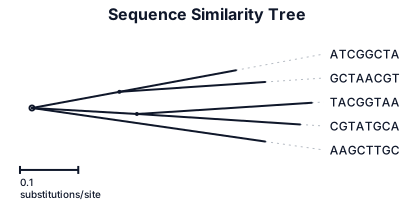
ATCGGCTA GCTAACGT TACGGTAA CGTATGCA AAGCTTGC
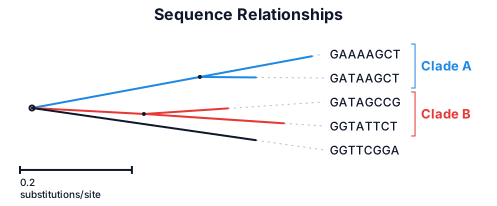
GAAAAGCT GATAGCCG GGTATTCT GATAAGCT GGTTCGGA
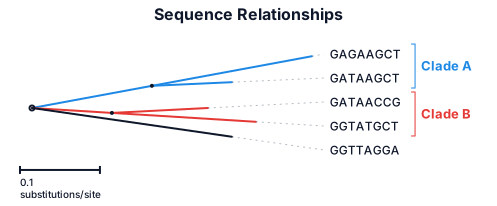
GAGAAGCT GATAACCG GGTATGCT GATAAGCT GGTTAGGA
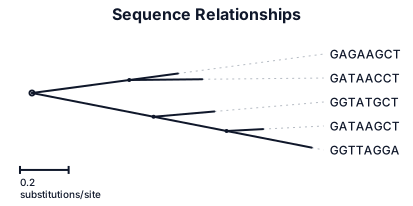
GAGAAGCT GATAACCT GGTATGCT GATAAGCT GGTTAGGA