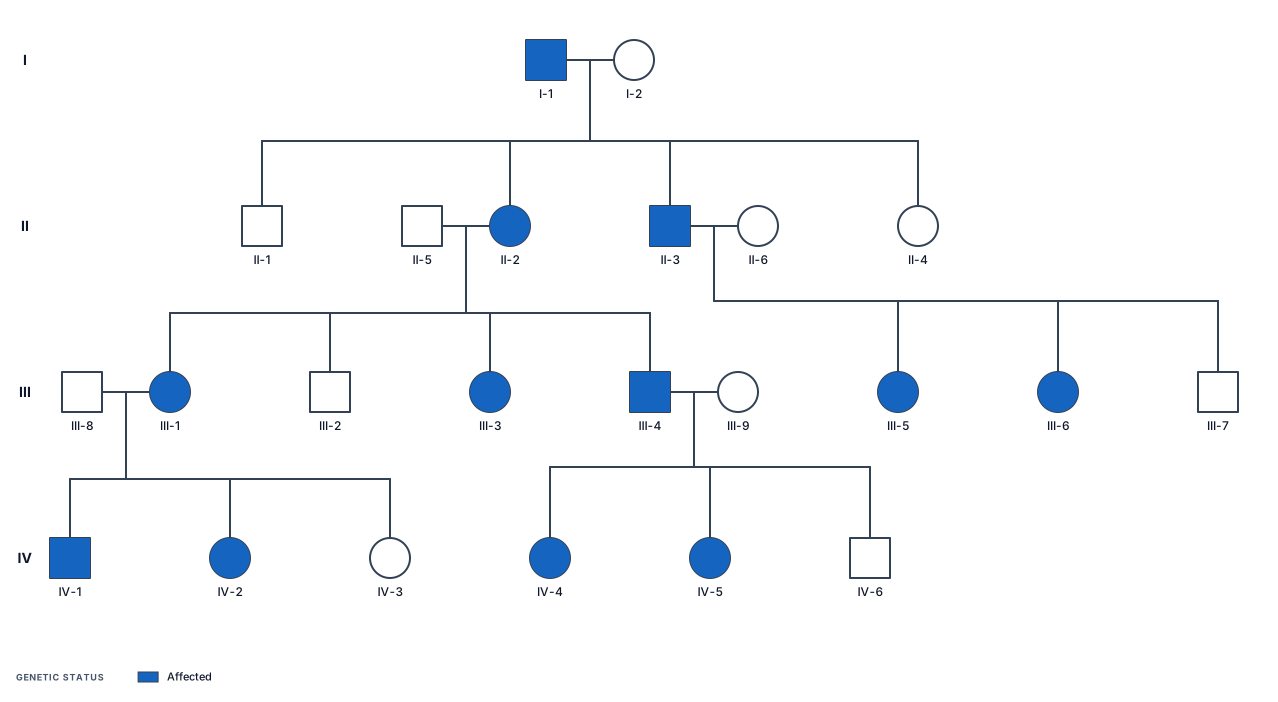
a big pedigree chart x linked dominant
NODE ARCHIVE · REAL DIAGRAM BRIEFS
Diagram Examples from Real Visitor Prompts
Browse eligible diagrams shared by FreeDiagram visitors, inspect the exact prompts, and build your own version.
Browse 3261 real creationsCOMMUNITY OUTPUTS · EXACT PROMPTS
Pedigree Chart
Showing 25–48 of 59. No stock examples or system defaults. Choose a tool, study a real result, then reopen its prompt as your starting point.
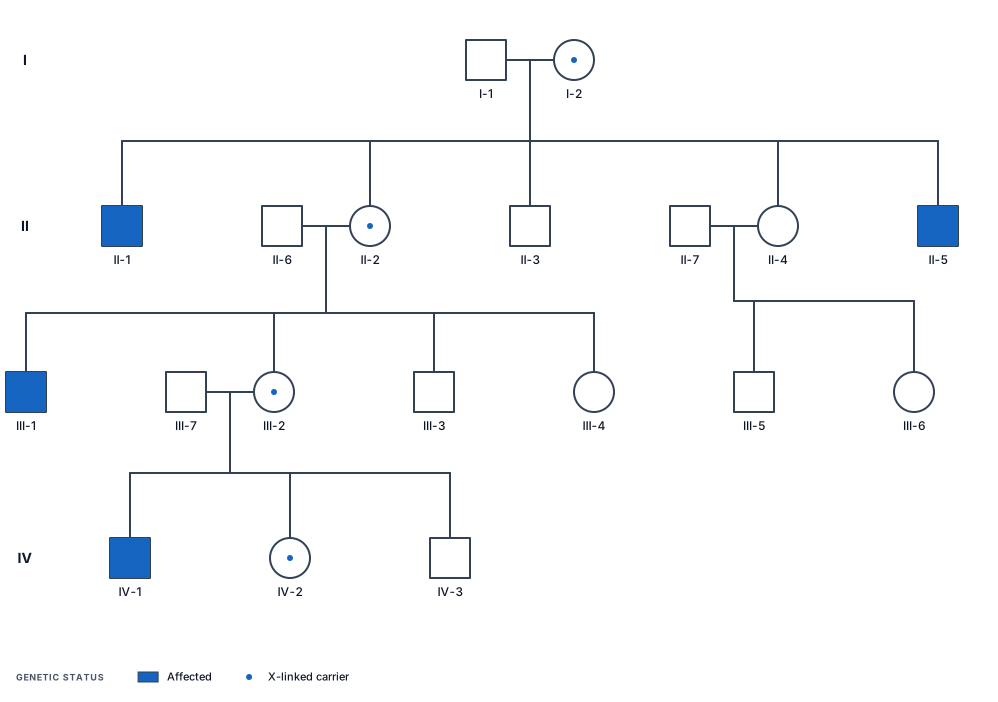
a big pedigree chart x linked recessive
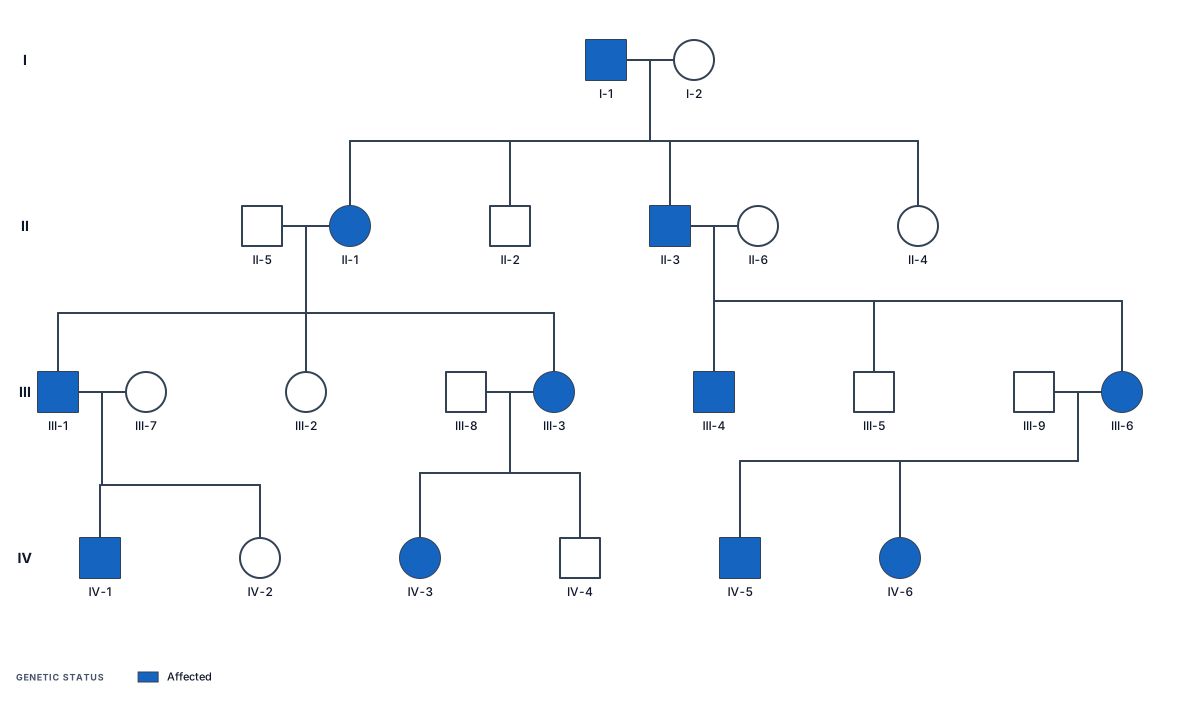
a big pedigree chart autosomal dominant
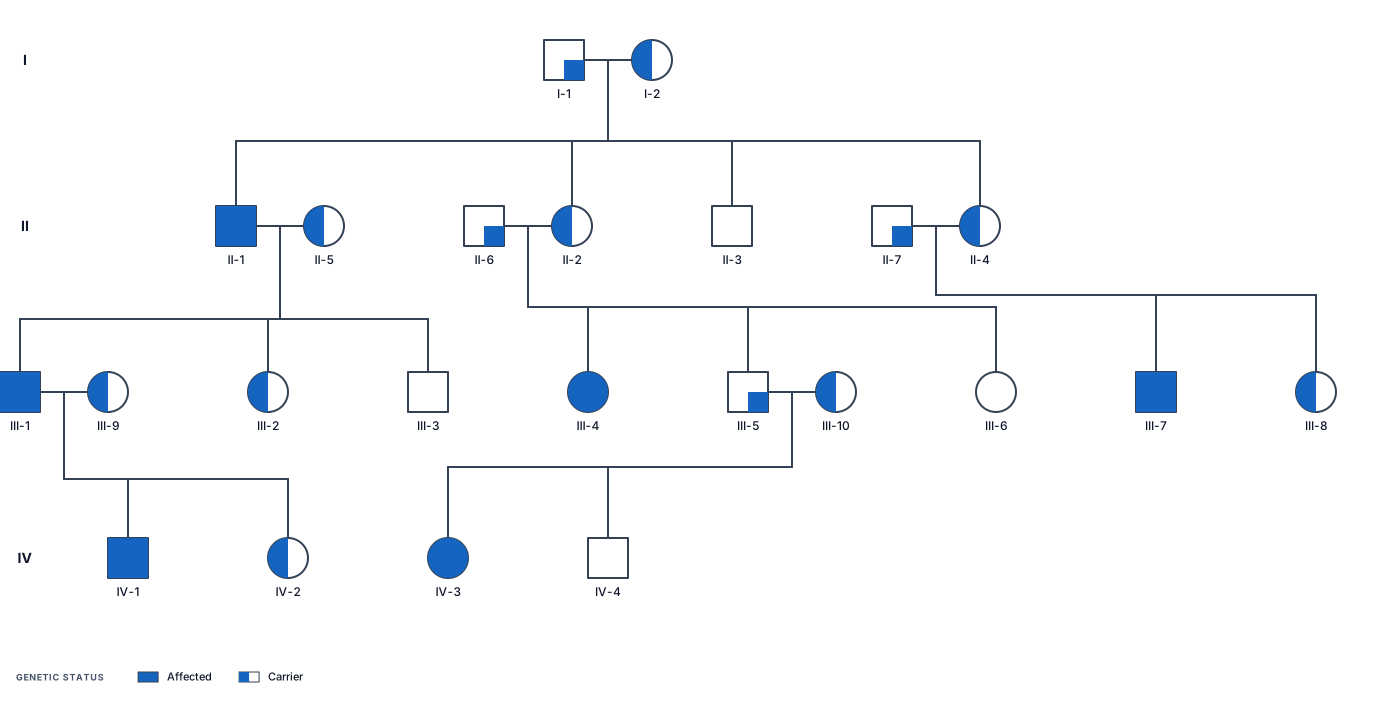
a big pedigree chart autosomal recessive
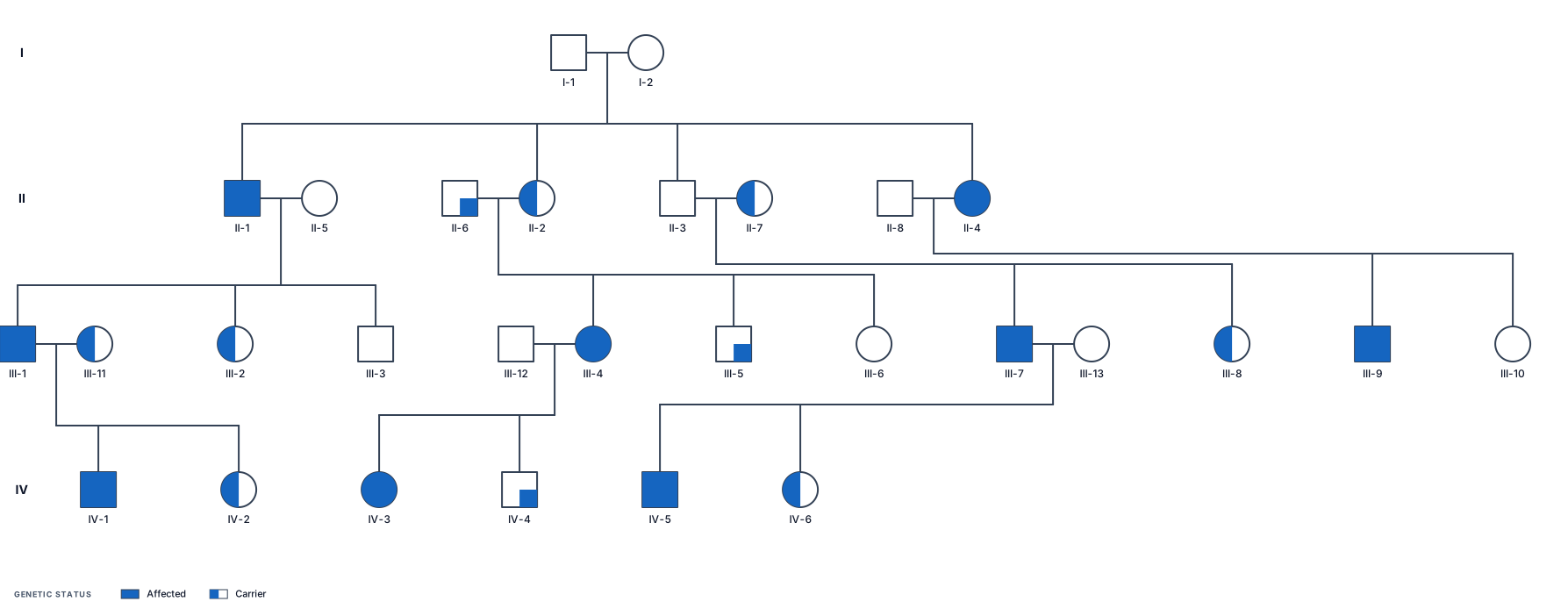
a big pedigree chart
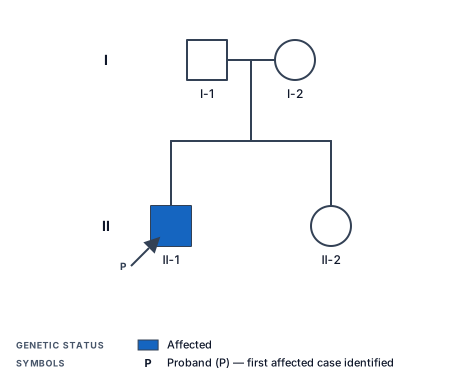
a pdegreeee
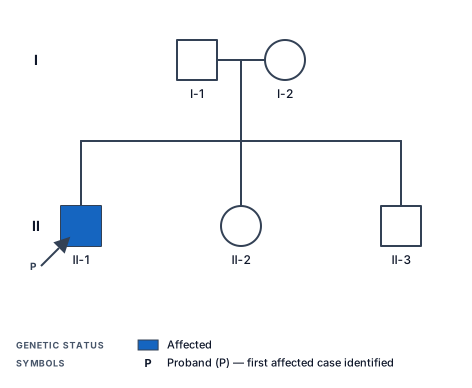
pedigree
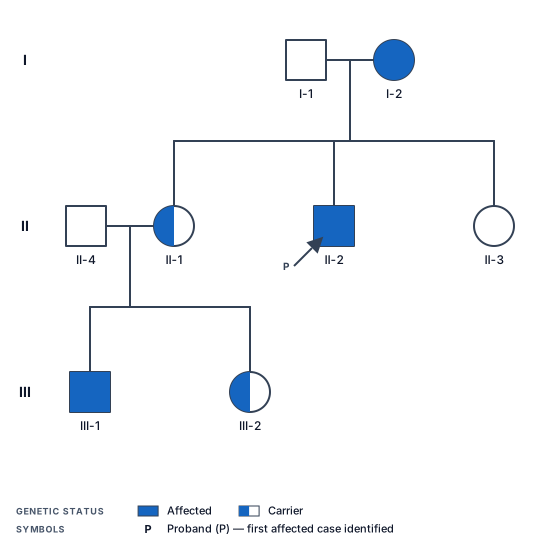
another pedigree
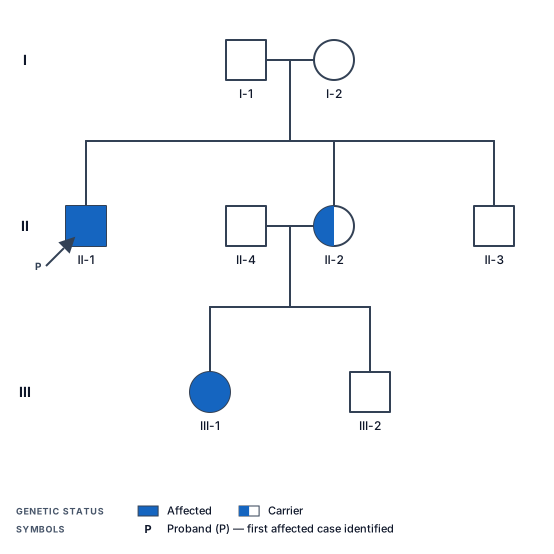
just any pedigree
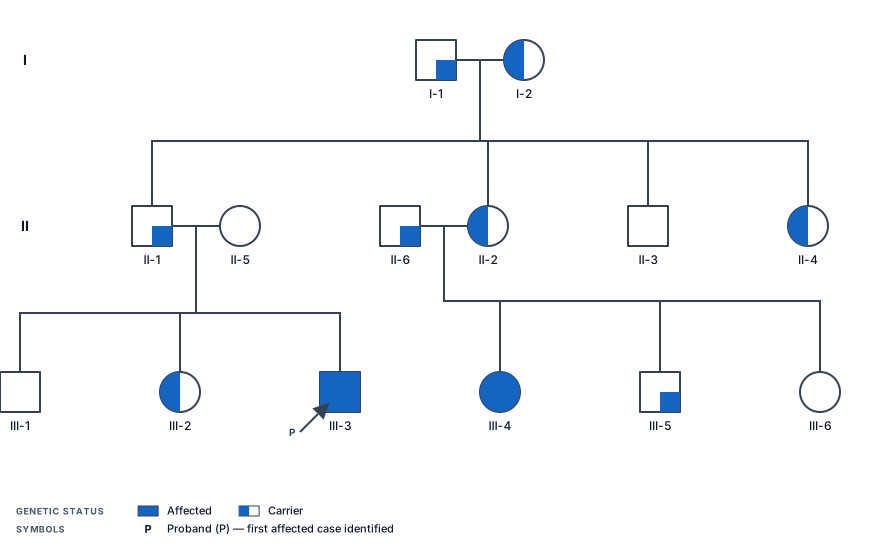
Create a three-generation pedigree demonstrating autosomal recessive inheritance of Spinal Muscular Atrophy Type II (SMA2) caused by mutations in the SMN1 gene. Use standard pedigree symbols: squares for males, circles for females, filled symbols for affected individuals, half-filled symbols for unaffected carriers, and unfilled symbols for unaffected non-carriers. Label each individual by generation and number (I-1, I-2, II-1, etc.) and include the genotype below each individual. Use A for a normal SMN1 allele and a for a disease-causing allele, so affected individuals are aa, carriers are Aa, and unaffected non-carriers are AA. Include at least three offspring in Generation II and at least three offspring in Generation III. Have two unaffected carrier parents (Aa × Aa) in Generation II produce an affected child (aa) in Generation III. Include both males and females in the pedigree. Identify one affected individual in Generation III as the proband using an arrow. Make all individuals living so no deceased symbols are necessary. Title the pedigree “Autosomal Recessive Inheritance of Spinal Muscular Atrophy Type II (SMA2).” Include a legend explaining the symbols and genotypes.
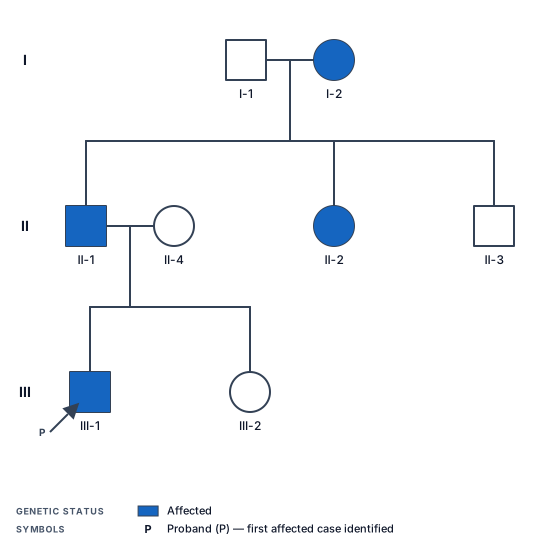
A three-generation pedigree chart showing autosomal dominant inheritance of ADPKD, with the grandmother affected, two carrier children, and one affected grandchild
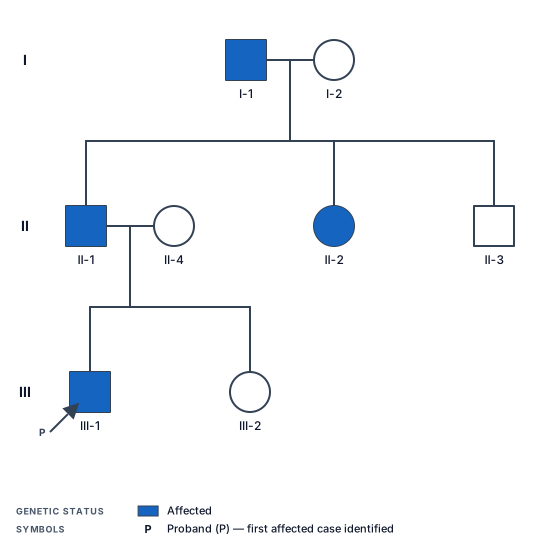
A three-generation pedigree chart showing autosomal dominant inheritance of Huntington disease, with the grandfather affected, two carrier children, and one affected grandchild
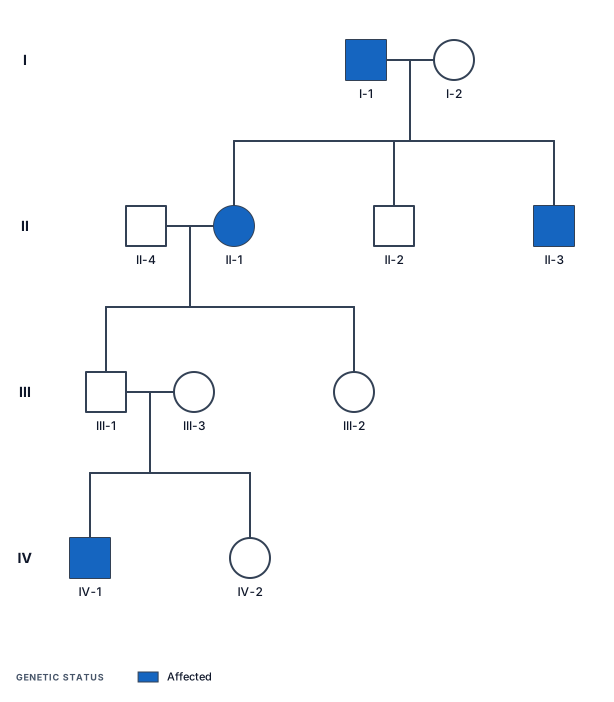
A pedigree chart for an autosomal dominant condition showing vertical transmission across four generations with one unaffected skip generation
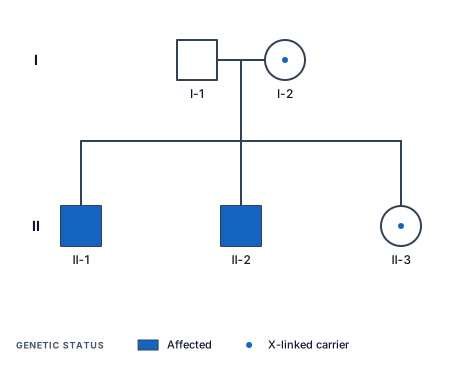
An X-linked recessive pedigree for color blindness showing a carrier mother, an unaffected father, two affected sons, and one carrier daughter. have 99 generations
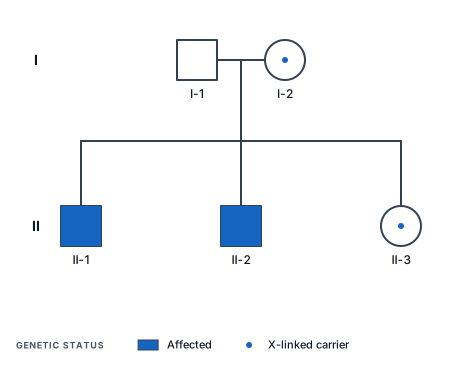
An X-linked recessive pedigree for color blindness showing a carrier mother, an unaffected father, two affected sons, and one carrier daughter. have 100 generations
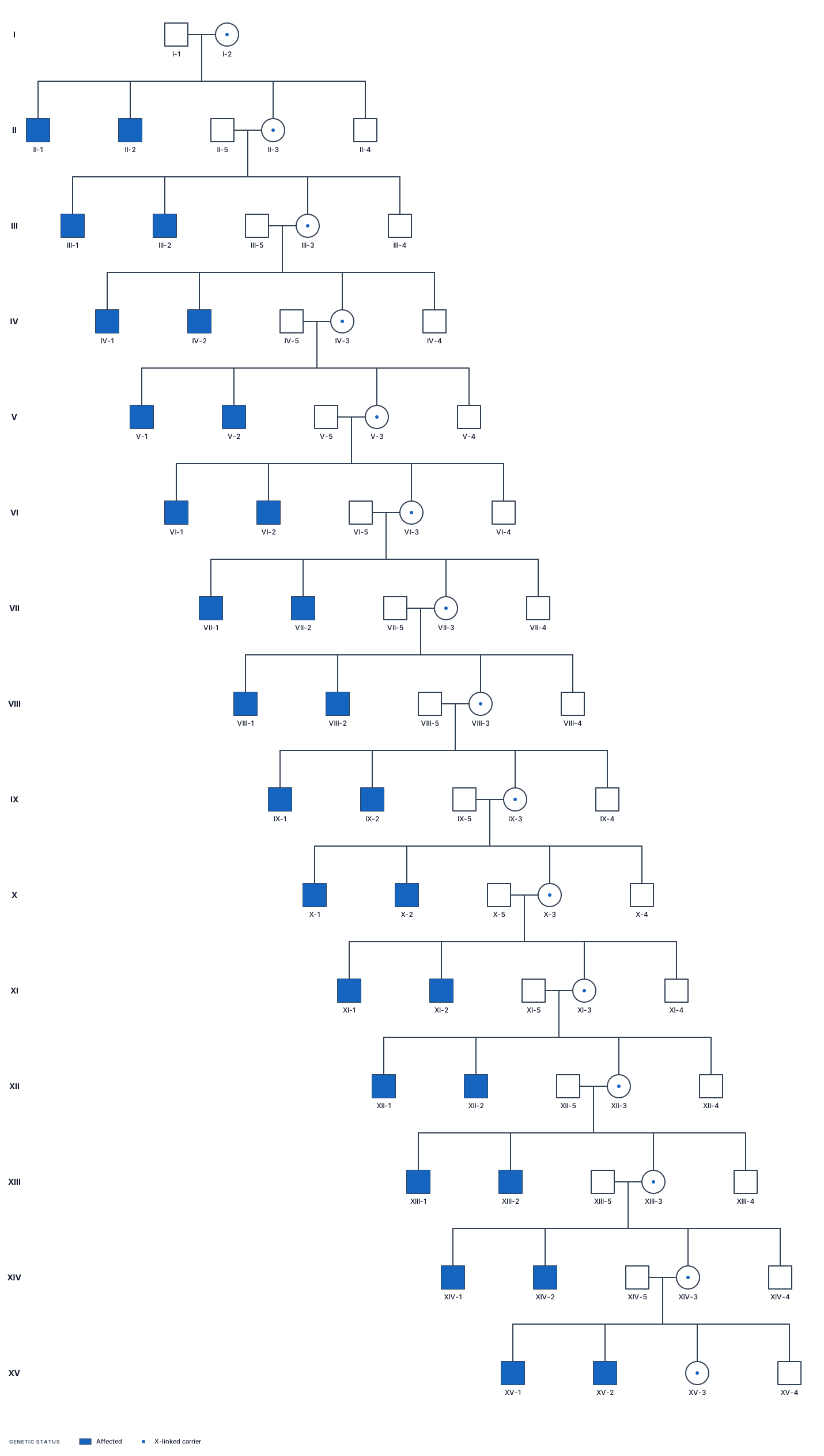
An X-linked recessive pedigree for color blindness showing a carrier mother, an unaffected father, two affected sons, and one carrier daughter. have 15 generations
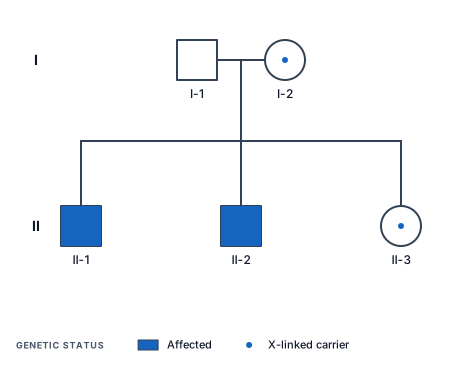
An X-linked recessive pedigree for color blindness showing a carrier mother, an unaffected father, two affected sons, and one carrier daughter
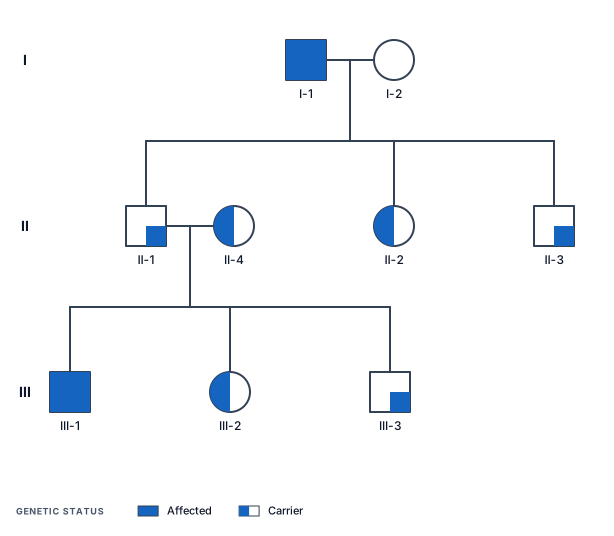
make a pedigree drawing of an autosomal recessive inheritance of sickle cell anaemia with 1 grandfather affected, 2 children becoming carriers and a 1 affected child. 3 genrations. DO NOT LABEL PROBAND
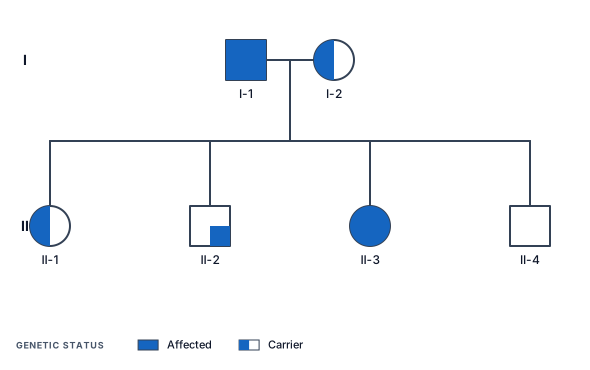
make a pedigree drawing of an autosomal recessive inheritance of sickle cell anaemia with 1 grandfather affected, 2 children becoming carriers and a 1 affected child. DO NOT LABEL PROBAND
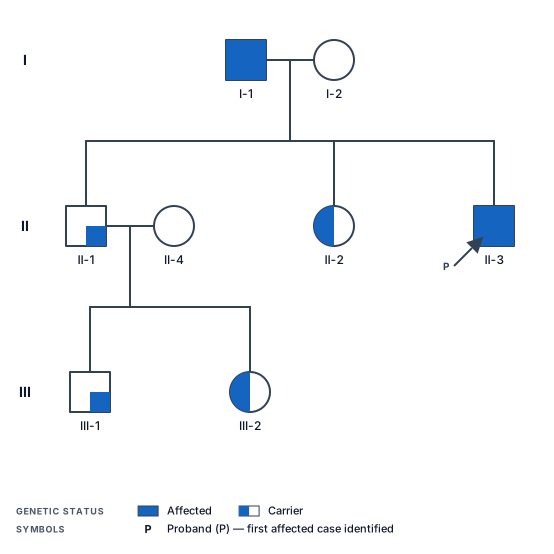
make a pedigree drawing of an autosomal recessive inheritance of sickle cell anaemia with 1 grandfather affected, 2 children becoming carriers and a 1 affected child
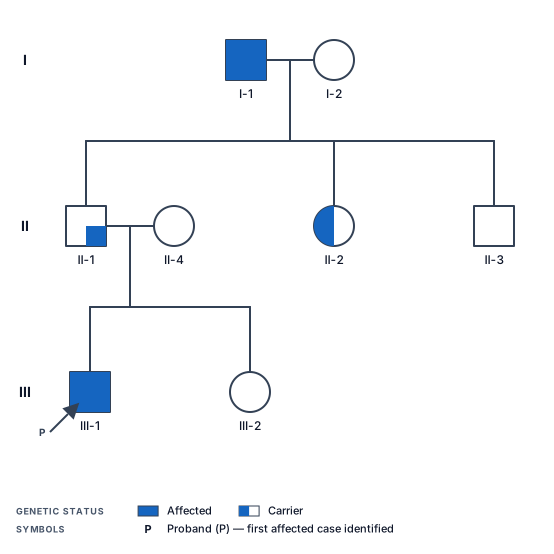
A three-generation pedigree chart showing autosomal dominant inheritance of sickle cell disease, with the grandfather affected, two carrier children, and one affected grandchild
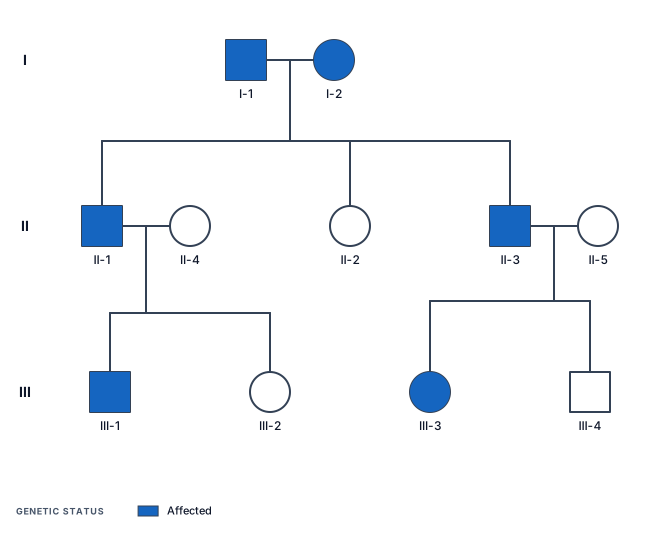
A three‑generation pedigree chart showing autosomal dominant inheritance of widow’s peak, with two affected grandparents, one affected child, one unaffected child, and cousins showing a full range of dominant, heterozygous, and unaffected phenotypes.
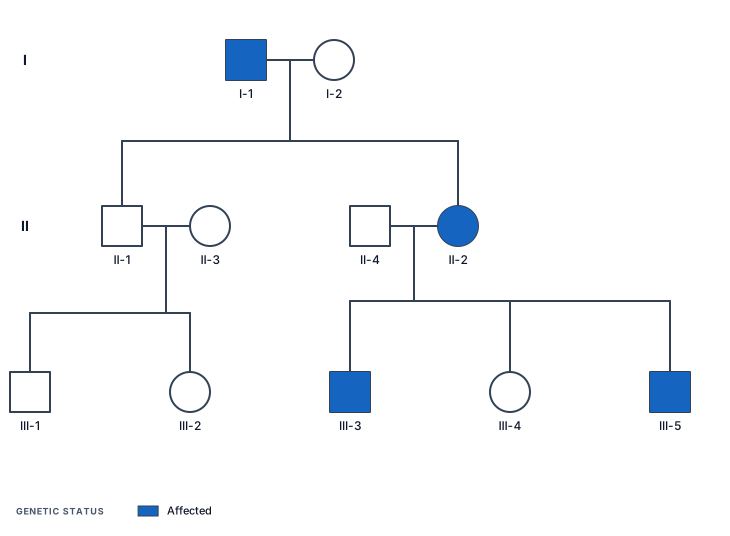
A three‑generation pedigree chart showing autosomal dominant inheritance of widow’s peak, with an affected grandfather, an unaffected grandmother, one unaffected child, one affected child, and grandchildren showing complete absence of the trait in one branch and mixed expression in the other.
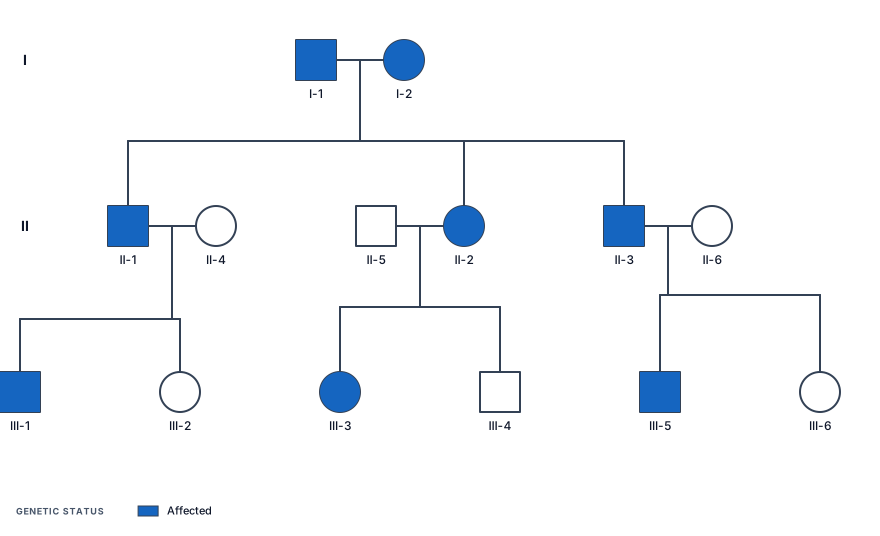
A three‑generation pedigree chart showing autosomal dominant inheritance of widow’s peak, with two affected grandparents, three affected children, and six grandchildren showing both affected and unaffected phenotypes depending on parental genotype