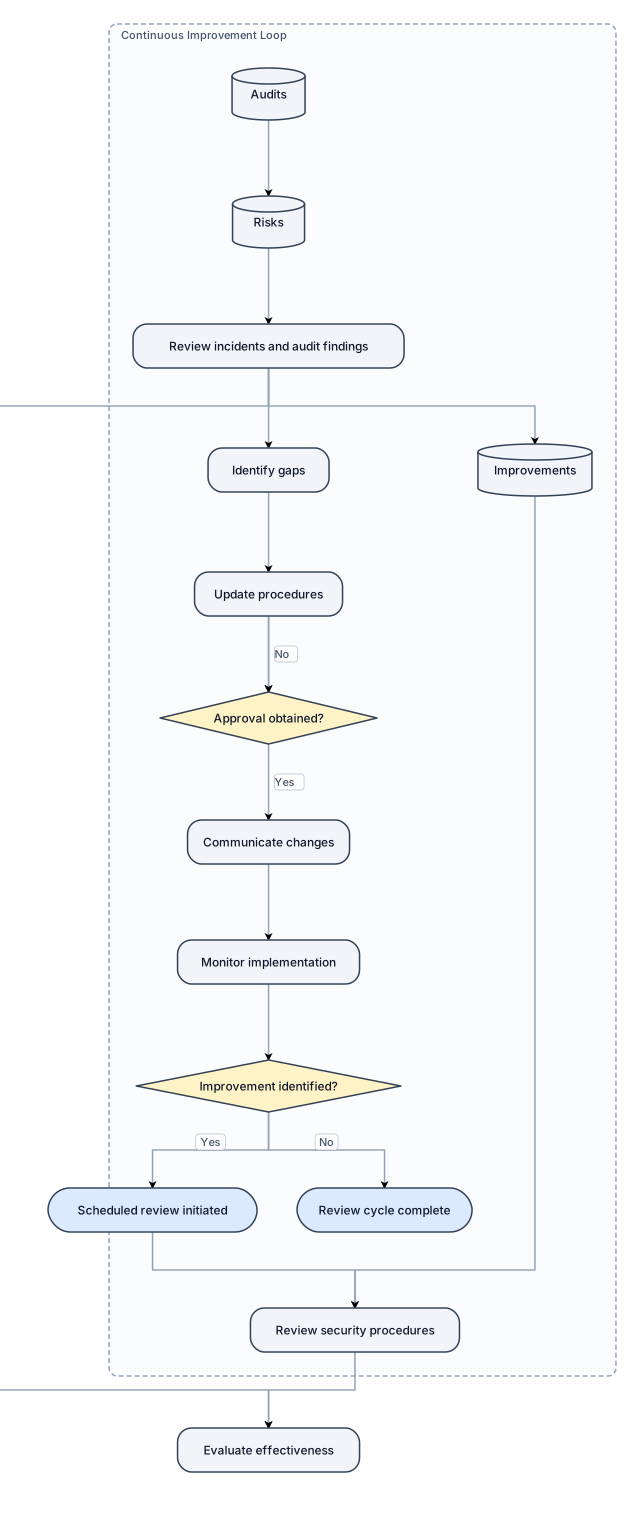
Create a Security Process Review and Continuous Improvement Workflow for Sidra Medicine. Flow: Scheduled review initiated → Review security procedures → Evaluate effectiveness → Review incidents and audit findings → Identify gaps → Update procedures → Approval obtained → Communicate changes → Monitor implementation. Connect: Audits → Risks → Incidents → Improvements.
NODE ARCHIVE · REAL DIAGRAM BRIEFS
Diagram Examples from Real Visitor Prompts
Browse eligible diagrams shared by FreeDiagram visitors, inspect the exact prompts, and build your own version.
Browse 951 real creationsCOMMUNITY OUTPUTS · EXACT PROMPTS
All visitor creations
Showing 553–576 of 951. No stock examples or system defaults. Choose a tool, study a real result, then reopen its prompt as your starting point.
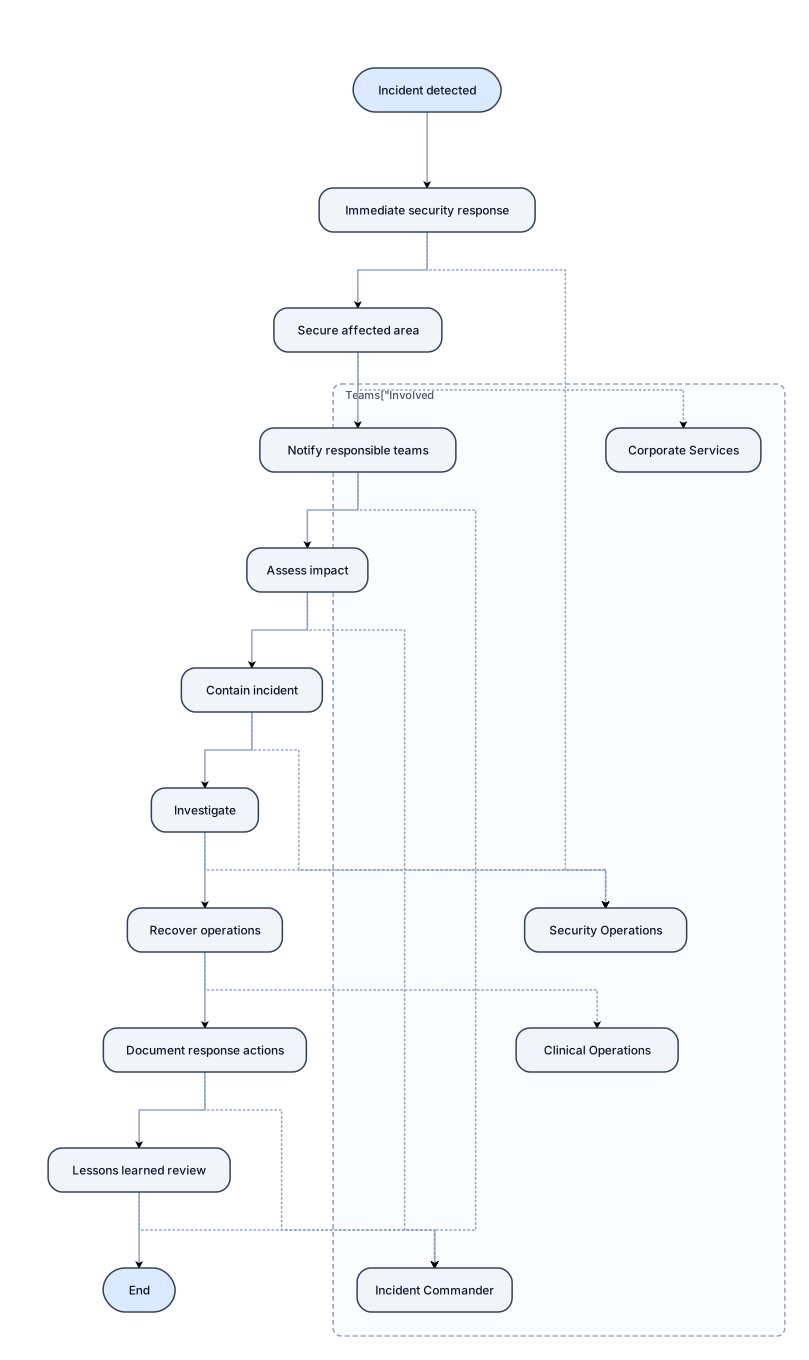
Create a Security Incident Response Workflow for Sidra Medicine. Flow: Incident detected → Immediate security response → Secure affected area → Notify responsible teams → Assess impact → Contain incident → Investigate → Recover operations → Document response actions → Lessons learned review. Show involved teams: Security Operations Incident Commander Corporate Services Clinical Operations.
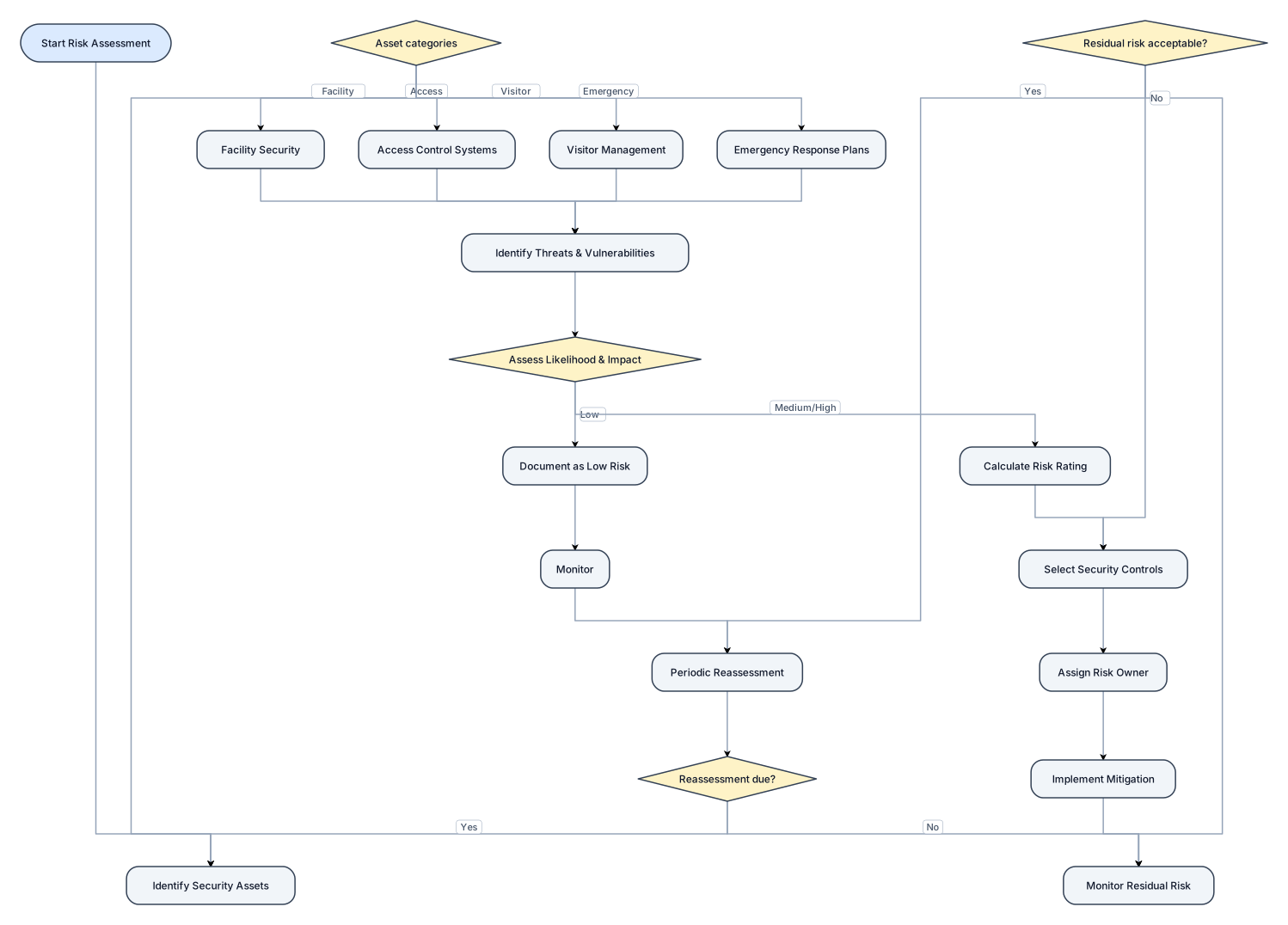
Create an ISO 27001 Security Risk Assessment Workflow for Sidra Medicine Physical Security. Flow: Identify security assets → Identify threats and vulnerabilities → Assess likelihood and impact → Calculate risk rating → Select security controls → Assign risk owner → Implement mitigation → Monitor residual risk → Periodic reassessment. Include risks: Facility security Access control Visitor management Emergency response.
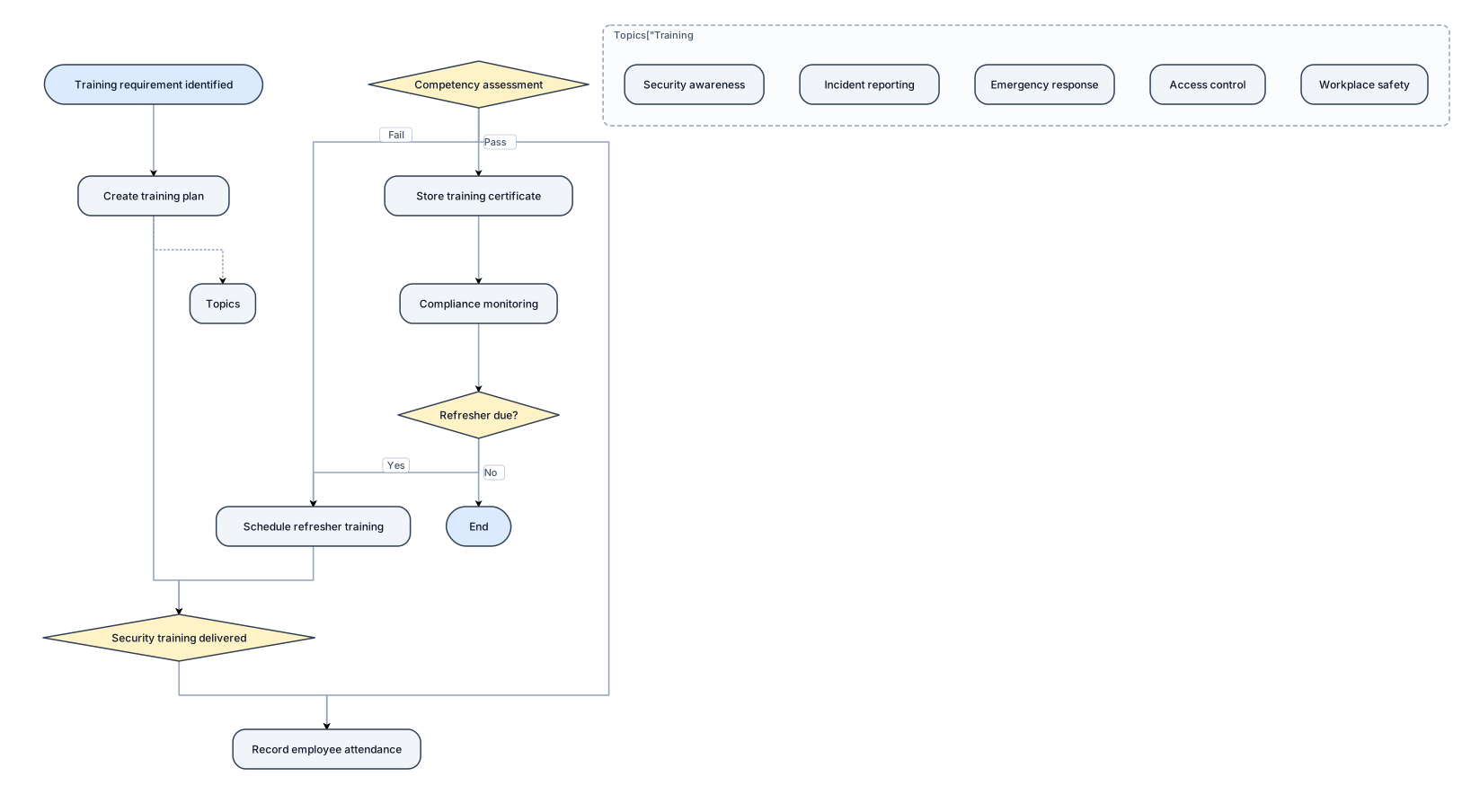
Create a Security Training Management Workflow for Sidra Medicine. Flow: Training requirement identified → Training plan created → Security training delivered → Employee attendance recorded → Competency assessment → Training certificate stored → Compliance monitoring → Refresher training scheduled. Include training topics: Security awareness Incident reporting Emergency response Access control Workplace safety.
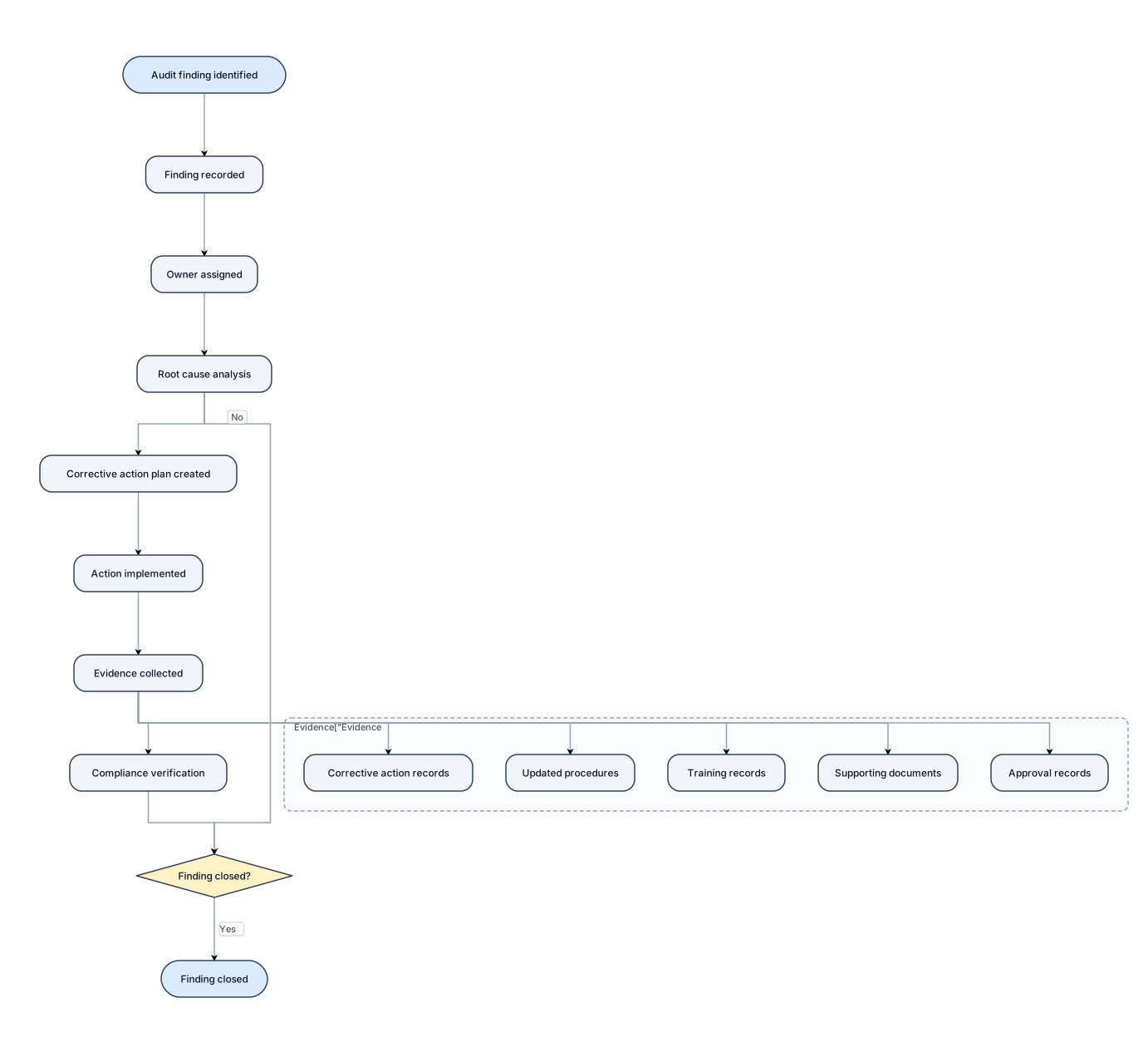
Create an ISO 27001 Audit Finding Closure Workflow for Sidra Medicine Security Department. Flow: Audit finding identified → Finding recorded → Owner assigned → Root cause analysis → Corrective action plan created → Action implemented → Evidence collected → Compliance verification → Finding closed. Include evidence: Corrective action records Updated procedures Training records Supporting documents Approval records.
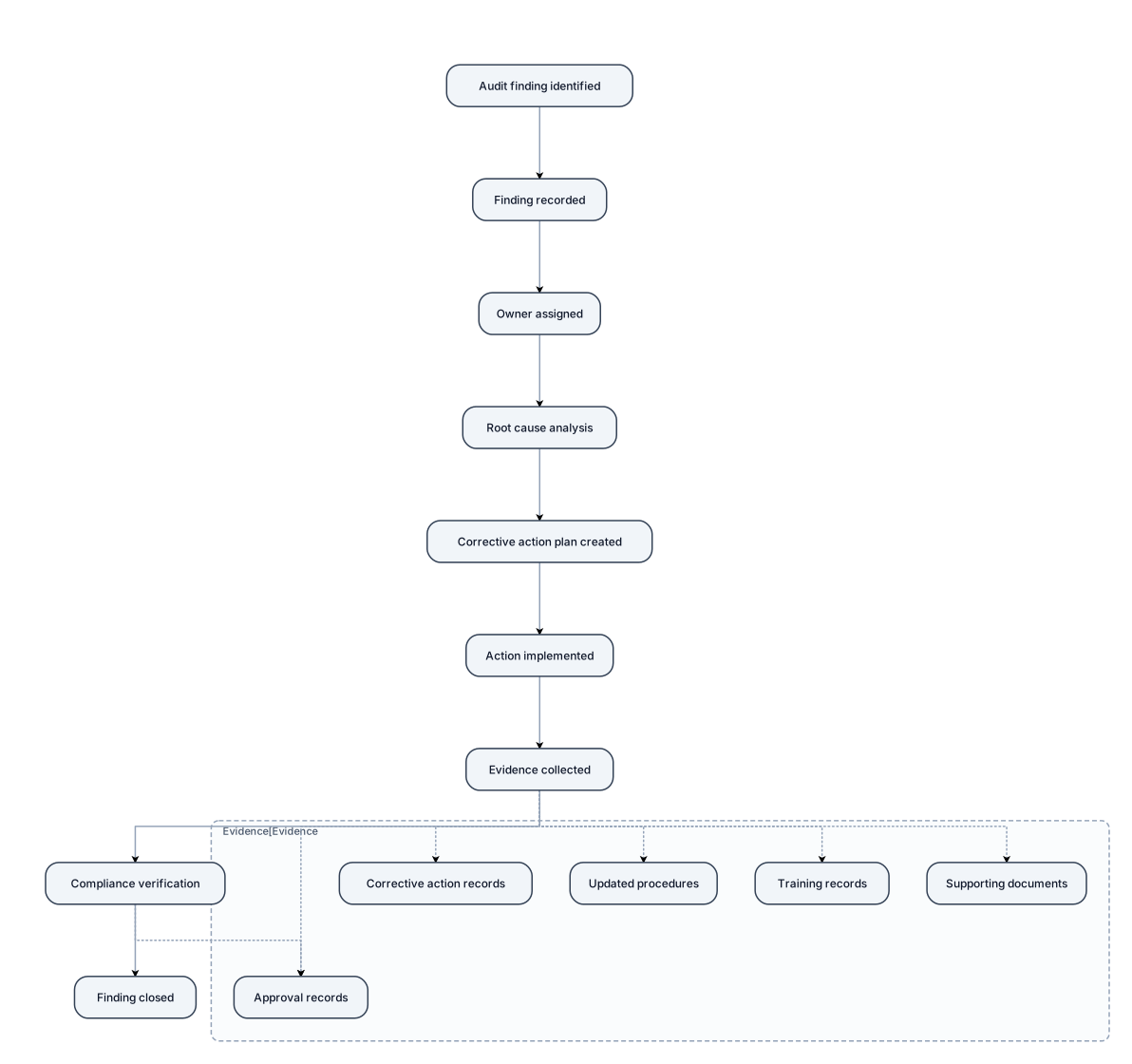
Create an ISO 27001 Audit Finding Closure Workflow for Sidra Medicine Security Department. Flow: Audit finding identified → Finding recorded → Owner assigned → Root cause analysis → Corrective action plan created → Action implemented → Evidence collected → Compliance verification → Finding closed. Include evidence: Corrective action records Updated procedures Training records Supporting documents Approval records.
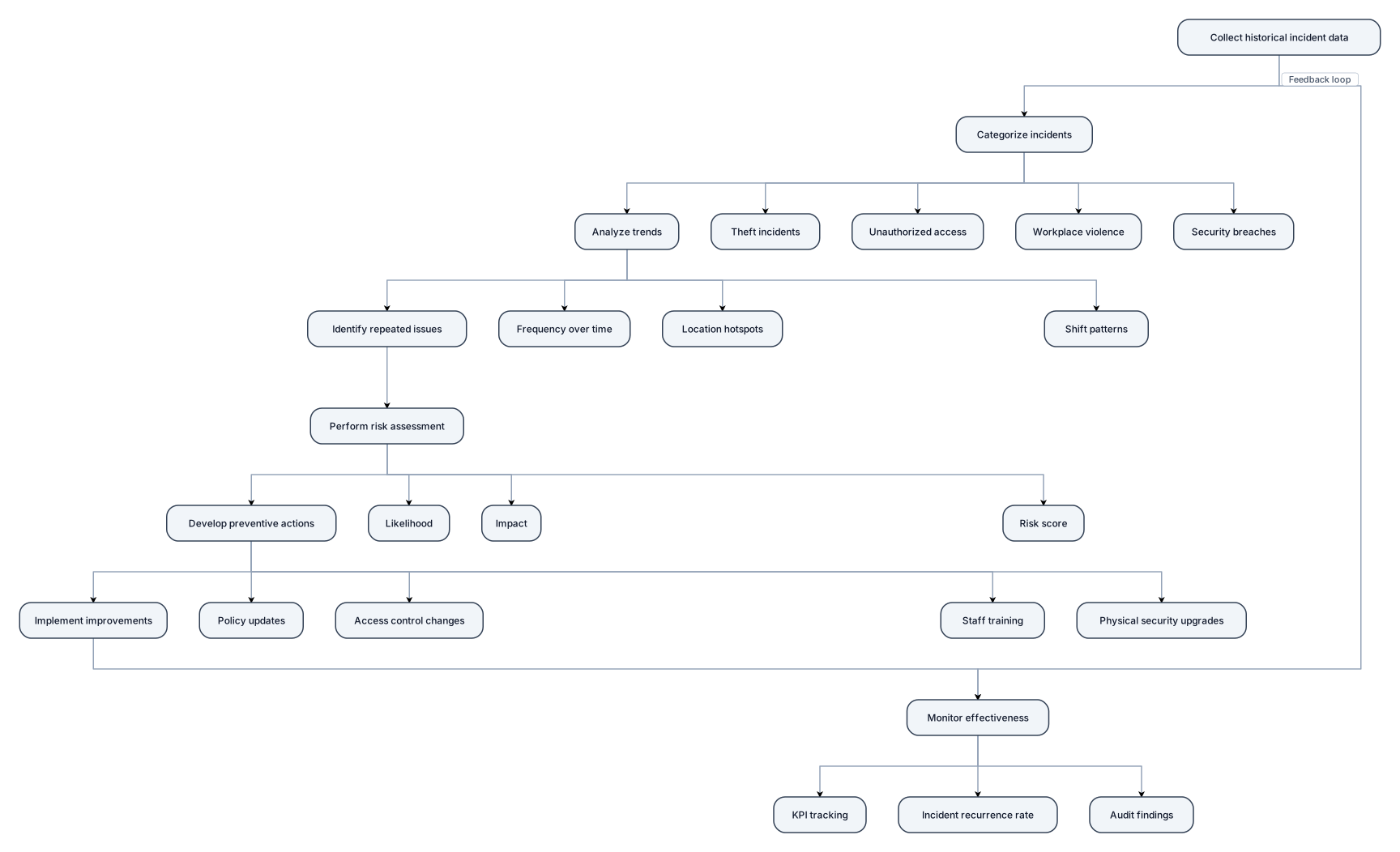
Create a Security Incident Trend Analysis Workflow for Sidra Medicine. Flow: Collect historical incident data → Categorize incidents → Analyze trends → Identify repeated issues → Perform risk assessment → Develop preventive actions → Implement improvements → Monitor effectiveness. Include examples: Theft incidents Unauthorized access Workplace violence Security breaches. Show continuous improvement cycle.
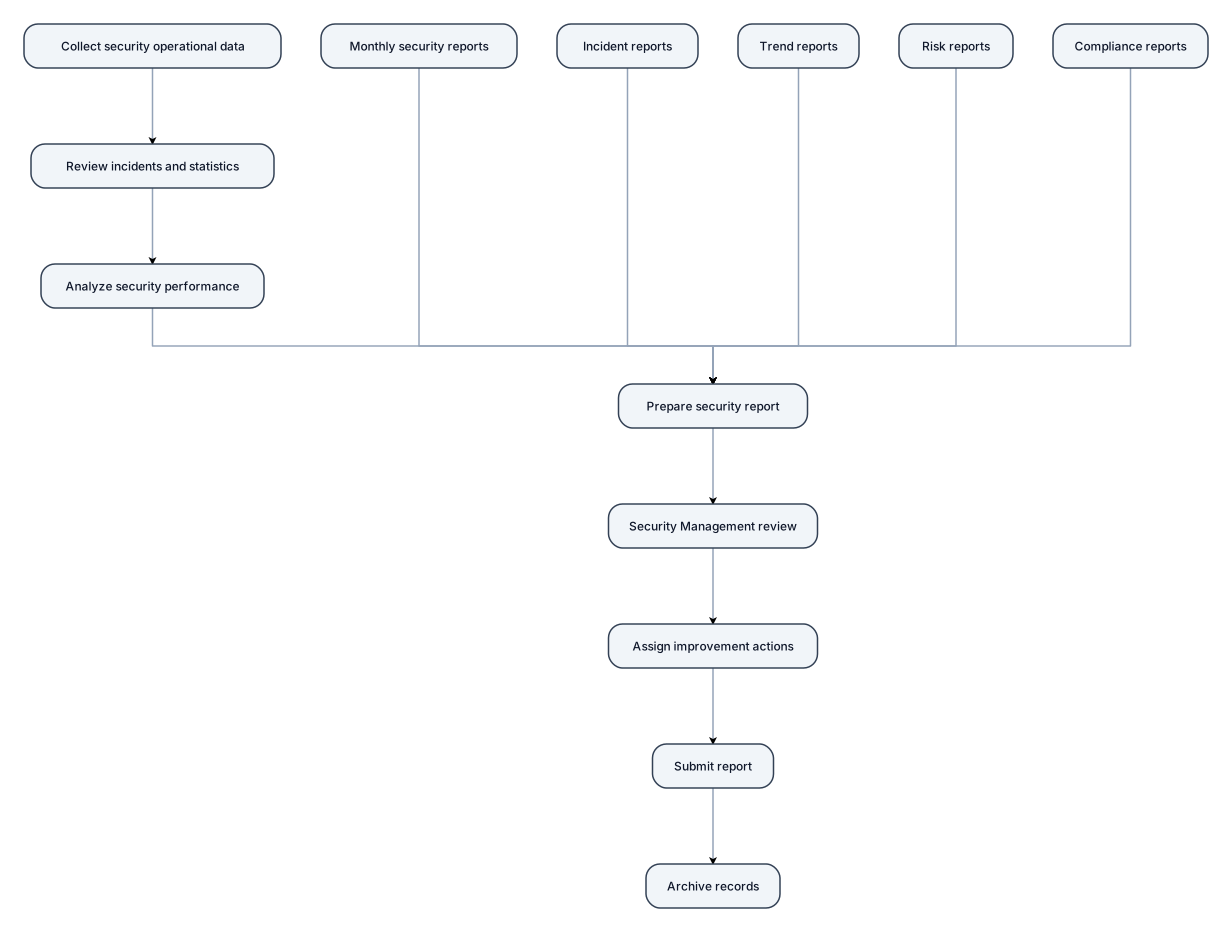
Create a Security Reporting Process Workflow for Sidra Medicine Corporate Services. Flow: Collect security operational data → Review incidents and statistics → Analyze security performance → Prepare security report → Security Management review → Assign improvement actions → Submit report → Archive records. Include report types: Monthly security reports Incident reports Trend reports Risk reports Compliance reports.
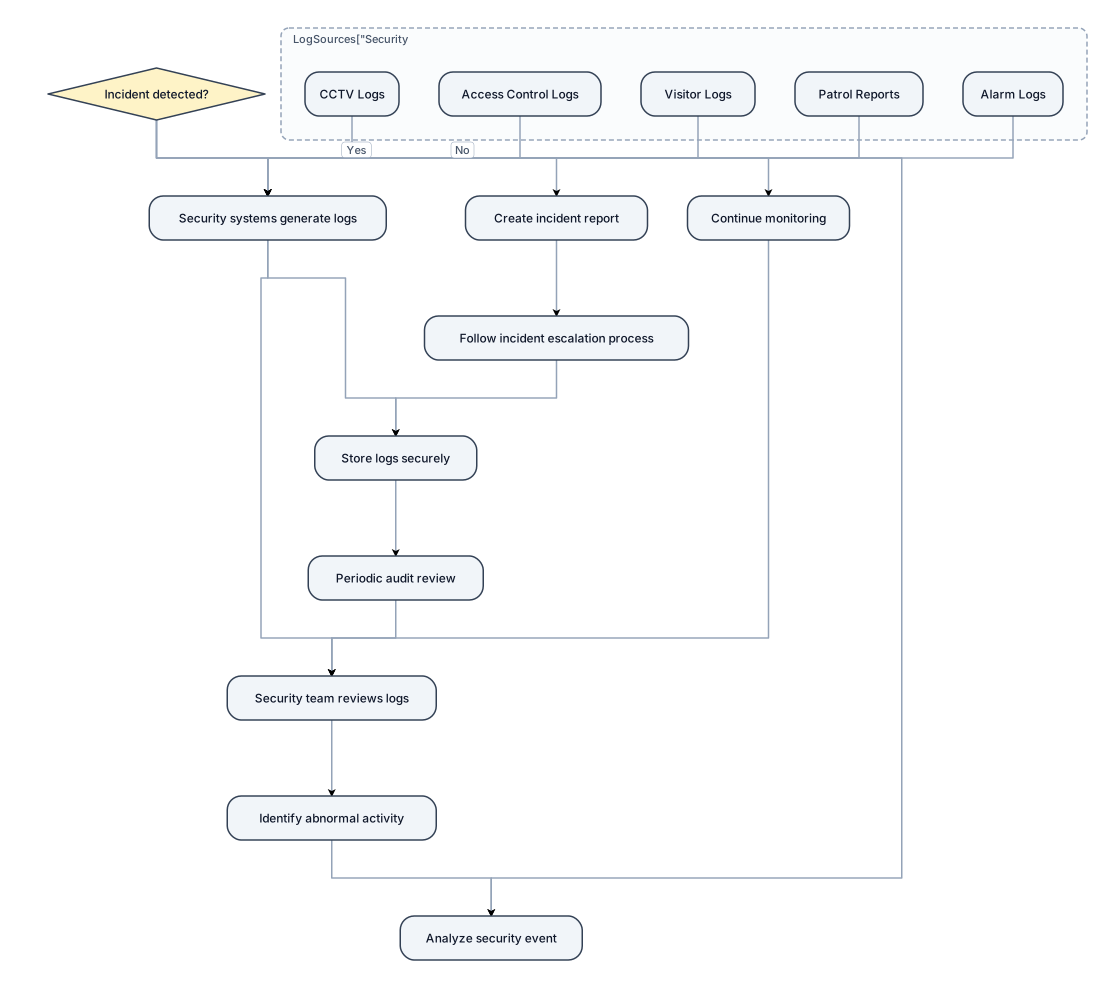
Create a Security Logs Monitoring and Review Workflow for Sidra Medicine. Flow: Security systems generate logs → Security team reviews logs → Identify abnormal activity → Analyze security event → Decision: Incident detected? Yes → Create incident report → Follow incident escalation process No → Continue monitoring Store logs securely → Periodic audit review. Include: CCTV logs Access control logs Visitor logs Patrol reports Alarm logs.
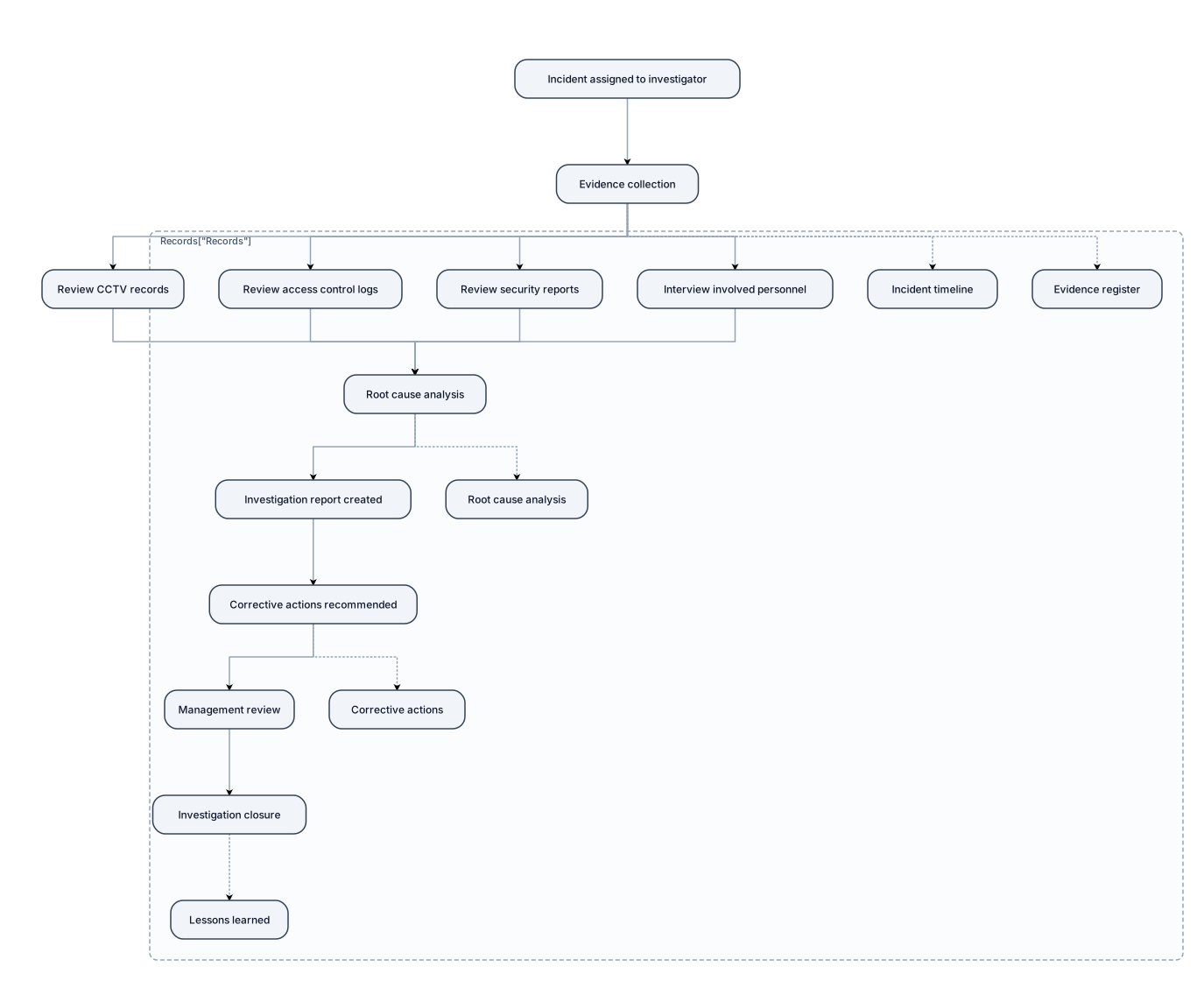
Create an ISO 27001 Security Incident Investigation Workflow for Sidra Medicine. Flow: Incident assigned to investigator → Evidence collection → Review CCTV records → Review access control logs → Review security reports → Interview involved personnel → Root cause analysis → Investigation report created → Corrective actions recommended → Management review → Investigation closure. Include records: Incident timeline Evidence register Root cause analysis Corrective actions Lessons learned.
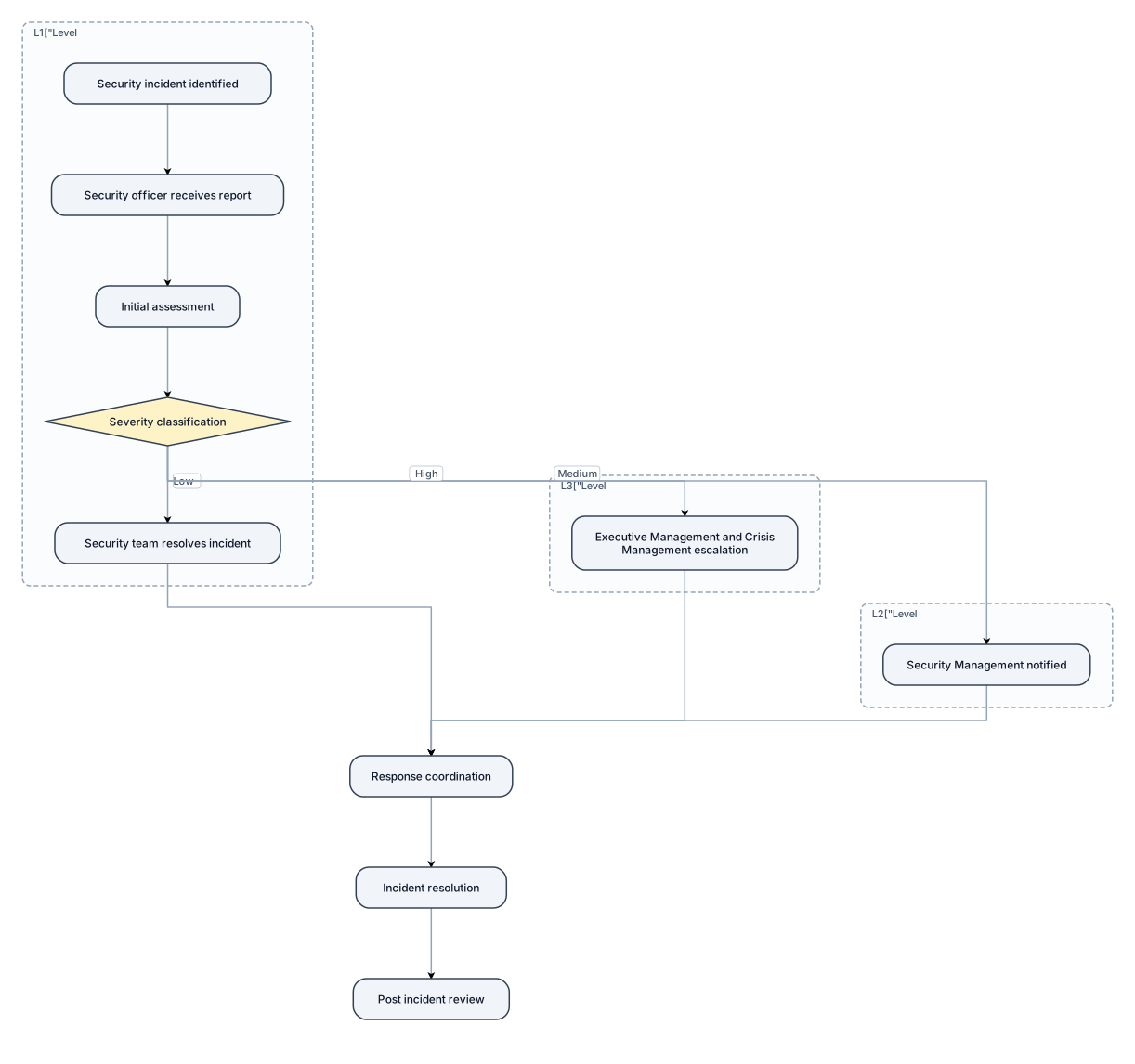
Create a Security Incident Reporting and Escalation Workflow for Sidra Medicine. Flow: Security incident identified → Security officer receives report → Initial assessment → Severity classification decision → If Low severity: Security team resolves incident → If Medium severity: Security Management notified → If High severity: Executive Management and Crisis Management escalation → Response coordination → Incident resolution → Post incident review. Show escalation levels: Level 1 Security Team Level 2 Security Management Level 3 Executive Management
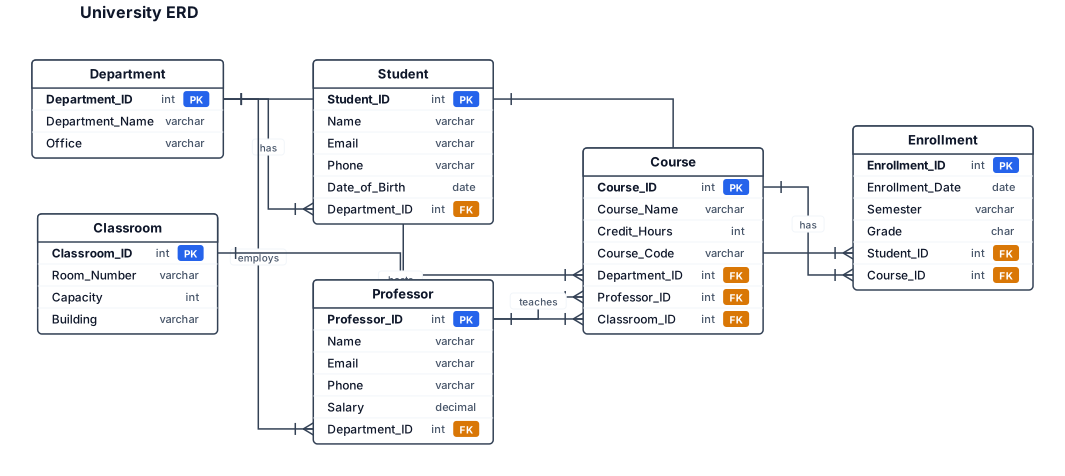
Identify Entities No. Entity 1 Student 2 Professor 3 Course 4 Department 5 Enrollment 6 Classroom 2. Define Attributes Entity Attributes Student Student_ID (PK), Name, Email, Phone, Date_of_Birth Professor Professor_ID (PK), Name, Email, Phone, Salary Course Course_ID (PK), Course_Name, Credit_Hours, Course_Code Department Department_ID (PK), Department_Name, Office Enrollment Enrollment_ID (PK), Enrollment_Date, Semester, Grade Classroom Classroom_ID (PK), Room_Number, Capacity, Building PK = Primary Key 3. Establish Relationships Relationship Cardinality Description Department — Student 1 : N One department can have many students; each student belongs to one department. Department — Professor 1 : N One department can have many professors; each professor belongs to one department. Department — Course 1 : N One department can offer many courses; each course is offered by one department. Student — Course M : N A student can enroll in many courses and a course can have many students; resolved by Enrollment. Professor — Course 1 : N One professor can teach many courses; each course is taught by one professor. Course — Classroom 1 : N A classroom can be used for many course classes; a course is assigned to a classroom f
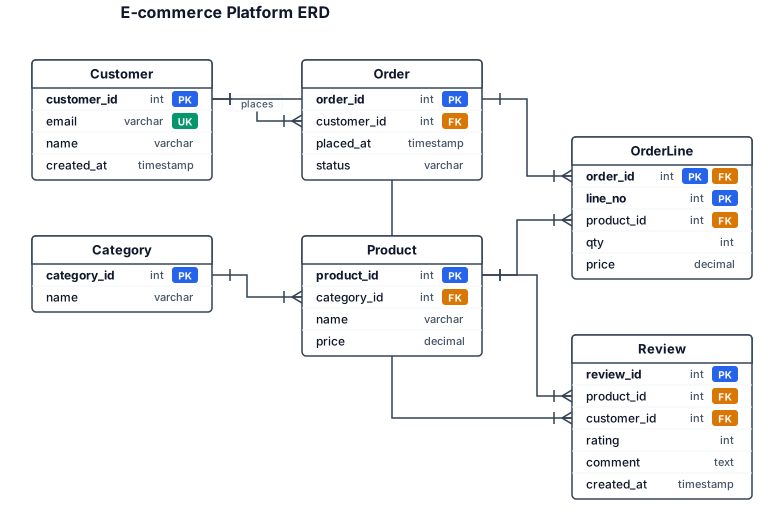
An ER diagram for an e-commerce platform with customers, orders, products, categories, and reviews — include primary keys and foreign key relationships

Create a exam friendly flowchart on principles of growth and development
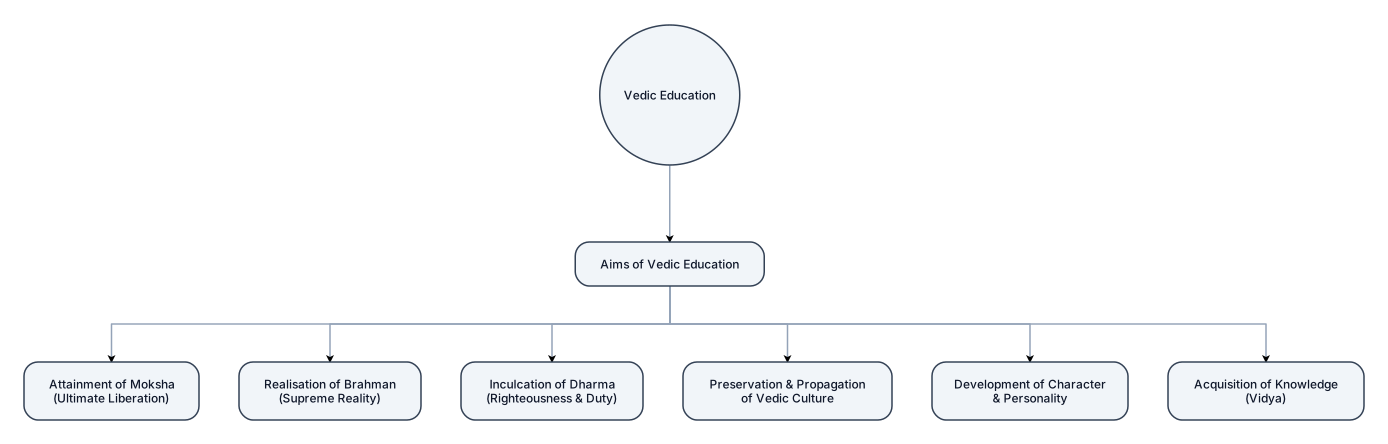
“Create a simple, exam-friendly flowchart on Vedic Education showing its aims.”
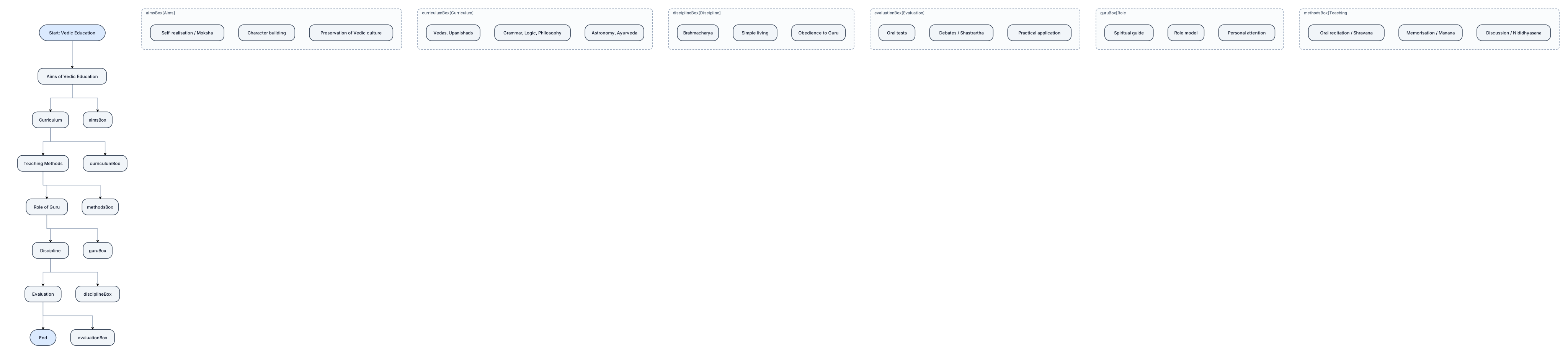
“Create a simple, exam-friendly flowchart on Vedic Education showing its aims, curriculum, teaching methods, role of Guru, discipline and evaluation.”
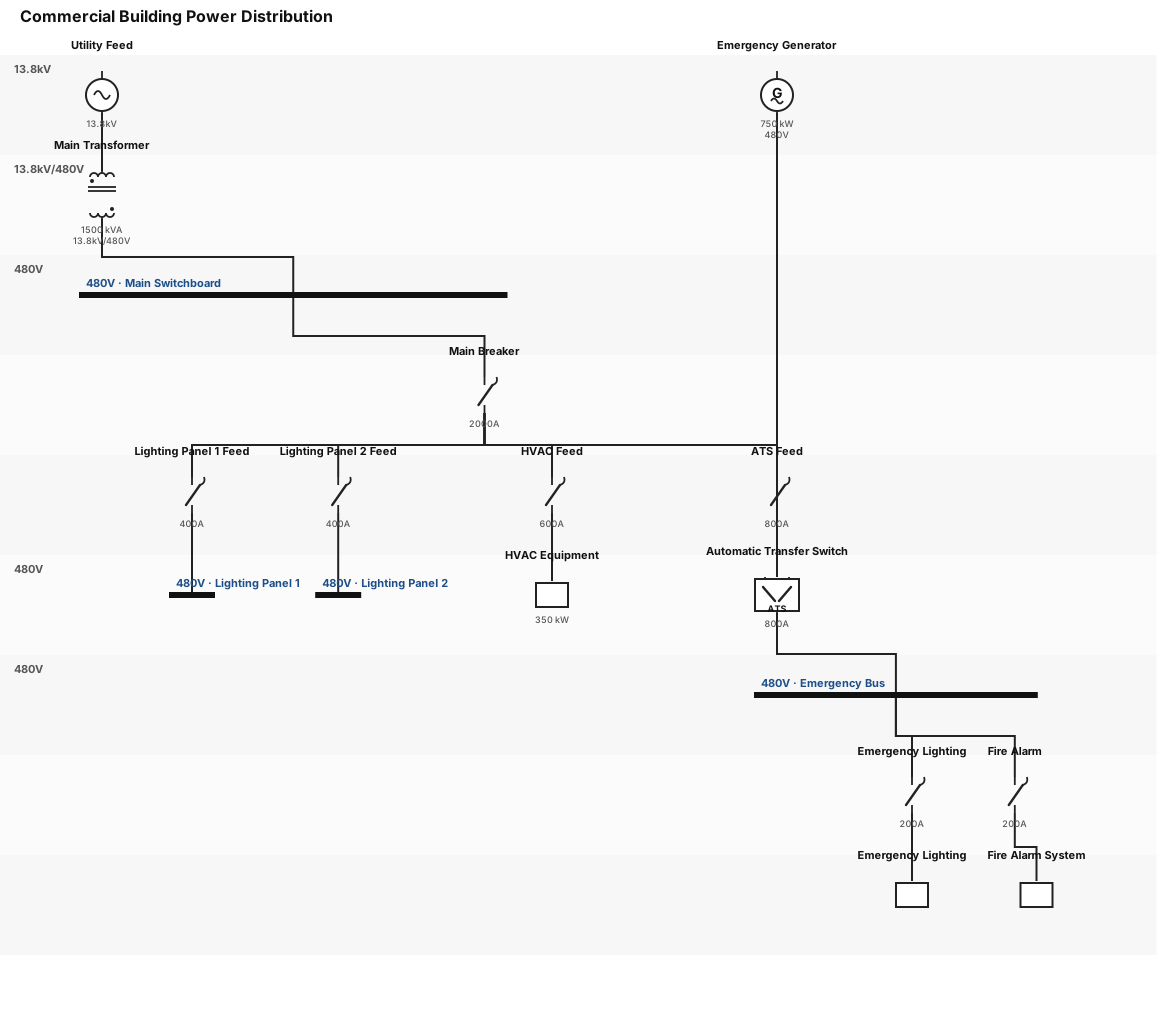
A single-line diagram for a commercial building: utility feed through a main transformer to a 480V switchboard, then to lighting panels, HVAC equipment, and an emergency generator with ATS

Create a scientific conceptual diagram showing broccoli microgreen cultivation, glucosinolate accumulation, myrosinase conversion of glucoraphanin to sulforaphane, absorption, and potential hepatoprotective effects in grade I fatty liver disease
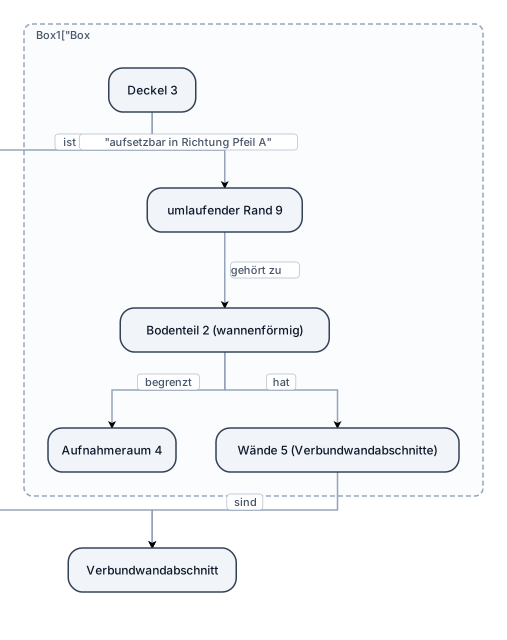
Figur 1 zeigt eine Box 1 mit einem wannenförmigen Bodenteil 2 und einem Deckel 3. Das Bodenteil 2 begrenzt einen Aufnahmeraum 4. Die Wände 5 des Bodenteils 2 und der Deckel 3 sind als Verbundwandabschnitte ausgebildet. Der Deckel 3 ist in Richtung des Pfeils A auf den umlaufenden Rand 9 des Bodenteils 2 aufsetzbar.
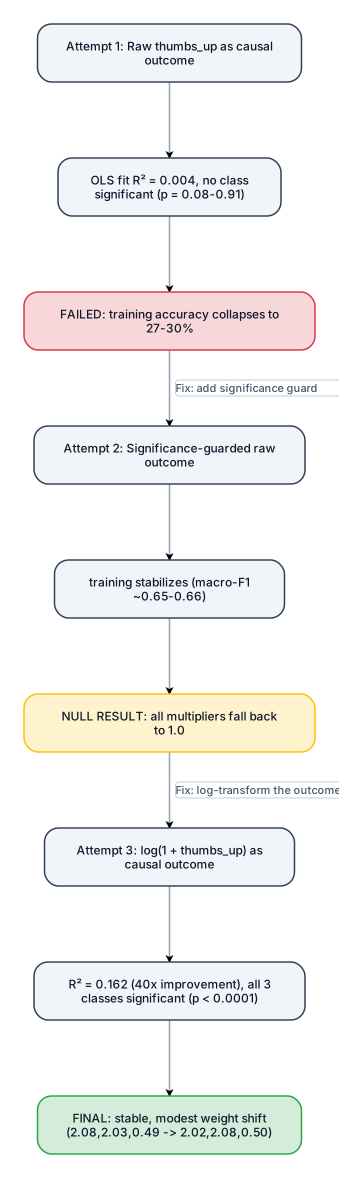
Create a flowchart titled "Causal-Driven Cost-Sensitive Weighting: Iteration History". Attempt 1: "Raw thumbs_up as causal outcome" -> OLS fit R² = 0.004, no class significant (p = 0.08-0.91) -> "FAILED: training accuracy collapses to 27-30%" (red box). Arrow labeled "Fix: add significance guard" leads to Attempt 2: "Significance-guarded raw outcome" -> training stabilizes (macro-F1 ~0.65-0.66) -> "NULL RESULT: all multipliers fall back to 1.0" (yellow/amber box). Arrow labeled "Fix: log-transform the outcome" leads to Attempt 3: "log(1 + thumbs_up) as causal outcome" -> R² = 0.162 (40x improvement), all 3 classes significant (p < 0.0001) -> "FINAL: stable, modest weight shift (2.08,2.03,0.49 -> 2.02,2.08,0.50)" (green box). Use a vertical top-to-bottom flowchart with color coding: red for failure, amber/yellow for stabilized-but-null, green for final success.
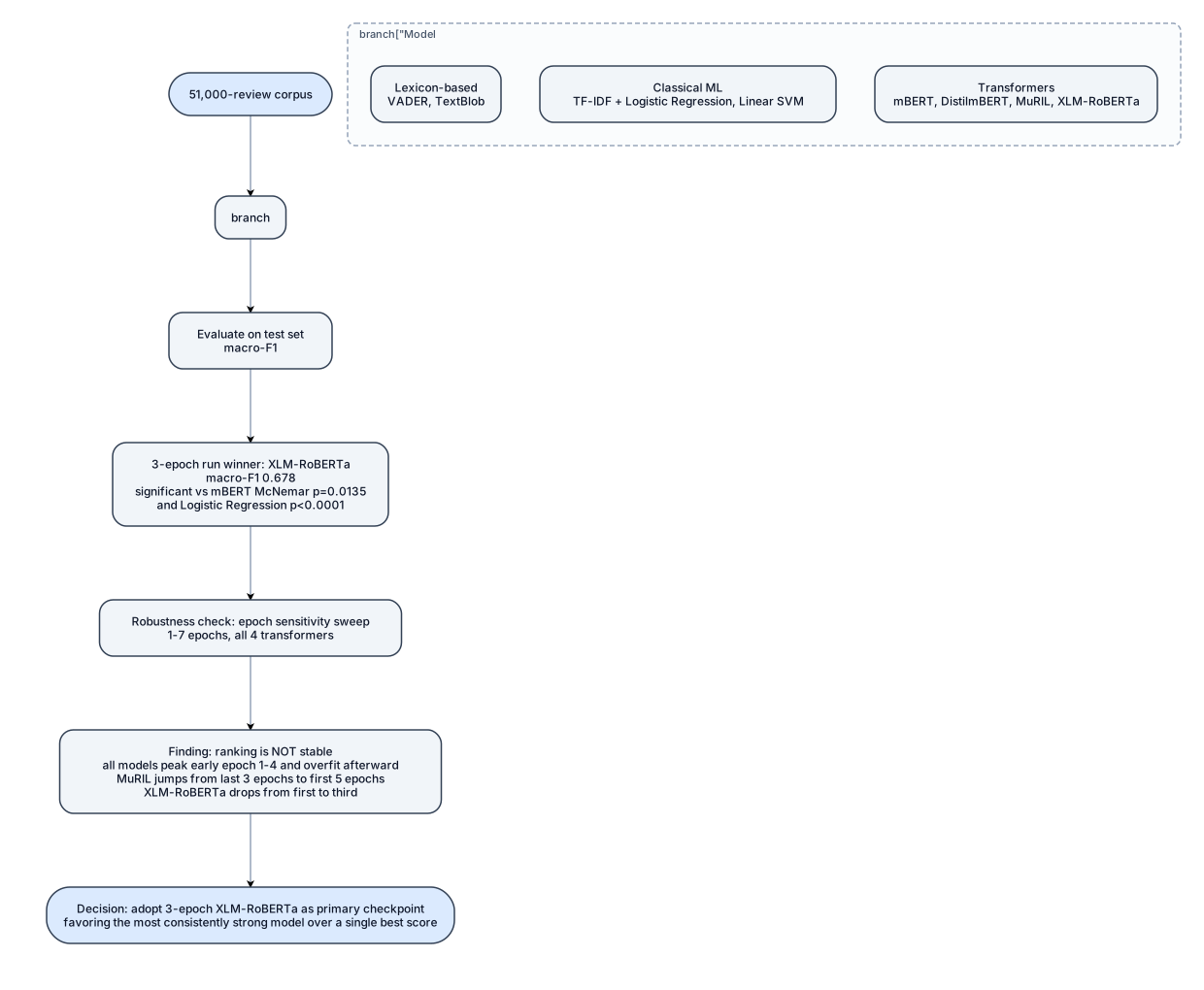
Create a flowchart titled "Sentiment Model Evaluation Pipeline". Start: 51,000-review corpus. Branch into 3 model families evaluated in parallel: Lexicon-based: VADER, TextBlob Classical ML: TF-IDF + Logistic Regression, Linear SVM Transformers: mBERT, DistilmBERT, MuRIL, XLM-RoBERTa All 8 models converge into: "Evaluate on test set (macro-F1)". Result box: "3-epoch run winner: XLM-RoBERTa (macro-F1 0.678), significant vs mBERT (McNemar p=0.0135) and Logistic Regression (p<0.0001)". Next step: "Robustness check: epoch sensitivity sweep (1-7 epochs, all 4 transformers)". Result box: "Finding: ranking is NOT stable - all models peak early (epoch 1-4) and overfit afterward. MuRIL jumps from last (3 epochs) to first (5 epochs); XLM-RoBERTa drops from first to third." Final step: "Decision: adopt 3-epoch XLM-RoBERTa as the primary checkpoint, favoring the most consistently strong model over a single best score." Use a funnel/pipeline layout, with the 3 model families as parallel colored branches merging into a single evaluation step.

Create a flowchart titled "Data Collection & Cleaning Pipeline". Step 1: Raw scrape - Banking apps: 27,000 reviews (9 apps x 3,000). UPI apps: 27,004 reviews (9 apps x ~3,000). Step 2: Data quality check - two issues found in parallel branches: Branch A: "Jupiter" app has only 4 reviews, dated 2020-2021, outside the Apr-Jun 2026 scrape window -> Dropped as failed scrape. Branch B: ICICI iMobile Pay found duplicated - same 3,000 reviews appear as "ICICI iMobile" in Banking AND "iMobile Pay" in UPI (same review IDs) -> Kept as Banking (bank-issued app), duplicate UPI copy dropped. Step 3: Final combined corpus: 51,000 reviews total = 27,000 Banking (9 apps) + 24,000 UPI (8 apps). Step 4: Preprocessing - light-touch cleaning, per-model subword tokenization, star rating mapped to sentiment label (1-2 negative, 3 neutral, 4-5 positive). Step 5: Output - Ready for sentiment model training. Use a clean left-to-right flowchart style, blue for collection, orange for the quality-check/decision branches, green for the final clean output.
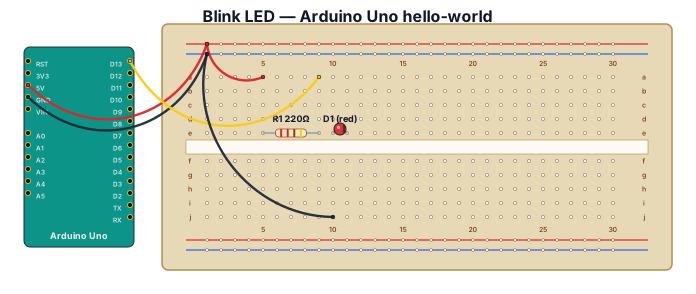
Blink LED hello-world on Arduino Uno with 220-ohm resistor
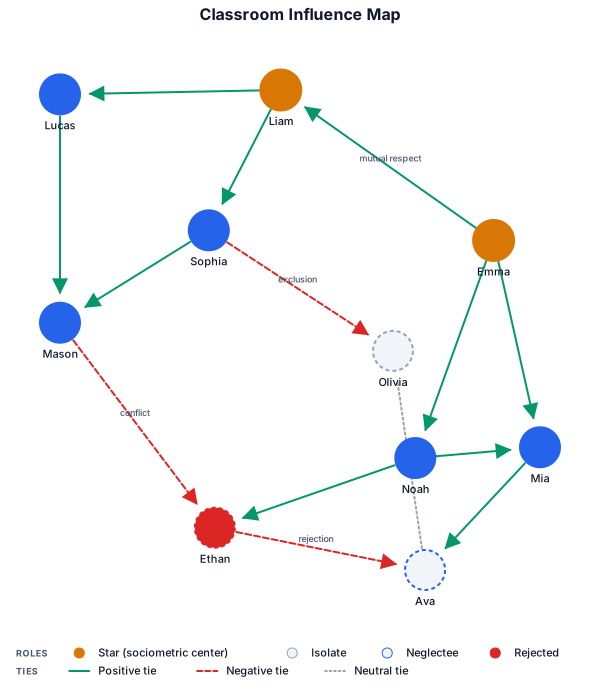
A sociogram of a classroom showing who influences whom, with positive and negative ties
Focused examples and prompt ideas
Start with the complete visitor wall above, then use these focused collections when you want a narrower subject and more prompt context.
The first curated collection is being prepared.