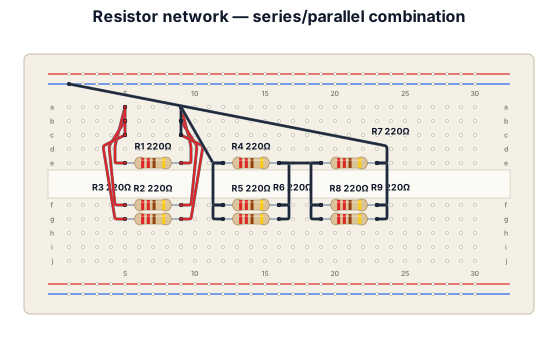
Connect 3 resistor in parallel one in series two more in parallel and 3 more in series
NODE ARCHIVE · REAL DIAGRAM BRIEFS
Diagram Examples from Real Visitor Prompts
Browse eligible diagrams shared by FreeDiagram visitors, inspect the exact prompts, and build your own version.
Browse 3282 real creationsCOMMUNITY OUTPUTS · EXACT PROMPTS
All visitor creations
Showing 937–960 of 3282. No stock examples or system defaults. Choose a tool, study a real result, then reopen its prompt as your starting point.
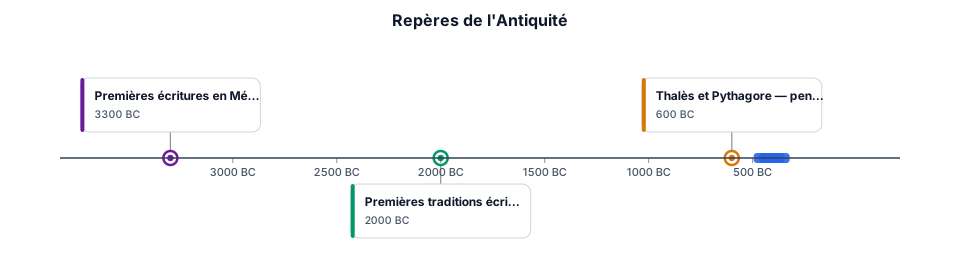
Date Événement à indiquer Vers 3300 av. J.-C. Apparition des premières formes d'écriture en Mésopotamie. Fin du IIIᵉ – début du IIᵉ millénaire av. J.-C., selon les versions Premières traditions écrites de l’Épopée de Gilgamesh. Date à garder seulement si cette œuvre figure bien dans ton cours. VIᵉ siècle av. J.-C. Thalès et Pythagore : figures de la pensée grecque ancienne, associées à la recherche d'explications rationnelles. Vers 495–429 av. J.-C. Vie de Périclès ; période liée à l'apogée d'Athènes au Vᵉ siècle av. J.-C. Vers 470/469–399 av. J.-C. Socrate ; il est condamné à mort et exécuté en 399 av. J.-C. Vers 460–370 av. J.-C. Démocrite, associé à l'atomisme antique. Vers 428/427–348/347 av. J.-C. Platon, auteur de La République. 384–322 av. J.-C. Aristote, philosophe grec.
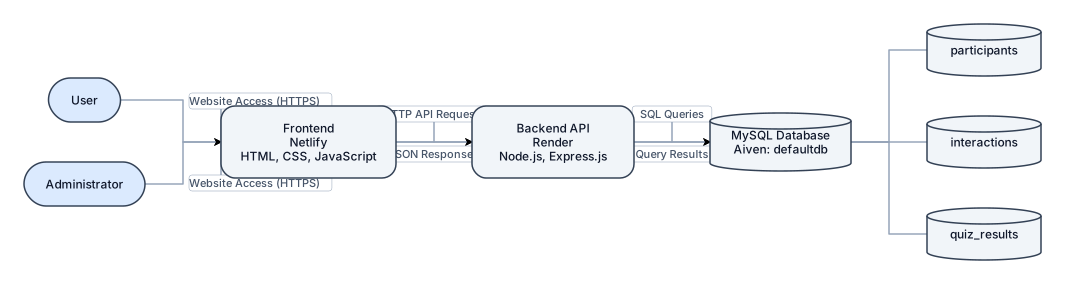
Draw a system architecture diagram for SafeSphere: User and Administrator → Frontend (Netlify: HTML, CSS, JavaScript) ↔ Backend API (Render: Node.js, Express.js) ↔ MySQL Database (Aiven: `defaultdb`). Database tables: `participants`, `interactions`, `quiz_results`. Label arrows: Website Access (HTTPS), HTTP API Requests, JSON Responses, SQL Queries, Query Results. White background, landscape layout, clear arrows. No direct frontend-to-database connection.
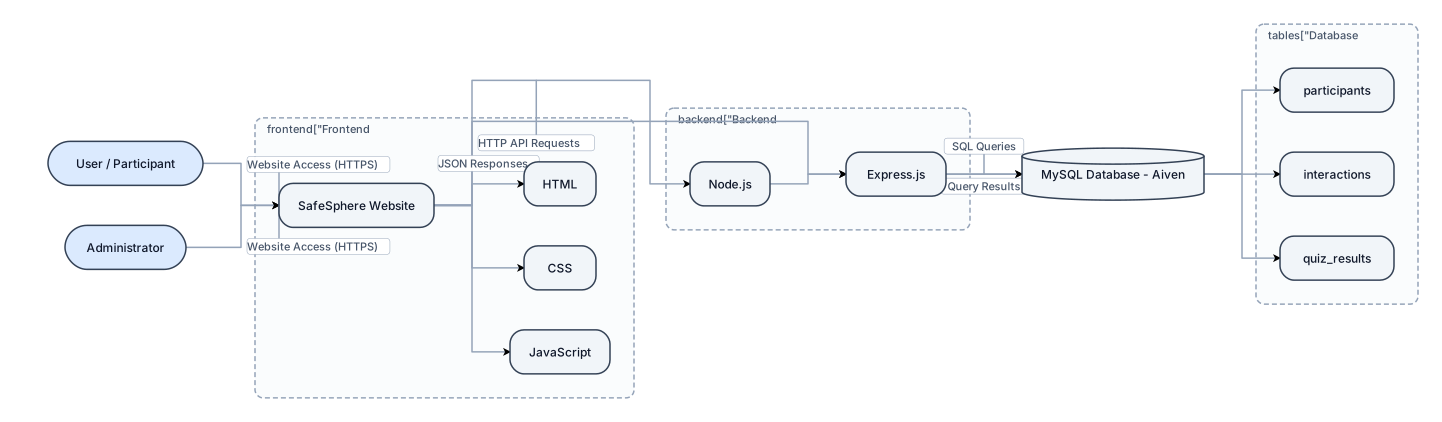
Create a simple landscape system architecture diagram titled “Figure 4.1: System Architecture of SafeSphere”. Show three main components connected from left to right: 1. **Frontend (Netlify):** SafeSphere Website, HTML, CSS, JavaScript. 2. **Backend API (Render):** Node.js, Express.js. 3. **MySQL Database (Aiven):** Database `defaultdb`, tables: `participants`, `interactions`, `quiz_results`. Add User/Participant and Administrator on the left, both connected to the Frontend with arrows labelled “Website Access (HTTPS)”. Connect Frontend ↔ Backend API with two arrows: “HTTP API Requests” and “JSON Responses”. Connect Backend API ↔ MySQL Database with two arrows: “SQL Queries” and “Query Results”. Use white background, clear boxes, a database cylinder, readable text, and neat arrows. The frontend must connect to the database only through the backend. Add the caption “Figure 4.1: System Architecture of SafeSphere”.
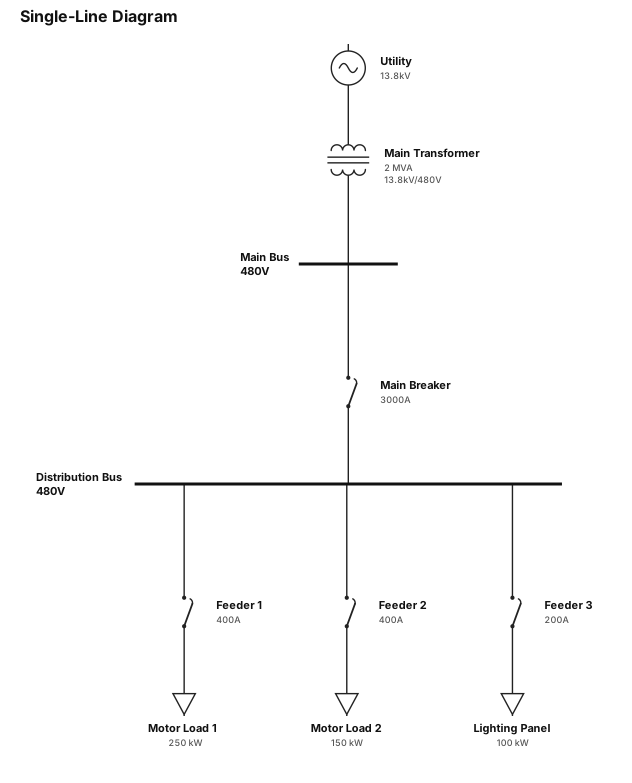
i want to replicate a single line diagram
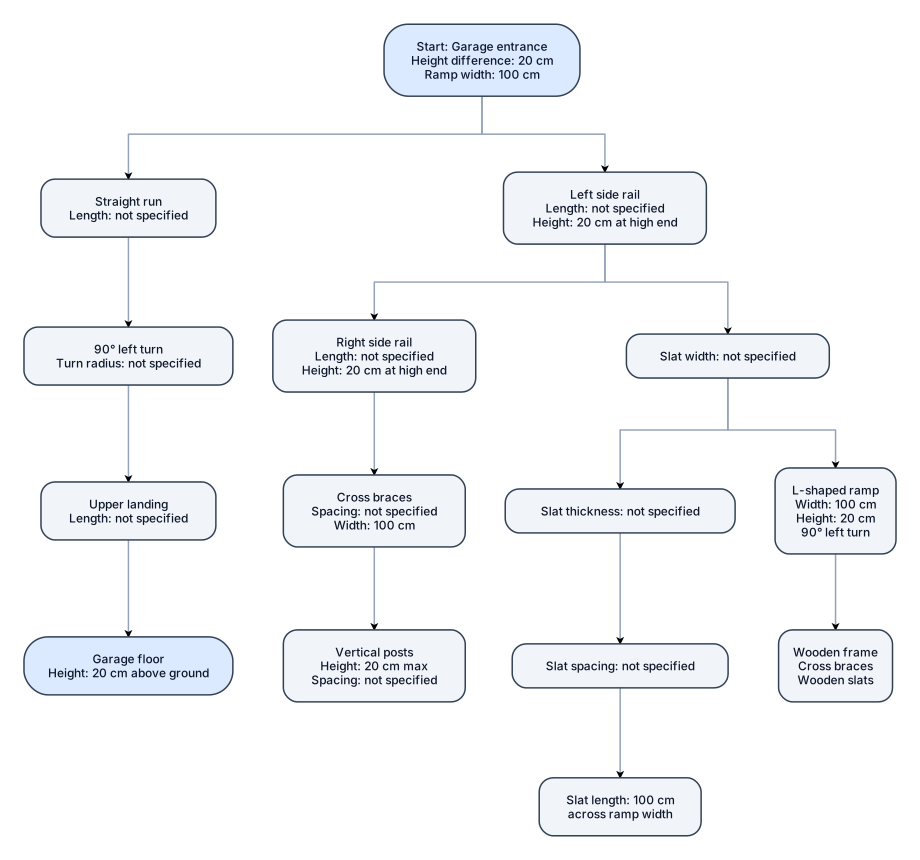
Create a step-by-step technical drawing of an L-shaped wooden motorcycle ramp at a garage entrance. The height difference is 20 cm and the width is approximately 100 cm. The ramp must turn 90 degrees to the left. Show the top view, wooden support frame, cross braces, wooden slats, and final 3D view. Label each part and show dimensions in centimeters. Do not invent unknown dimensions. Use clear technical illustrations on a white background.
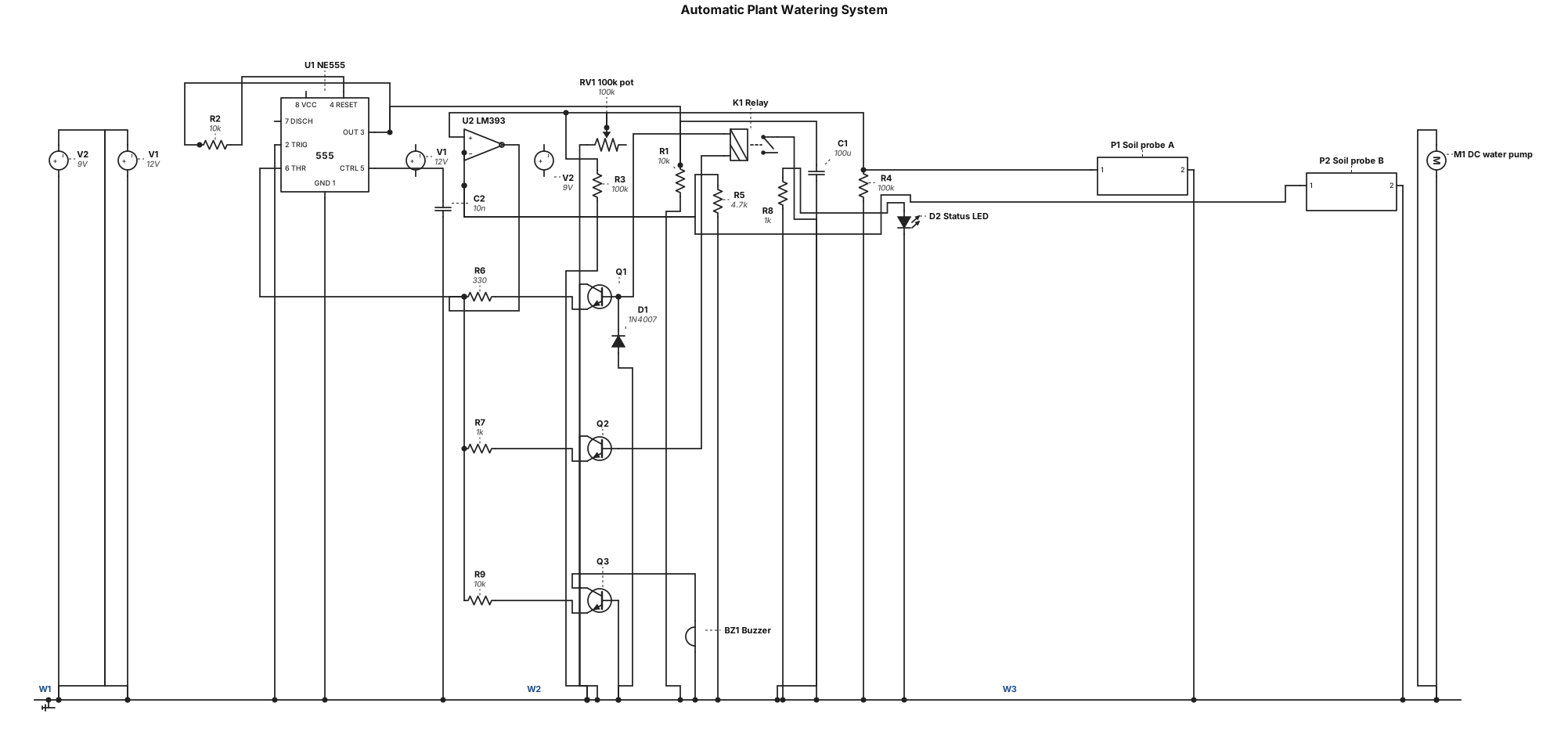
NE555 timer IC, comparator IC, 2 transistors, relay, 10 kΩ resistors (×2), 4.7 kΩ resistor, 330 Ω resistor, 100 kΩ resistor, 1 kΩ resistor, 100 kΩ potentiometer, 100 µF capacitor, 1N4007 diode, LED, buzzer, DC water pump, 9 V battery, 12 V power supply, 2 soil probes, connecting wires, and breadboard.
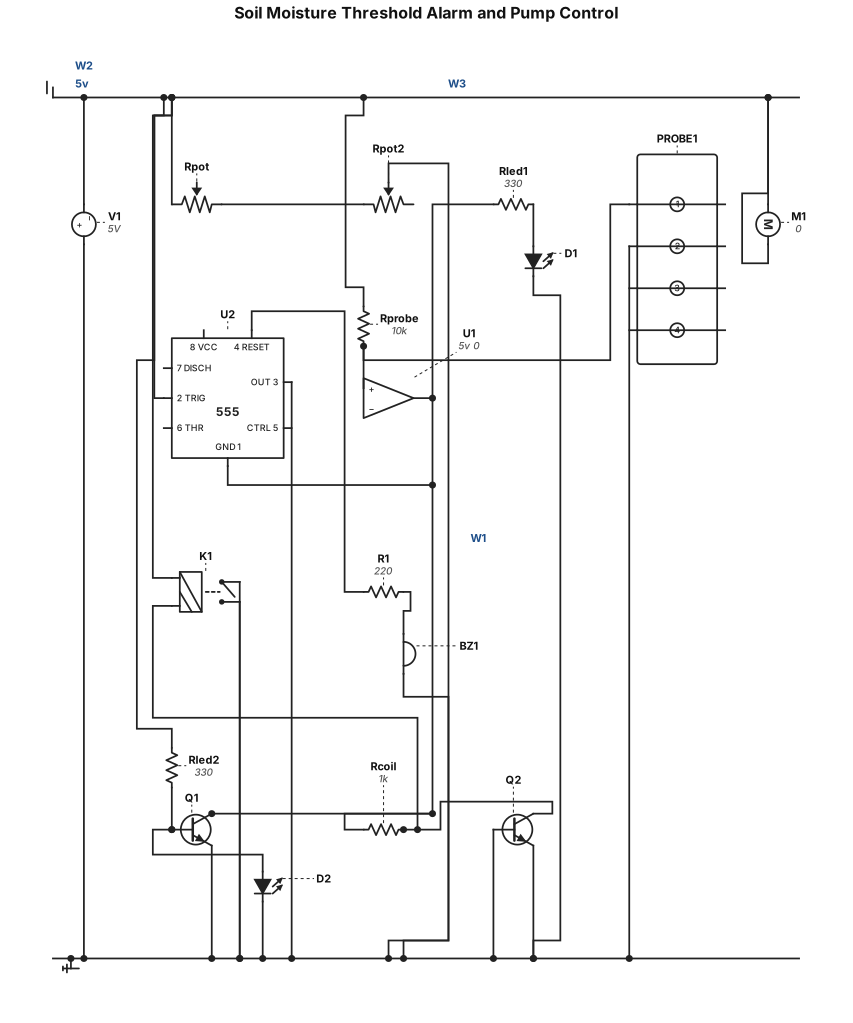
Soil sensing and threshold Connect the two soil probes between the sensor node and ground. Connect the sensor-node pull-up resistor between +5 V and the sensor node. Feed the sensor node to the LM358 IN+A input. Connect the sensitivity potentiometer’s outer legs to +5 V and GND, and its wiper to IN−A. Power the LM358 from +5 V and GND. Adjust the pot to set the dry/wet threshold. Outputs Use the LM358 output as the dry signal: for the wiring above, the sensor node should rise as the soil dries. Connect the dry signal to the 555 RESET input so the buzzer oscillator runs when dry and stops when wet. Configure the 555 as an astable oscillator; the existing timed-trigger arrangement won’t make the buzzer follow the dry state continuously. Connect the piezo to the 555 OUTPUT. Wire the red LED to turn on from the dry signal and the green LED to turn on when the dry signal is low. Put a current-limiting resistor in series with each LED. Use the dry signal to control the relay module; connect the pump motor through COM and N.O. so it runs only when the relay is energized. Check whether your relay module’s IN input is active-high or active-low before connecting it directly; use a transistor inverter if its polarity requires one. The saved circuit still needs rewiring and the LED resistors added. I can’t verify this analog circuit in Cirkit’s simulator because its LM358 and 555 parts have no simulation models. View less
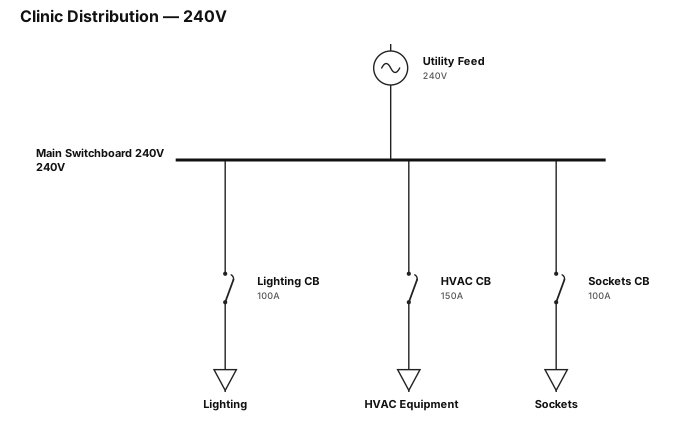
A single-line diagram for a clinic: utility feed through 240V switchboard, then to lighting , HVAC equipment, and sockets
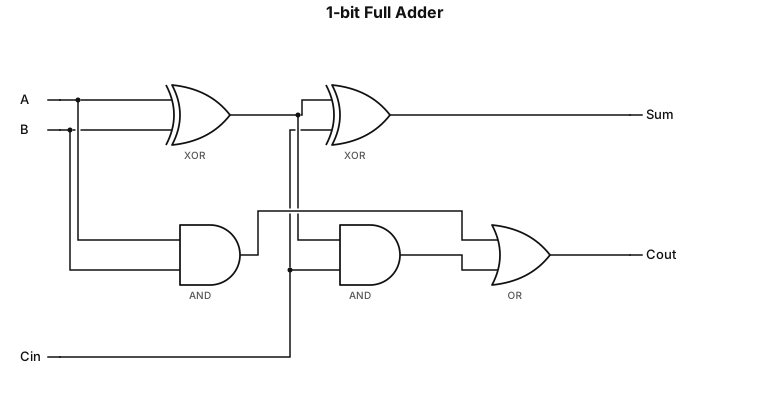
A 1-bit full adder logic circuit using AND, OR, and XOR gates with carry-in and carry-out
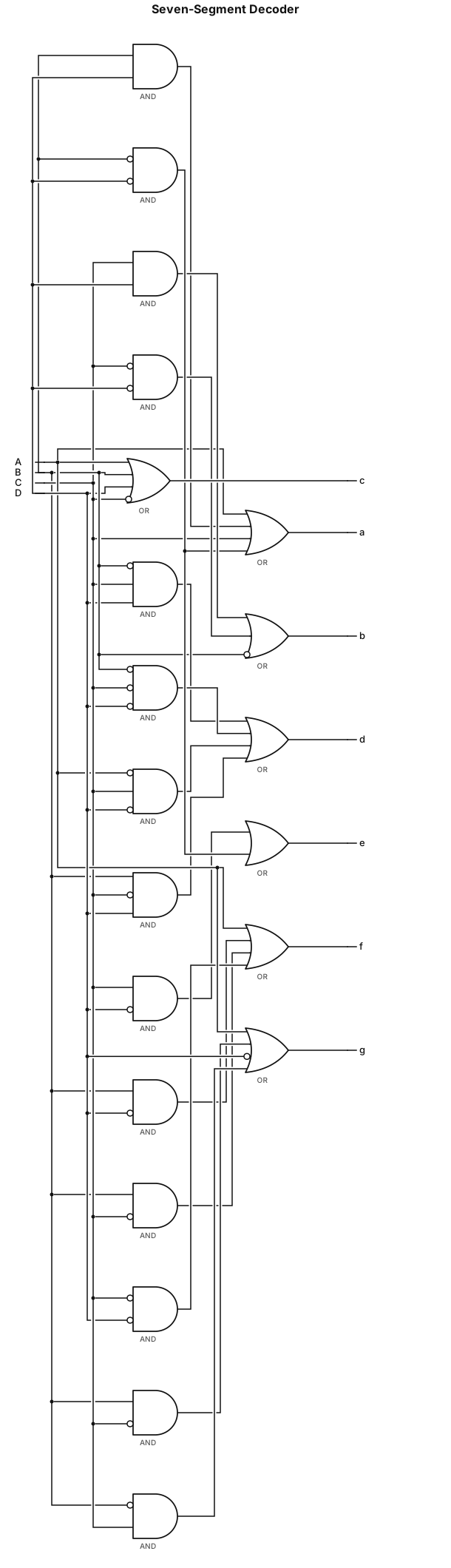
a = A + B D + C + B' D'; b = C D + C' D' + B' ; c = A + B + D + C' ; d = B' C D + B' C' D' + A' C D' + B C' D; e = C D' + B' D'; f = A + B D' + B C' + C' D'; g = A + B C' + D' + B' C ;
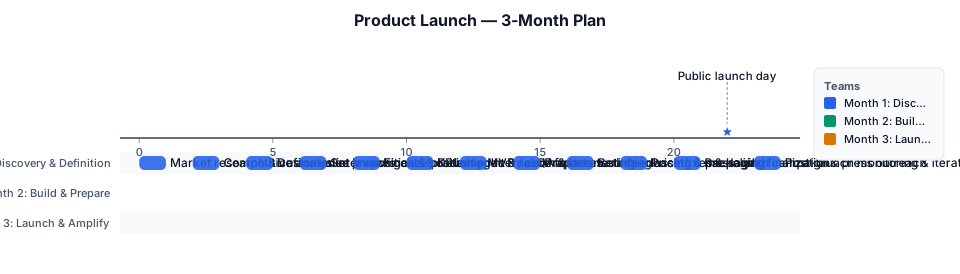
A timeline of the steps to launch a new product over three months
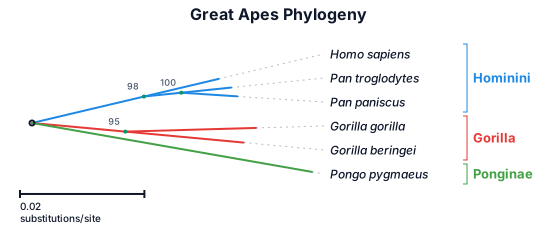
A phylogenetic tree of the great apes: humans, chimpanzees, bonobos, gorillas, and orangutans, with branch lengths and bootstrap support values
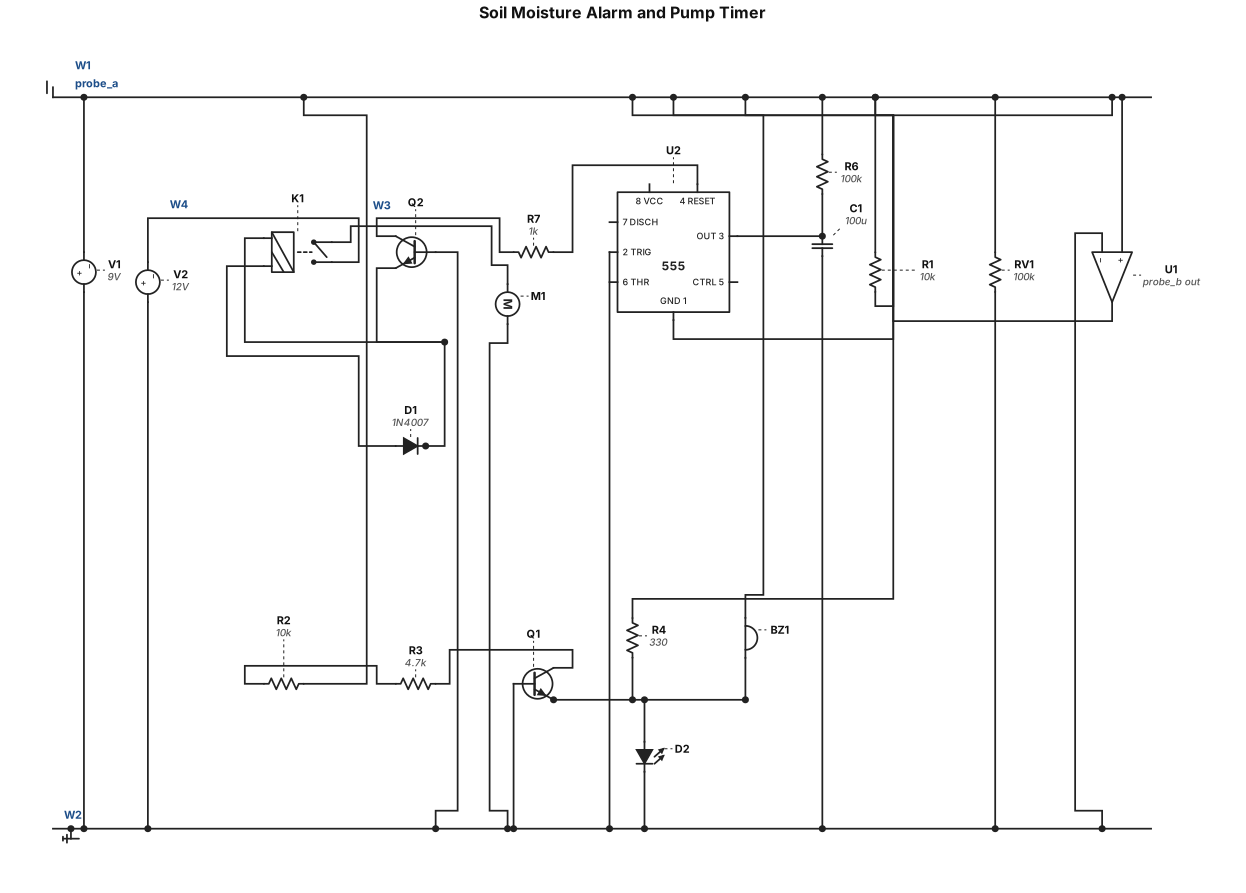
Probes + R1 + potentiometer feed the LM358, which compares wet/dry voltage and goes high when the soil is dry. That output switches on an alarm branch (R4 → Q1 → LED + buzzer) and triggers the 555 timer (R6, C1 set ~10s run time). The 555’s output drives R7 → Q2 → relay (with D1 protection) → pump, which waters the plant for that fixed time, then stops.

purified water generation system
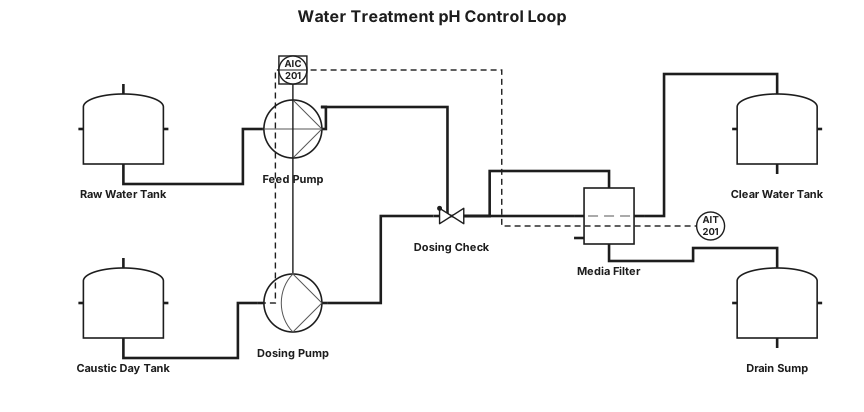
Water treatment loop with pH control and dosing pump
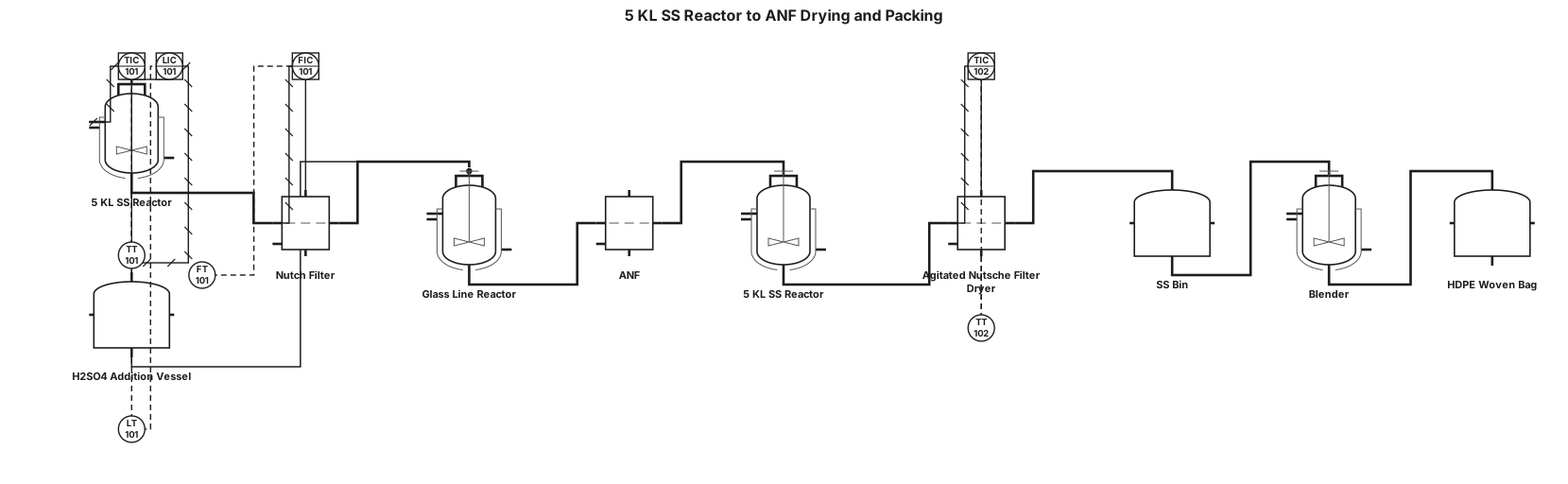
Make P&ID for 5 KL Stainless steel reactor then mass transfer Nutch filter (NF) then clear filtrate from NF transfer to Glass line reactor (GLR) having provision H2SO4 addition vessel the Reaction mass from GLR transfer to ANF for filtration. After ANF solid mass transfer 5 KL stainless reactor having water charing line then filter the mass and dry in ANDF agitated nutche filter and unload material in SS bin. Solid material tranfer in to blender further shifting and final packed in to HDPE woven bag
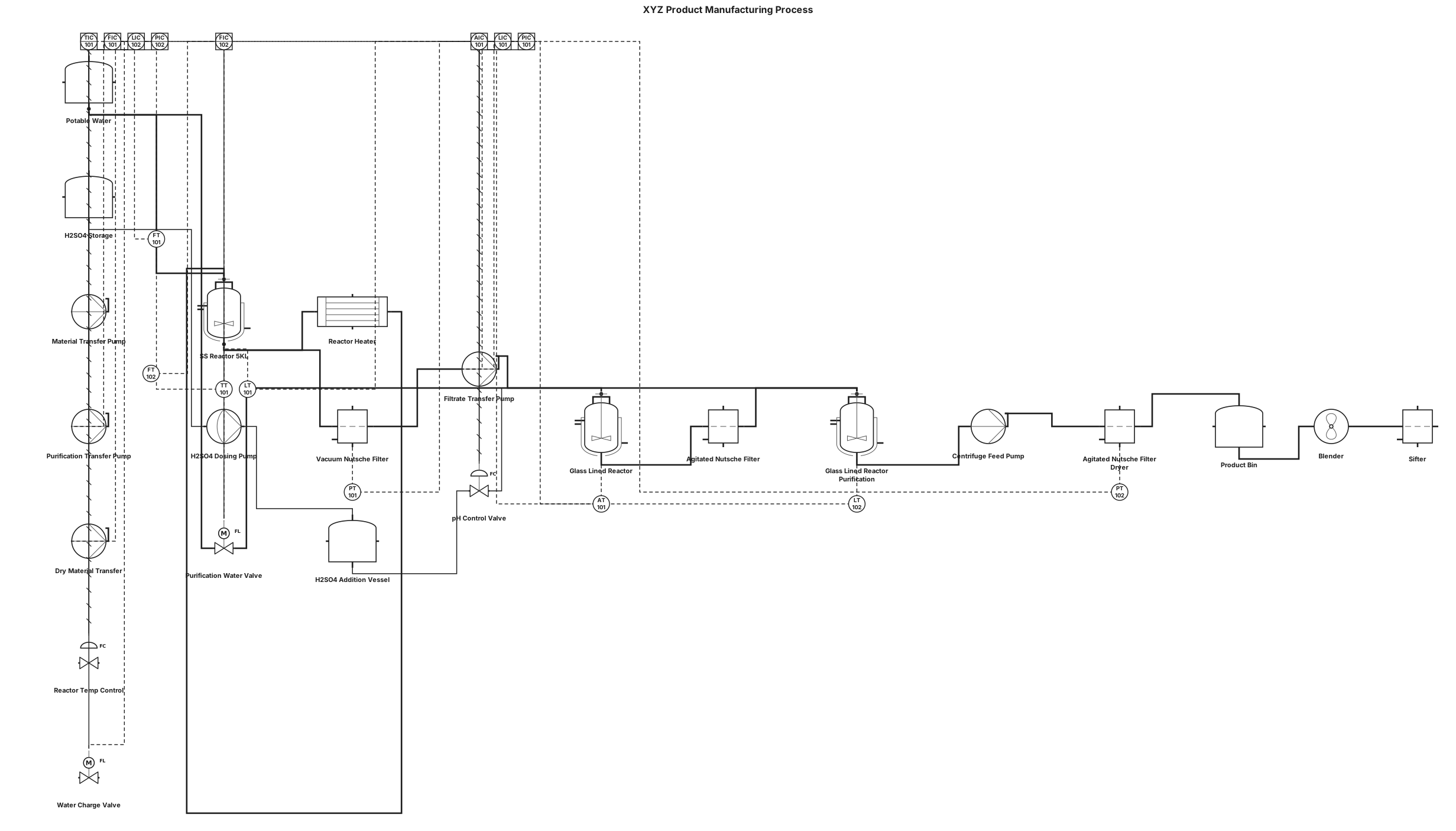
Process Description XYZ product: Charge 875 kg potassium hydroxide further charge 3750 L of potable water and Charge 2 Chloro 5 Nitro Benzoic Acid (CNBA) 625 kg in to SS reactor (5 KL). Apply heating and attend temperature 130 -140°C after that maintain at 130 - 140°C for 8-10 Hrs. Cool the reaction mass at 45 - 50°C charge potable water 2500L and heat the reaction mass up to 70°C and filter through Vacuum Nutsche Filter (VNF). Transfer clear filtrate in to Glass line reactor then Adjust pH below 2.0 by adding H2SO4 (Addition vessel) further cool the mass and filtered through Agitated nutche (ANF). Unload wet material and transfer material in to glass line reactor and then charge water for purification then material transfer to Agitated nutch filter dryer (ANFD) after dried material unload in to bin and then transfer in to Blender then transfer to sifting Sifter and finallly pack Purification: Send wet cake for purification. Charge wet cake and 5 times water in reactor and stir for 1 hr. Centrifuge the material lot wise washing with 200Ltrs water for each lot. Send wet cake for HPLC analysis. If HPLC does not comply proceed for 2nd purification. If result complies proceed for drying.
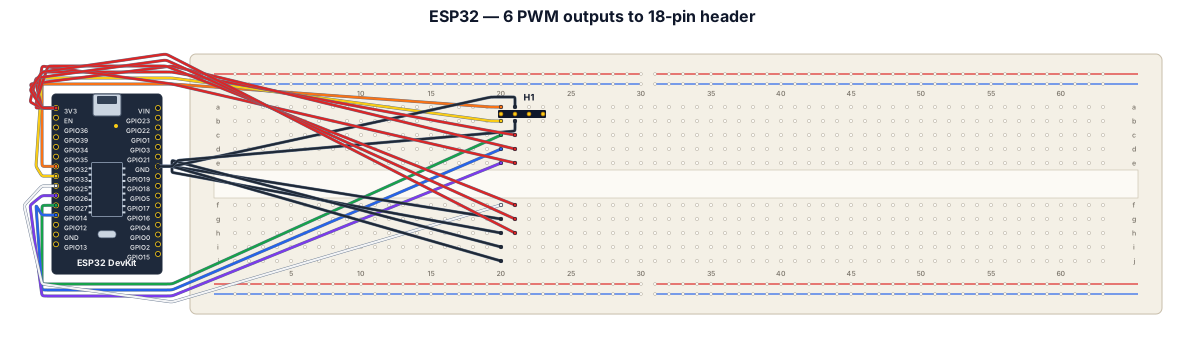
esp32, need 18 pins for 6 PWM cables. Pins for PWM used are in this order based on PWM placement. 32, 33, 27, 14, 26, 25. Positive and negative battery is going to be separate so don't worry about it.
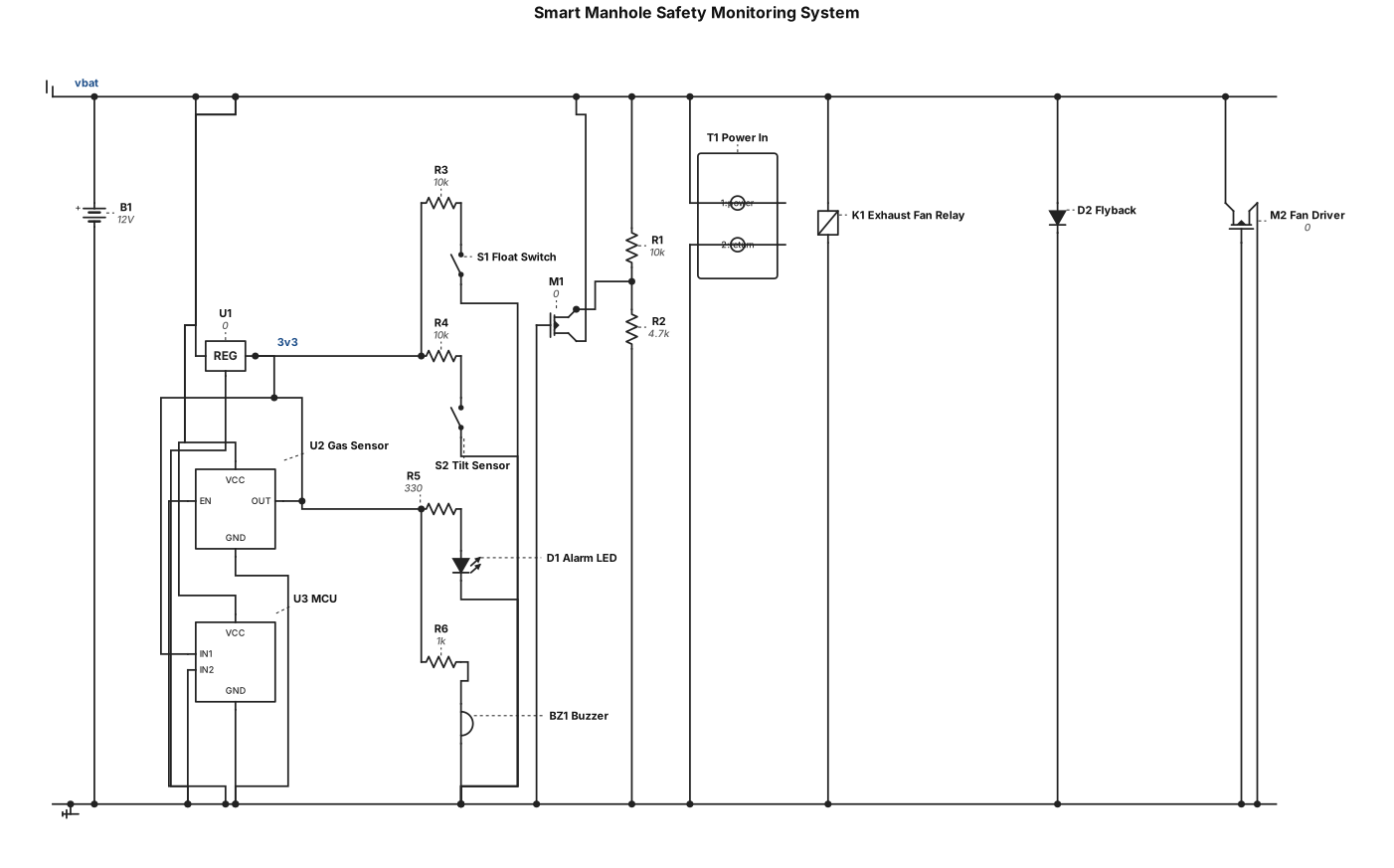
smart manhole safety monitoring system
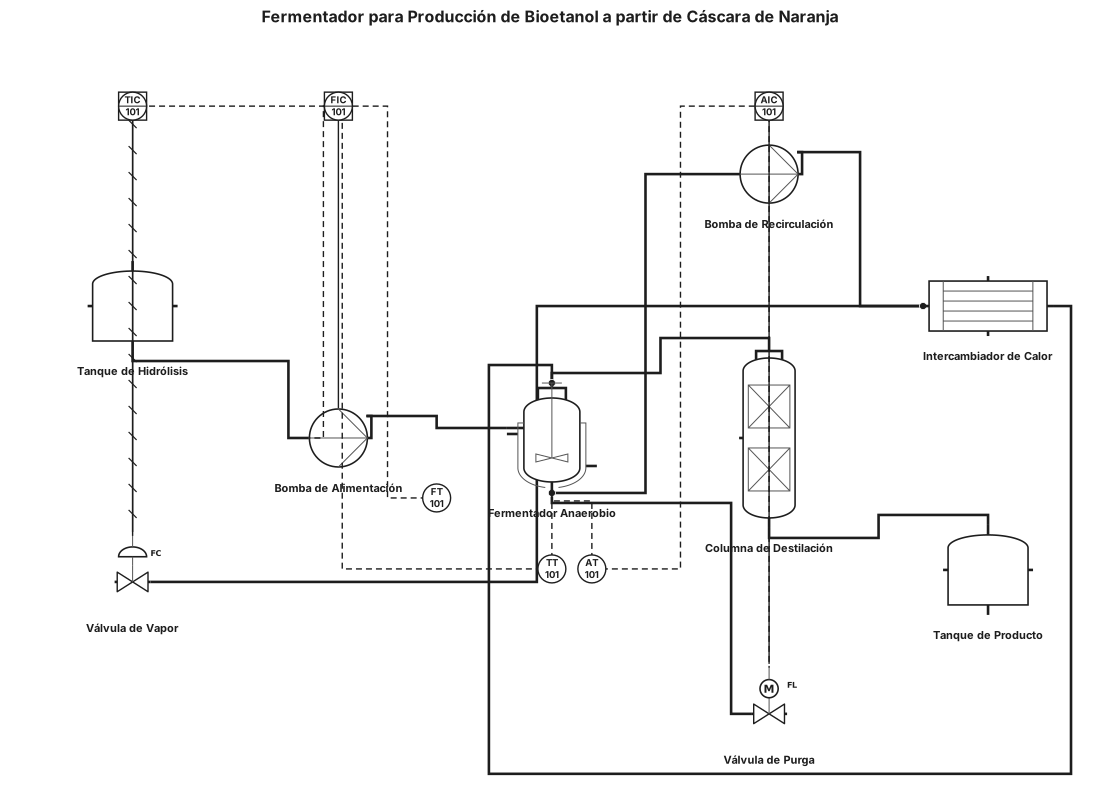
reactor fermentador para obtener bioetanol de cascara de naranja
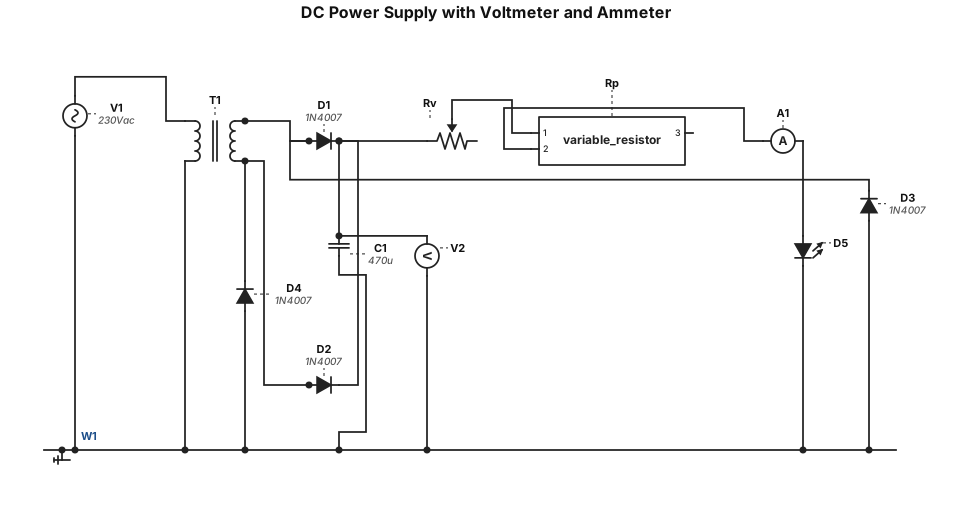
dc power supply 230V 50 hz in a square shape going to a voltmeter parallel going down to - and to Rv which goes to Rp, which is a variable resistor. it goes to an ammeter which goes to a led that goes to - and voltmeter.
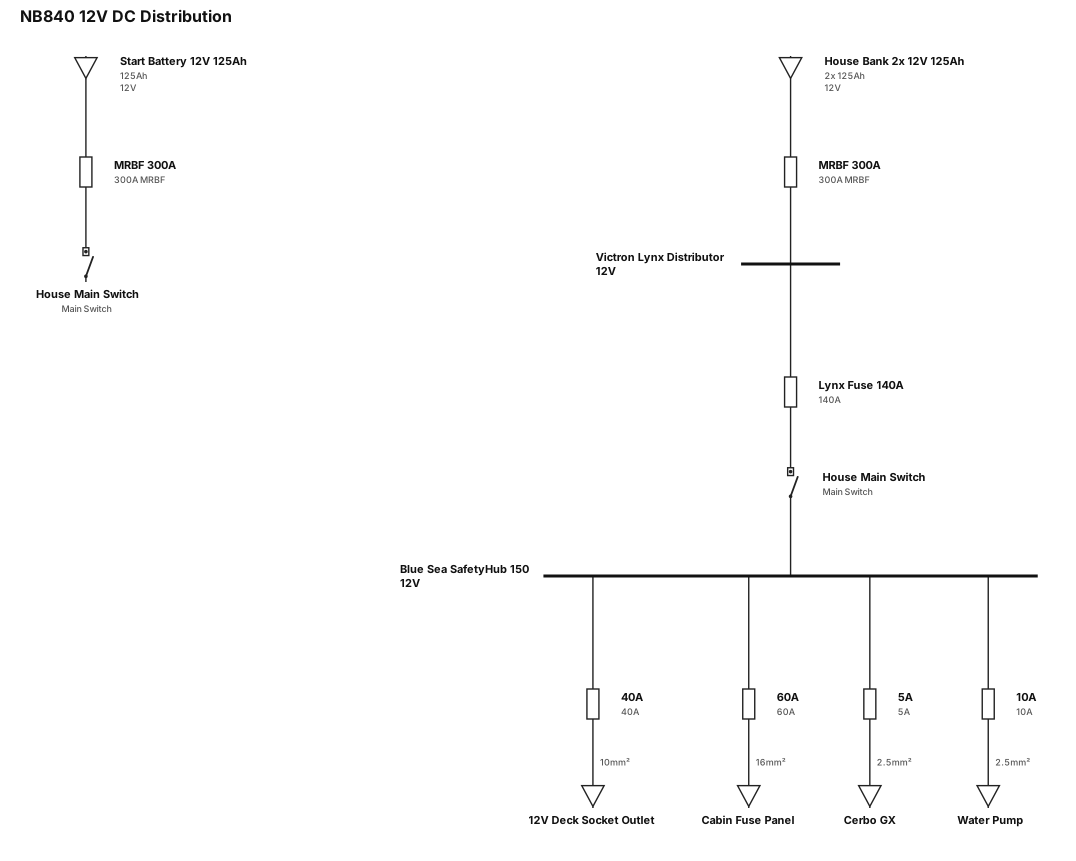
A single-line diagram for 12v on a private boat NB840: one start battery 12v 125ah, one house bank 2x 12v 125ah. Batteries equipped with 300a mrbf fuses on battery poles. 70mm2 wires on batteries. From house battery 70mm2 to main switch for victron lynx distributor. Lynx distributor has 5 fuses/distrubutions; house: 140A 35mm2 to house main switch then 35mm2 from main switch to blue sea safetyhub 150 fuse panel. From safety hub there is 40A/10mm2 for 12V deck socket outlet, 60A/16mm2 to fuse panel inside cabin, 5A/2,5mm2 for cerbo gx, 10A 2.5mm2 for water pump
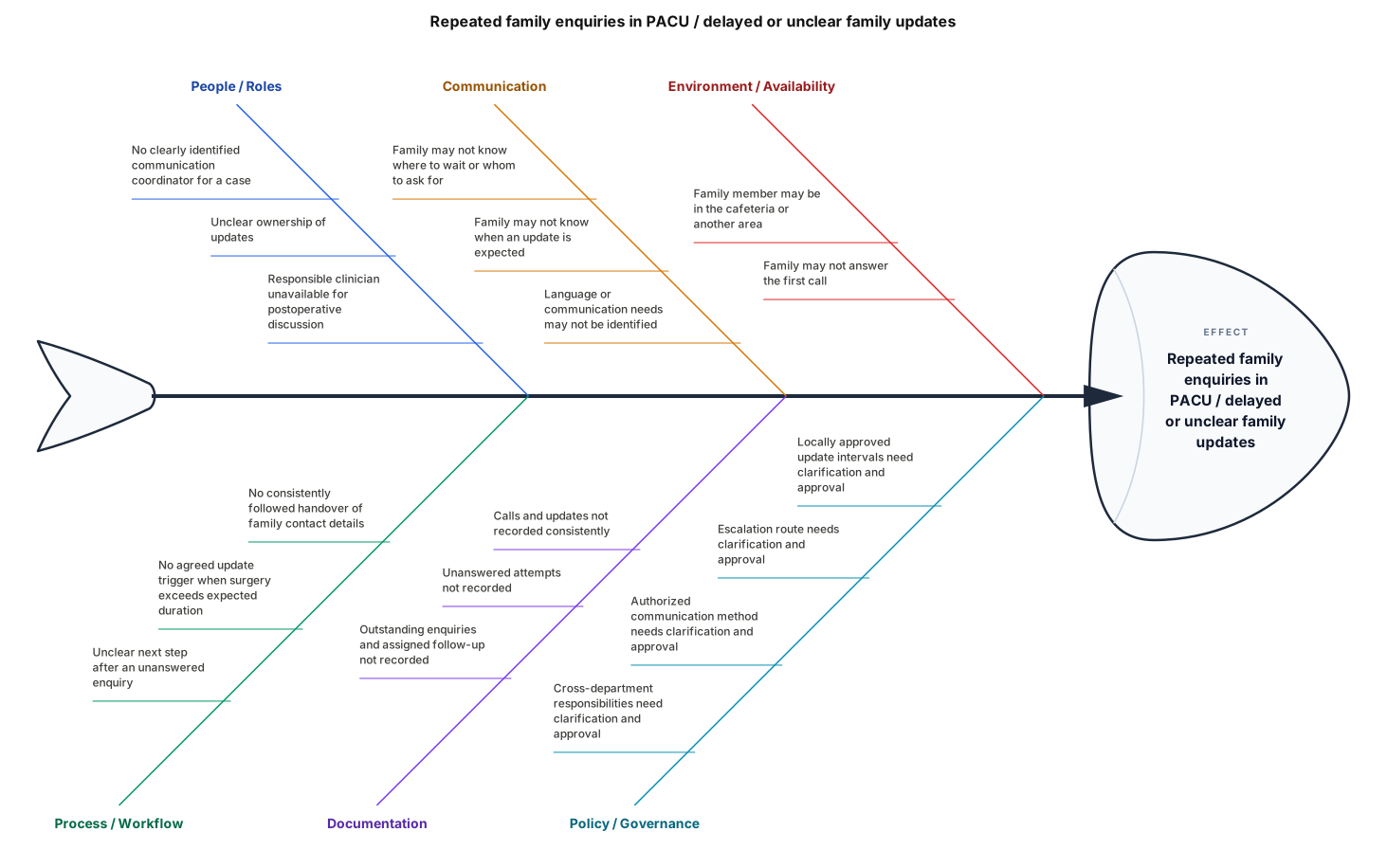
• Fishbone Analysis Effect at the head of the fish: Repeated family enquiries in PACU / delayed or unclear family updates. People / Roles — No clearly identified communication coordinator for a case; unclear ownership of updates; responsible clinician unavailable for postoperative discussion. Process / Workflow — No consistently followed handover of family contact details; no agreed update trigger when surgery exceeds expected duration; unclear next step after an unanswered enquiry. Communication — Family may not know where to wait, whom to ask for, or when an update is expected; language or communication needs may not be identified. Documentation — Calls, updates, unanswered attempts, outstanding enquiries, and assigned follow-up may not be recorded consistently. Environment / Availability — Family member may be in the cafeteria or another area rather than the designated waiting area; family may not answer the first call. Policy / Governance — Locally approved update intervals, escalation route, authorized communication method, and cross-department responsibilities may need clarification and approval. Use of this analysis: treat each item as a possible contributing factor until verified. The pathway proposes assigning a designated professional in the intraoperative area (for example, a nominated nurse, subject to local approval), verifying the authorized contact and telephone number, calling the family when appropriate, documenting attempts, and escalating unresolved enquiries. Suggested placement: these sections are placed after Purpose and before Scope so the rationale and root-cause analysis explain why the pathway is needed before responsibilities and procedures are presented.