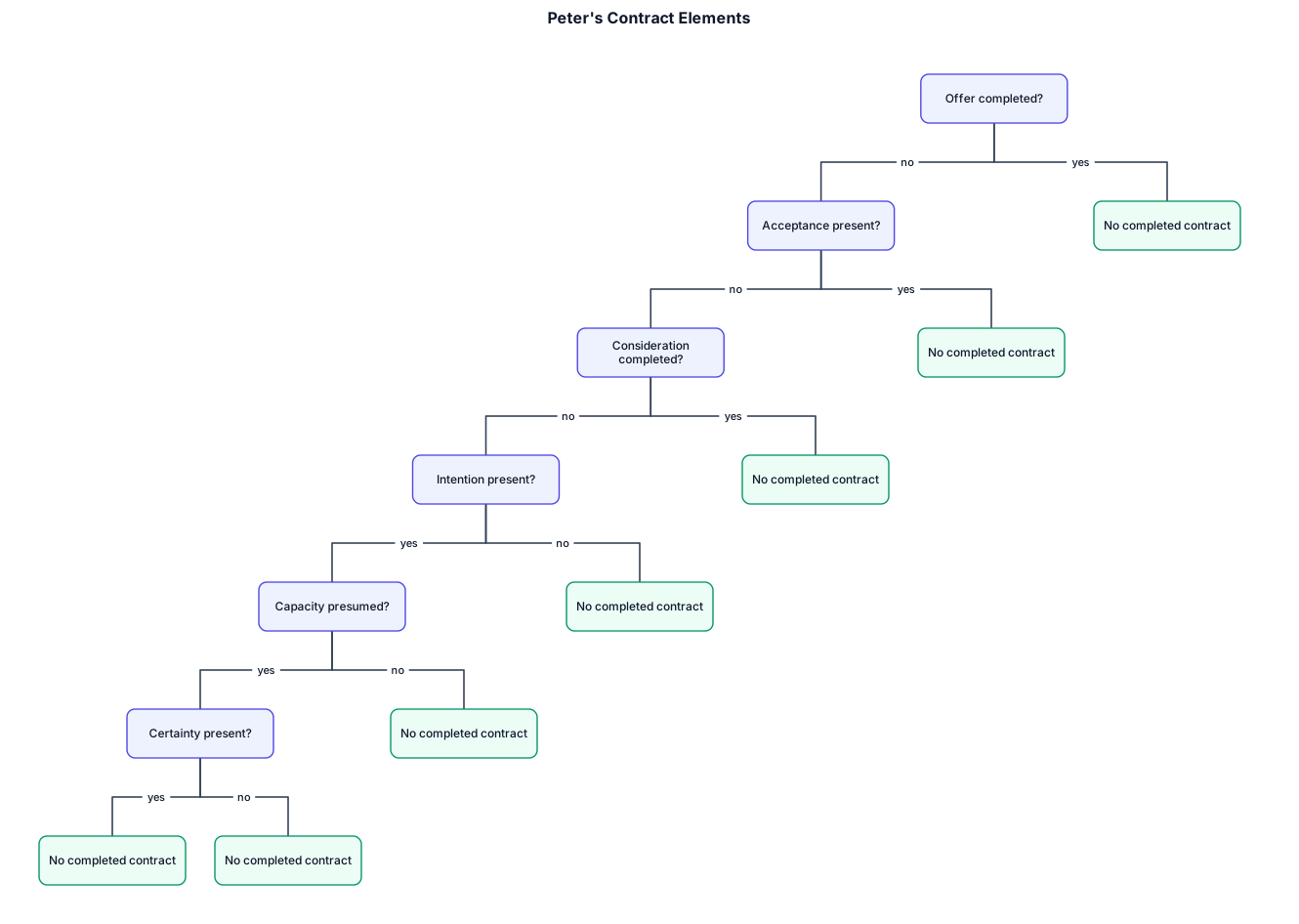
Peter's six contract elements: Offer – not yet completed; Acceptance – absent; Consideration – not completed; Intention – present; Capacity – presumed; Certainty – present; Result – no completed contract.
NODE ARCHIVE · REAL DIAGRAM BRIEFS
Diagram Examples from Real Visitor Prompts
Browse eligible diagrams shared by FreeDiagram visitors, inspect the exact prompts, and build your own version.
Browse 1024 real creationsCOMMUNITY OUTPUTS · EXACT PROMPTS
All visitor creations
Showing 673–696 of 1024. No stock examples or system defaults. Choose a tool, study a real result, then reopen its prompt as your starting point.
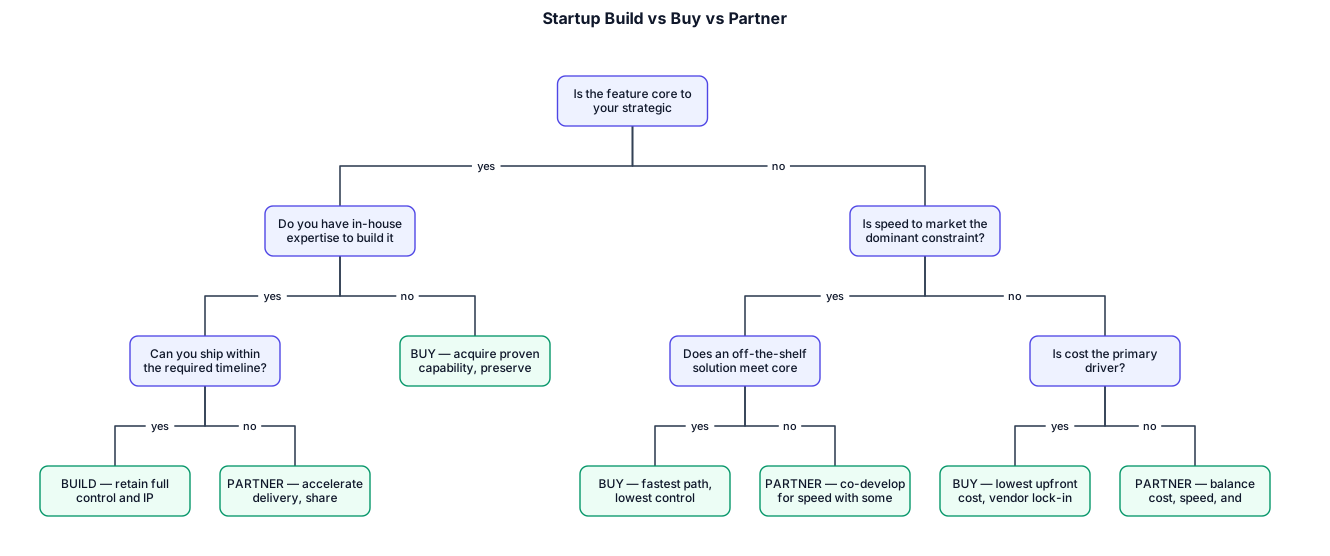
A decision tree for whether a startup should build, buy, or partner for a new feature, evaluating cost, speed, and strategic control Peter's six contract elements: Offer – not yet completed; Acceptance – absent; Consideration – not completed; Intention – present; Capacity – presumed; Certainty – present; Result – no completed contract.
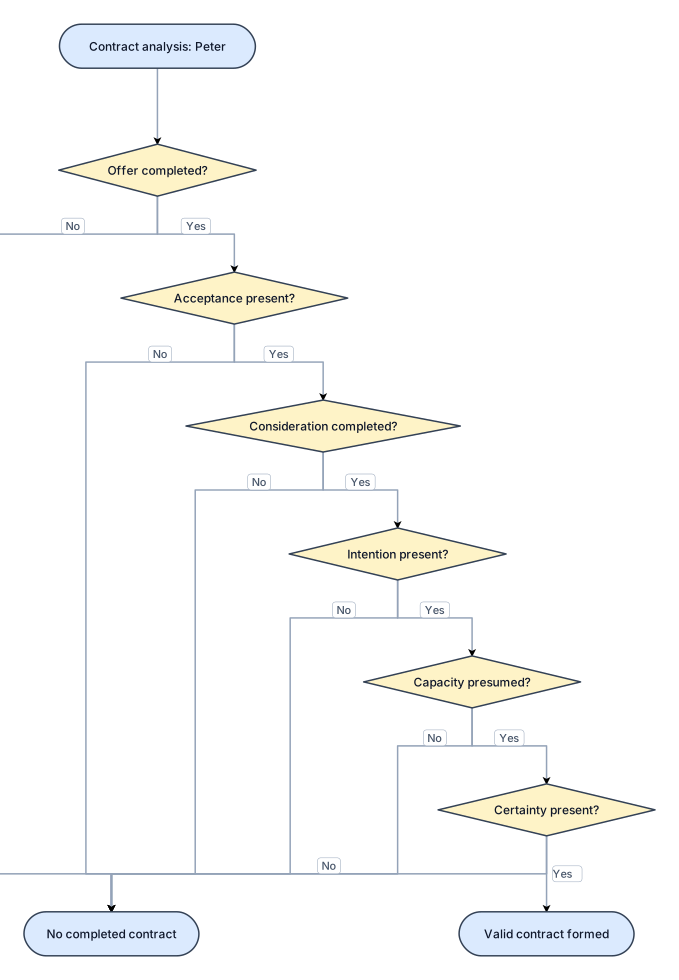
Peter's six contract elements: Offer – not yet completed; Acceptance – absent; Consideration – not completed; Intention – present; Capacity – presumed; Certainty – present; Result – no completed contract.
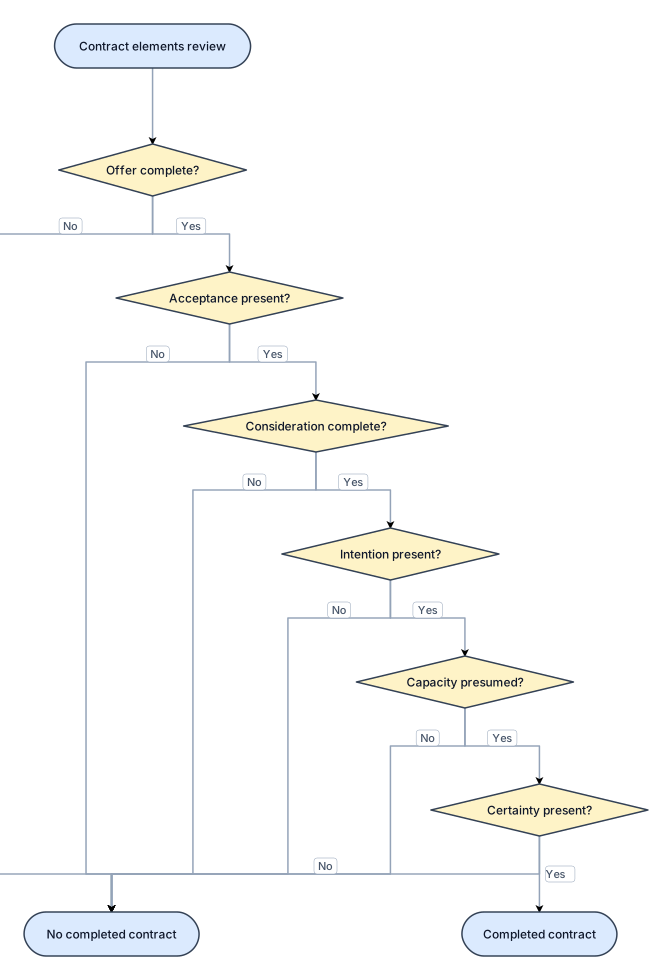
A flowchart of Peter's six contract elements: Offer – not yet completed; Acceptance – absent; Consideration – not completed; Intention – present; Capacity – presumed; Certainty – present; Result – no completed contract.
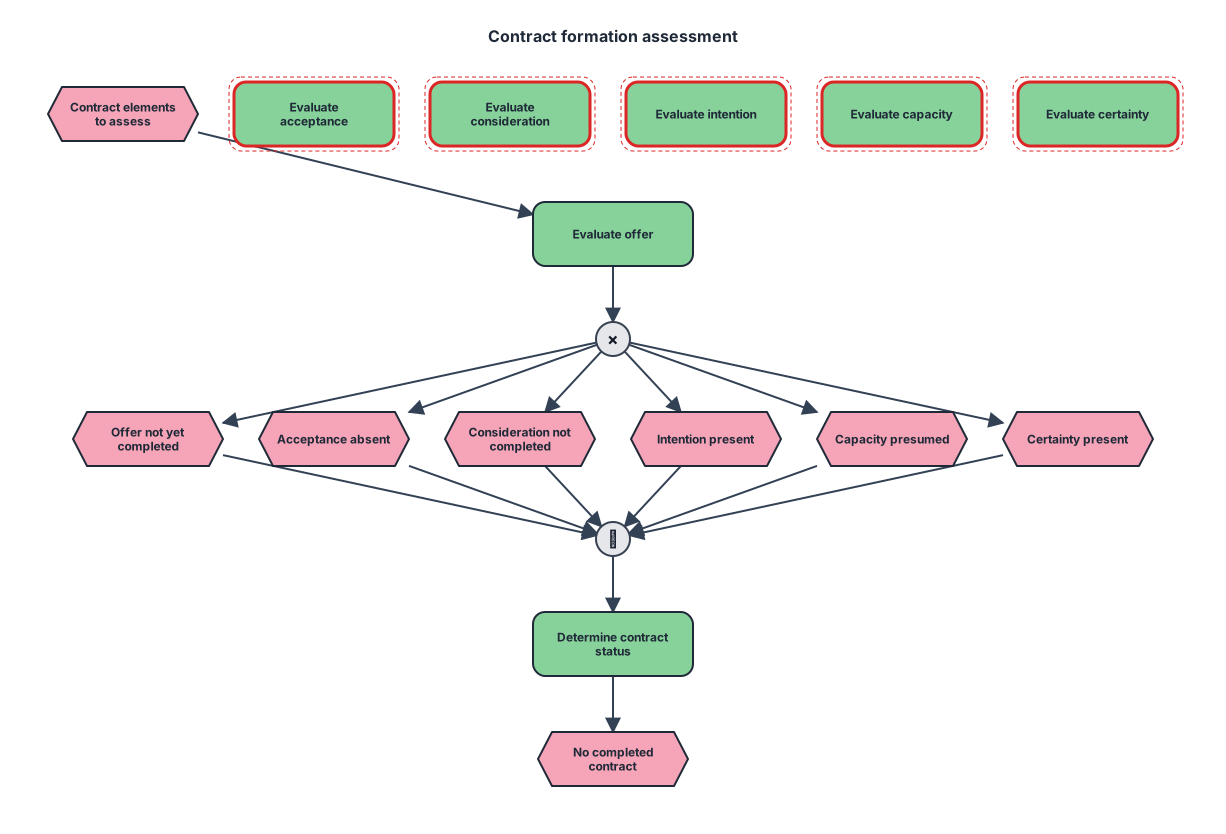
Peter's six contract elements: Offer – not yet completed; Acceptance – absent; Consideration – not completed; Intention – present; Capacity – presumed; Certainty – present; Result – no completed contract.
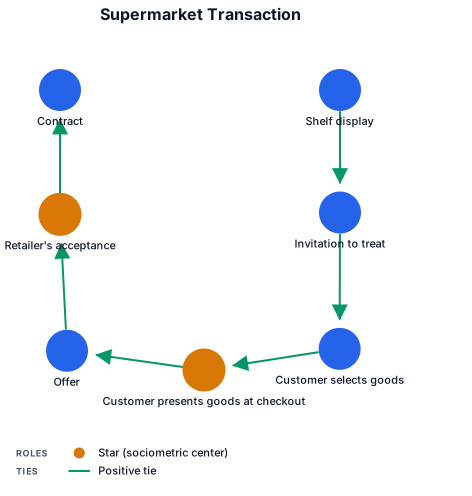
A sociogram of a Supermarket transaction: Shelf display → Invitation to treat → Customer selects goods → Customer presents goods at checkout → Offer → Retailer's acceptance → Contract.
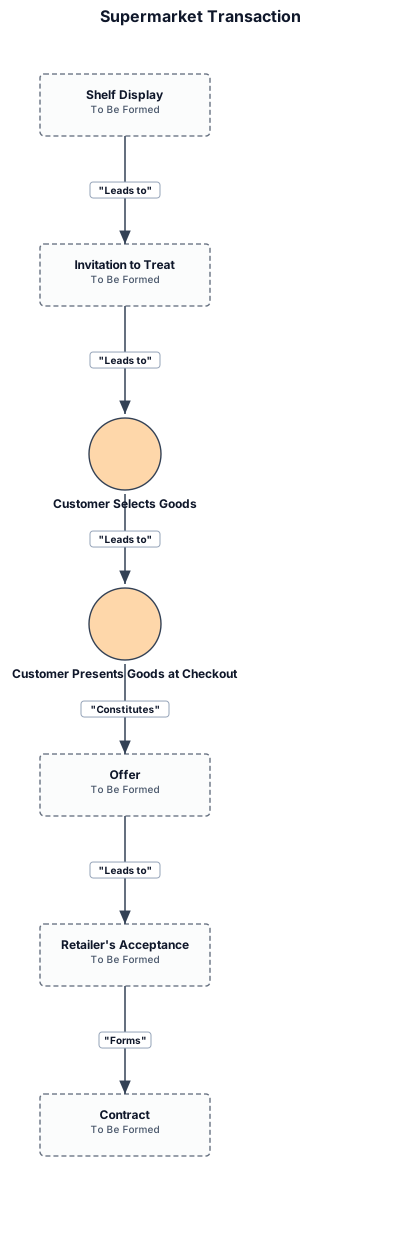
Supermarket transaction: Shelf display → Invitation to treat → Customer selects goods → Customer presents goods at checkout → Offer → Retailer's acceptance → Contract.
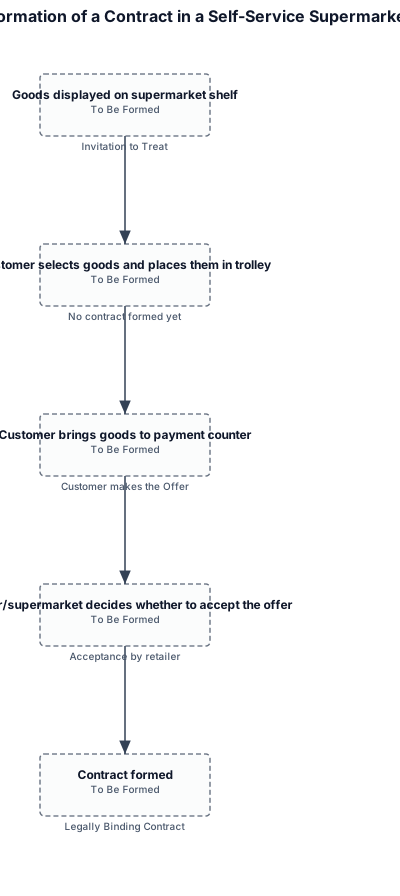
Create a clean, professional academic flowchart for a university Business Law assignment explaining the formation of a contract in a self-service supermarket. Use a simple left-to-right or top-to-bottom sequence with arrows. Show these exact stages: 1. Goods displayed on supermarket shelf Label: “Invitation to Treat” ↓ 2. Customer selects goods and places them in trolley Label: “No contract formed yet” ↓ 3. Customer brings goods to payment counter Label: “Customer makes the Offer” ↓ 4. Cashier/supermarket decides whether to accept the offer Label: “Acceptance by retailer” ↓ 5. Contract formed Label: “Legally Binding Contract” Add a small note below the diagram: “Based on Pharmaceutical Society of Great Britain v. Boots Cash Chemists (Southern) Ltd. [1953] 1 Q.B. 401.”

Create a clean, professional academic flowchart for a university Business Law assignment explaining the formation of a contract in a self-service supermarket. Use a simple left-to-right or top-to-bottom sequence with arrows. Show these exact stages: 1. Goods displayed on supermarket shelf Label: “Invitation to Treat” ↓ 2. Customer selects goods and places them in trolley Label: “No contract formed yet” ↓ 3. Customer brings goods to payment counter Label: “Customer makes the Offer” ↓ 4. Cashier/supermarket decides whether to accept the offer Label: “Acceptance by retailer” ↓ 5. Contract formed Label: “Legally Binding Contract” Add a small note below the diagram: “Based on Pharmaceutical Society of Great Britain v. Boots Cash Chemists (Southern) Ltd. [1953] 1 Q.B. 401.”

A fishbone diagram that shows Six elements of a valid contract: 1 Offer → 2 Acceptance → 3 Consideration → 4 Intention → 5 Capacity → 6 Certainty ,then it becomes Legally binding contract.

A fishbone diagram that shows Six elements of a valid contract: Offer → Acceptance → Consideration → Intention → Capacity → Certainty → Legally binding contract.
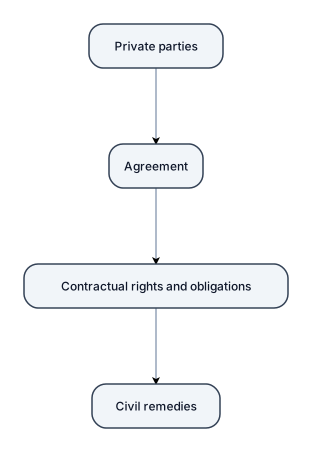
Figure 1. Contract law as private law: Private parties → Agreement → Contractual rights and obligations → Civil remedies.
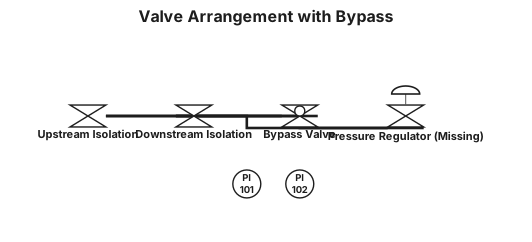
A P&iD of valve arrangement having missing pressure regulator but have isolating upstream and downstream valves with bypass globe valve
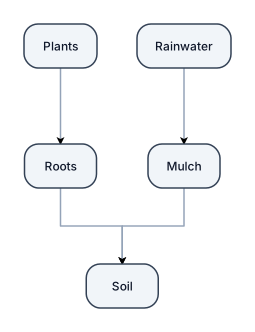
Simple school science sketch of a soil erosion prevention design. Show a side view of soil with small plants growing above it, roots visible underground, and mulch covering the soil. Add arrows and labels for Plants, Roots, Mulch, Soil, and Rainwater. Black and white hand-drawn worksheet style. Make it look like a student science diagram, not a logo, poster, advertisement, or front design.
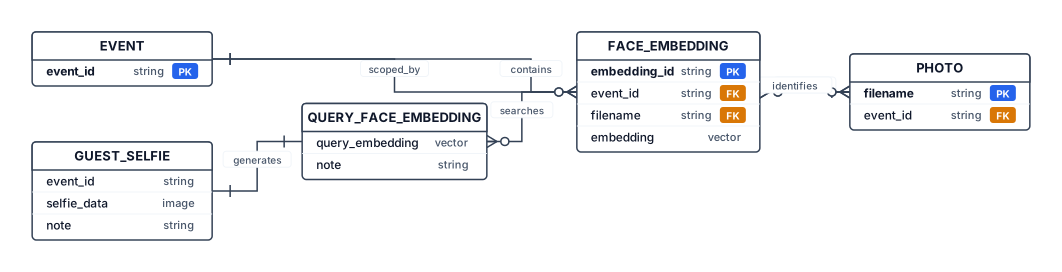
Create a professional academic Logical Data Model / ER-style Diagram for: "ClickMe – AI Event Photo Retrieval System Using Face Recognition" Important: The actual implementation uses ChromaDB, not a relational database. Therefore, represent the logical relationships rather than traditional relational database tables. Show these main components: EVENT - event_id PHOTO - filename - event_id FACE EMBEDDING - embedding_id - event_id - filename - embedding vector GUEST SELFIE / QUERY - event_id - query face embedding Relationships: EVENT contains PHOTO. PHOTO produces or is associated with FACE EMBEDDING. GUEST SELFIE is temporarily processed to generate a QUERY FACE EMBEDDING. QUERY FACE EMBEDDING searches stored FACE EMBEDDINGS. Matching FACE EMBEDDINGS identify matching PHOTOS. Clearly indicate that the guest selfie and query embedding are temporary and are not permanently stored. Use clean academic diagram notation, white background, rectangular entities, arrows showing relationships, minimal colors, readable labels, suitable for a university project report. Do not show PostgreSQL, MySQL or any relational database.
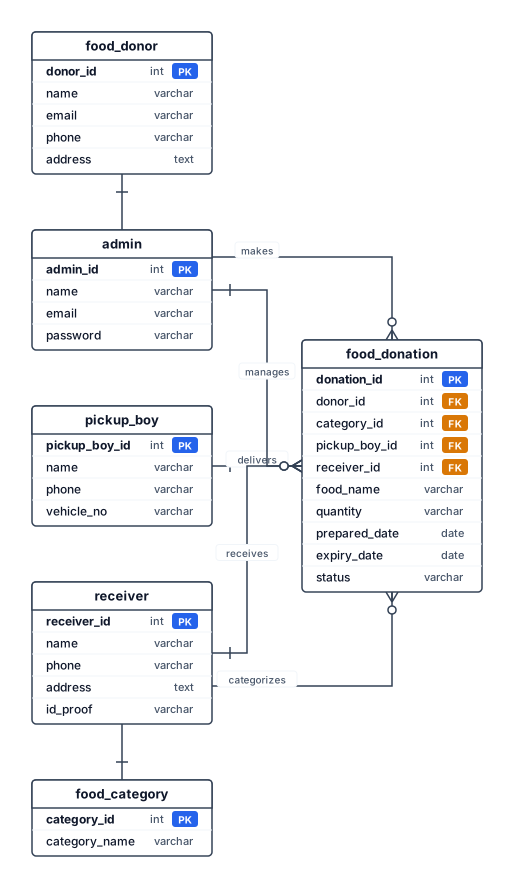
Entity relationship diagram for food donation system. ER diagram . food donation,food donor,admin,pick-up boy,receiver,food category,ER diagram generate
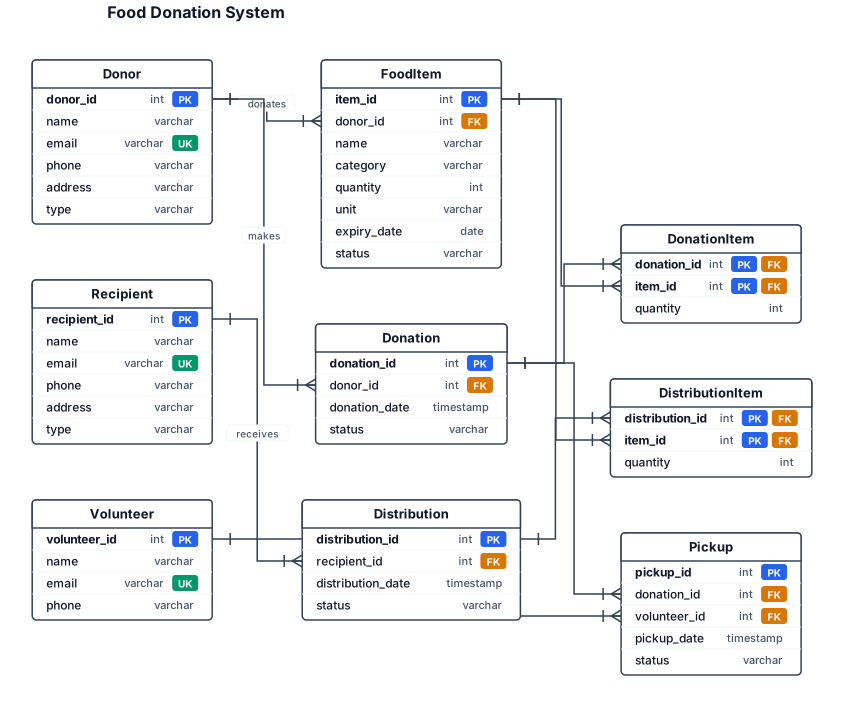
An entity-relationship diagram for the topic is food donation system relationship between entity
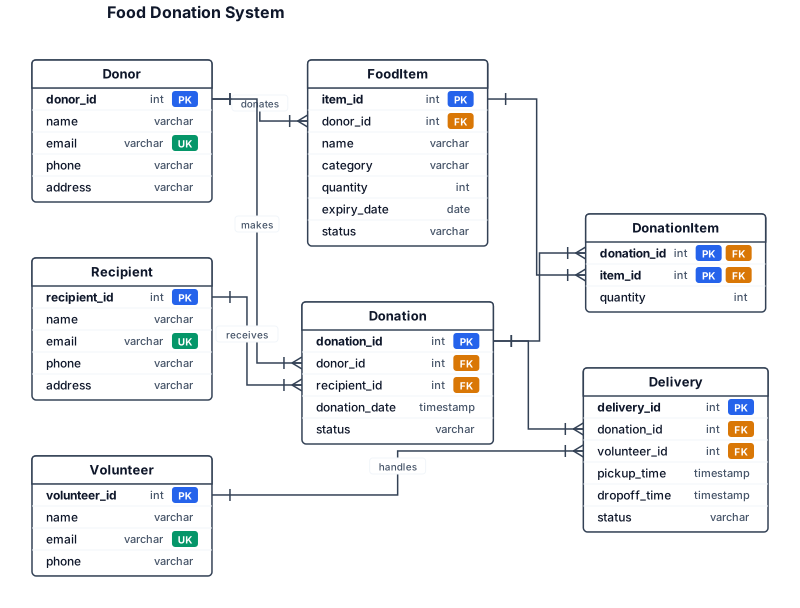
An entity-relationship diagram for the topic is food donation system relationship between entitys
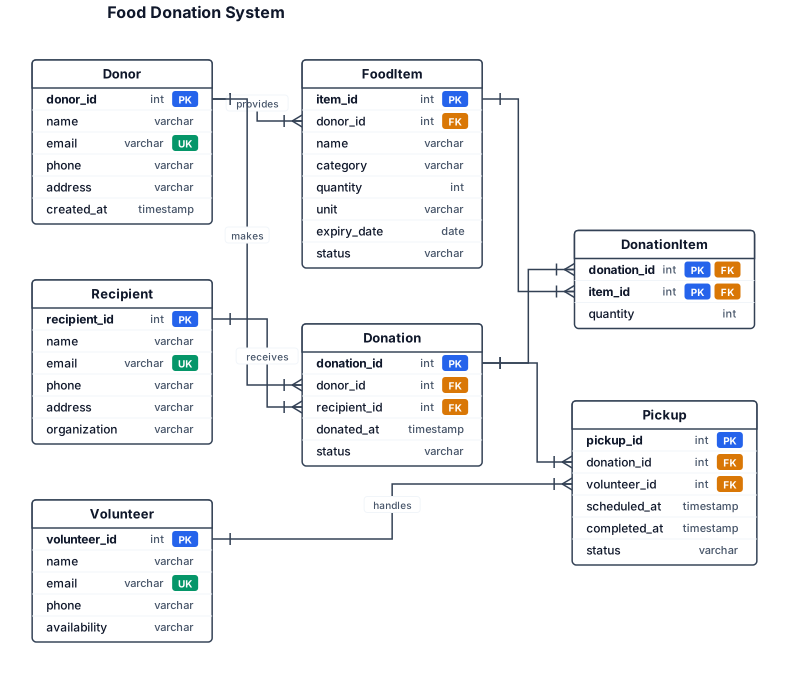
An entity-relationship diagram for the topic is food donation system
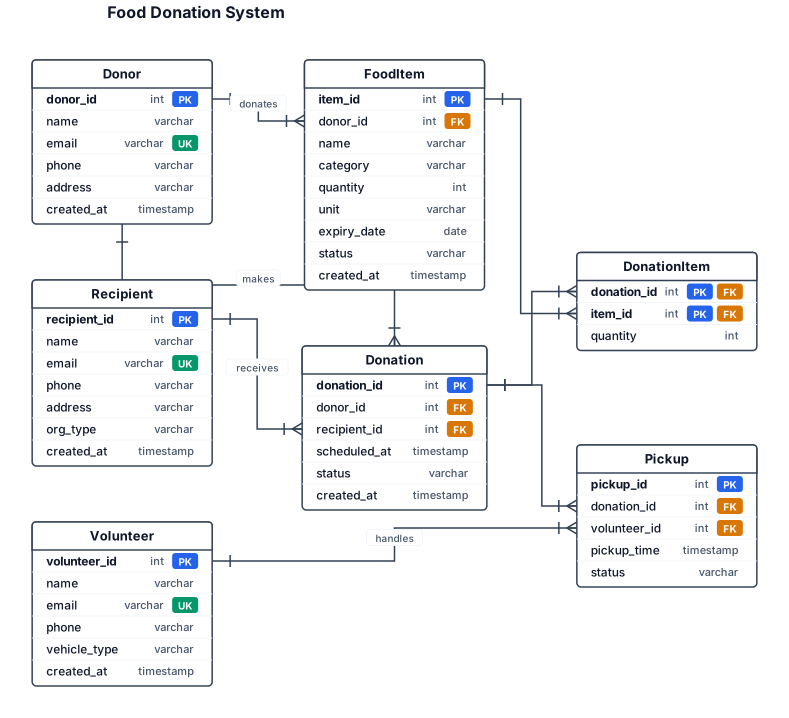
An entity-relationship diagram for a SaaS app the topic is food donation system
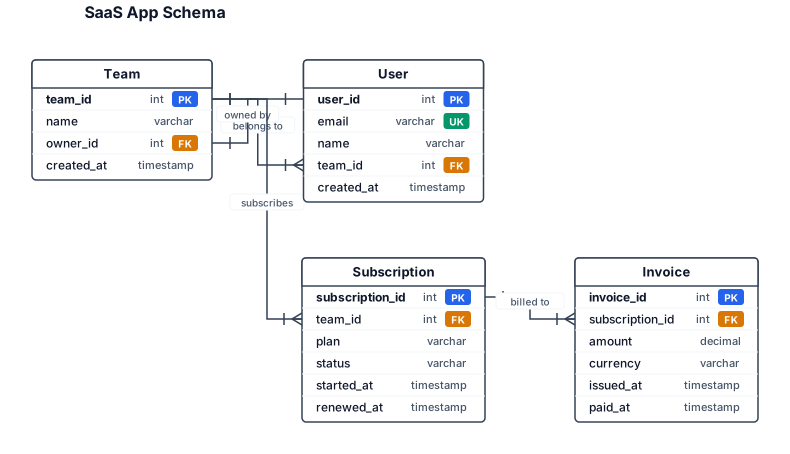
An entity-relationship diagram for a SaaS app with users, teams, subscriptions, and invoices
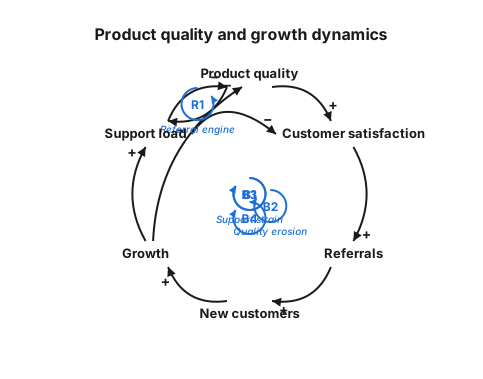
A causal loop diagram showing how product quality, customer satisfaction, referrals, growth, and support load reinforce or balance each other

The system is equipped with 2 sets of vertical U‑tube semi‑volume water‑to‑water heat exchangers. The heat exchanger shell diameter is DN1200, volume 1.4 m³, design pressure of tube‑side and shell‑side is 1.0 MPa, heat transfer area is 16.5 ㎡. Shell, tube‑side and heat exchange tubes are made of 304 stainless steel; supports are 304 stainless steel plus carbon steel. Auxiliary equipment includes circulating water pumps and pressure tanks. Instruments and accessories: pressure gauges, thermometers, transmitters, safety valves, blow‑down valves. The system includes primary‑side pipelines & valves, secondary‑side pipelines & valves. Control objectives: Complete heat exchange between primary and secondary side to meet cooling and heating requirements of the system. Monitor pressure and temperature of heat exchanger medium. Safety overpressure relief via safety valves. Blow‑down function through blow‑down valves. Circulating pumps provide medium circulation. All equipment, instruments and valves shall be configured in accordance with construction drawings and relevant design codes and specifications

Create a clean academic 0-Level DFD for: “ClickMe – AI Event Photo Retrieval System” LAYOUT: Use a wide landscape layout with plenty of empty space. Do NOT make the diagram compact or crowded. Place the elements like this: LEFT: Rectangle: PHOTOGRAPHER CENTER: One large process box: (ClickMe – AI Event Photo Retrieval System) RIGHT: Rectangle: GUEST ARROWS: PHOTOGRAPHER → CLICKME Label: Event Photos + Event ID GUEST → CLICKME Label: Selfie + Event ID CLICKME → GUEST Label: Matching Photographs IMPORTANT: - Exactly 2 external entities: Photographer and Guest - Exactly 1 central process: ClickMe - No other boxes - No internal processes - No ChromaDB - No Face Detection - No Face Embedding - No Similarity Search - No extra text - No icons - No decoration - Do not stack the elements vertically - Do not overlap arrows or labels - Keep large spacing between all elements - Use clear directional arrows - Use black text and black lines on white background - Professional college-project style - Landscape orientation - High resolution The final diagram should be visually simple: PHOTOGRAPHER → CLICKME → GUEST ↑ │ GUEST → CLICKME Caption: Figure 5.3.1: 0-Level DFD of ClickMe
Focused examples and prompt ideas
Start with the complete visitor wall above, then use these focused collections when you want a narrower subject and more prompt context.
The first curated collection is being prepared.